
6 hours·English
4.8(7,079)
Tromsø: Northern Lights Tour with Minibus, and Free Photos.
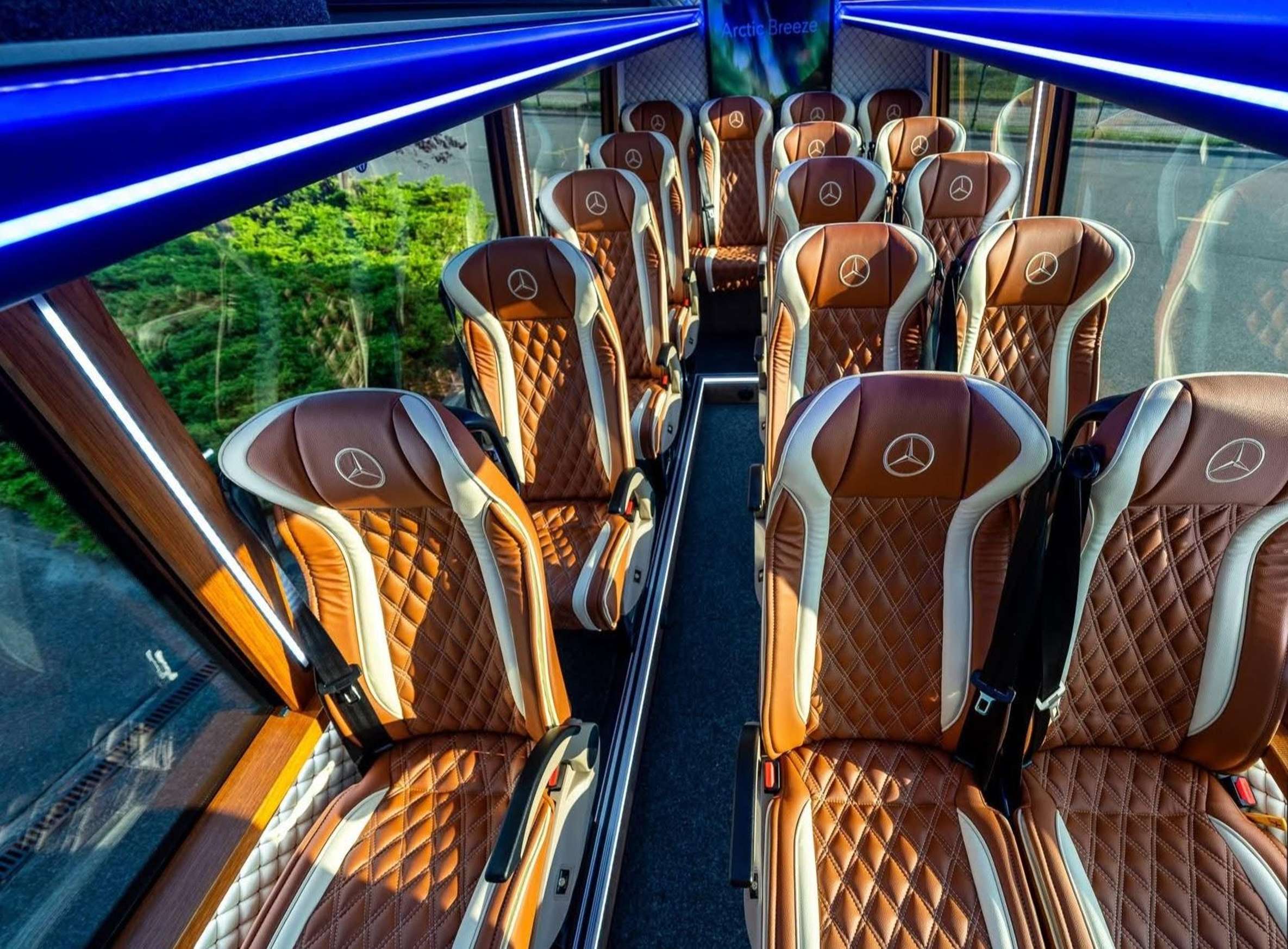
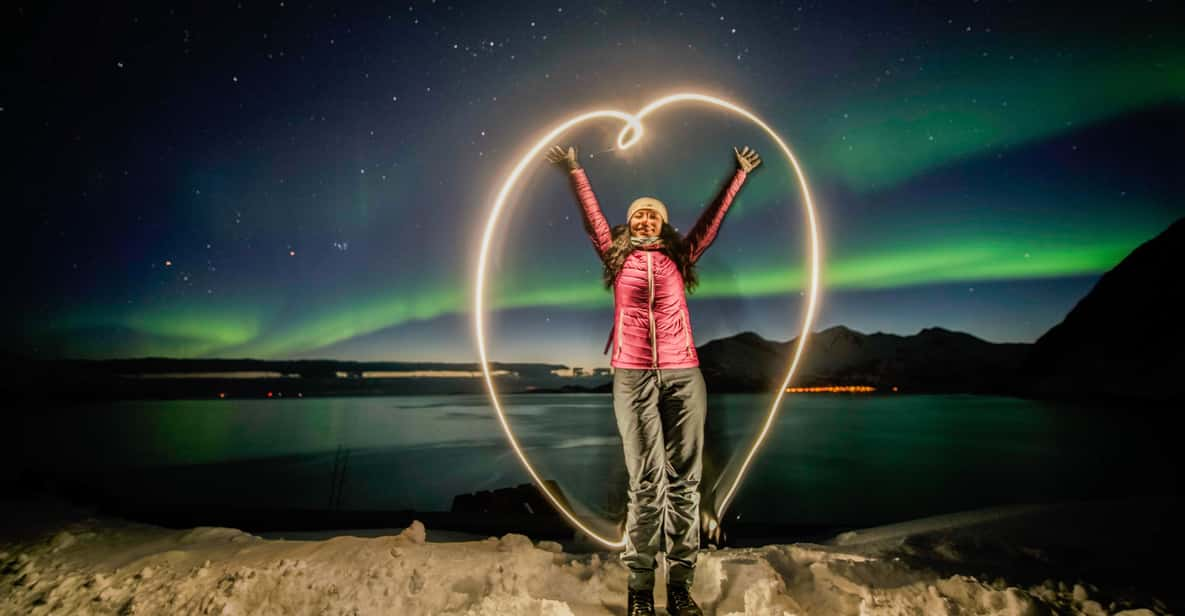
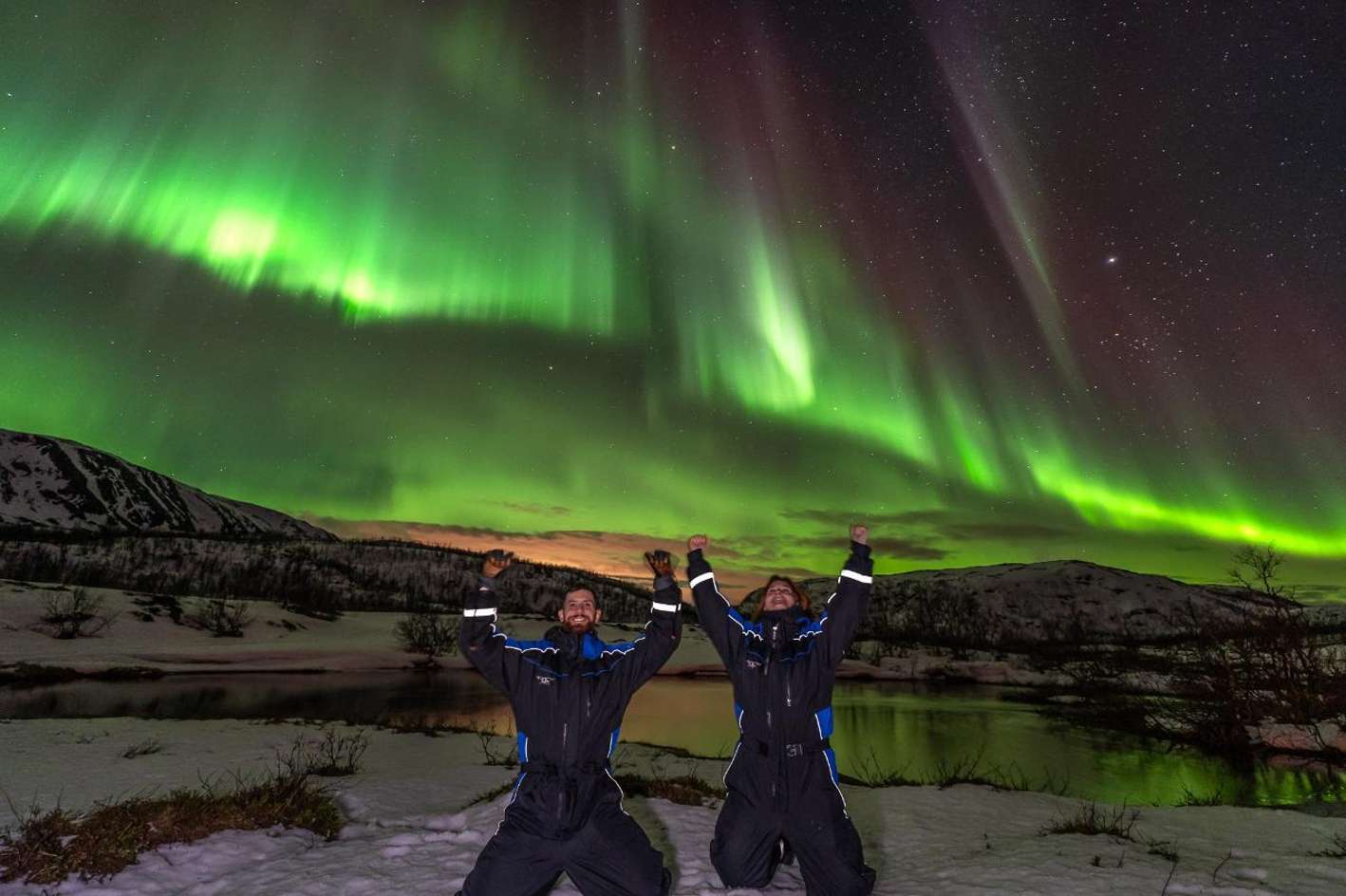
Professional portraits and photos.Thermal suits and hot drinks providedBrand-new, high-end Mercedes-Benz vehicles
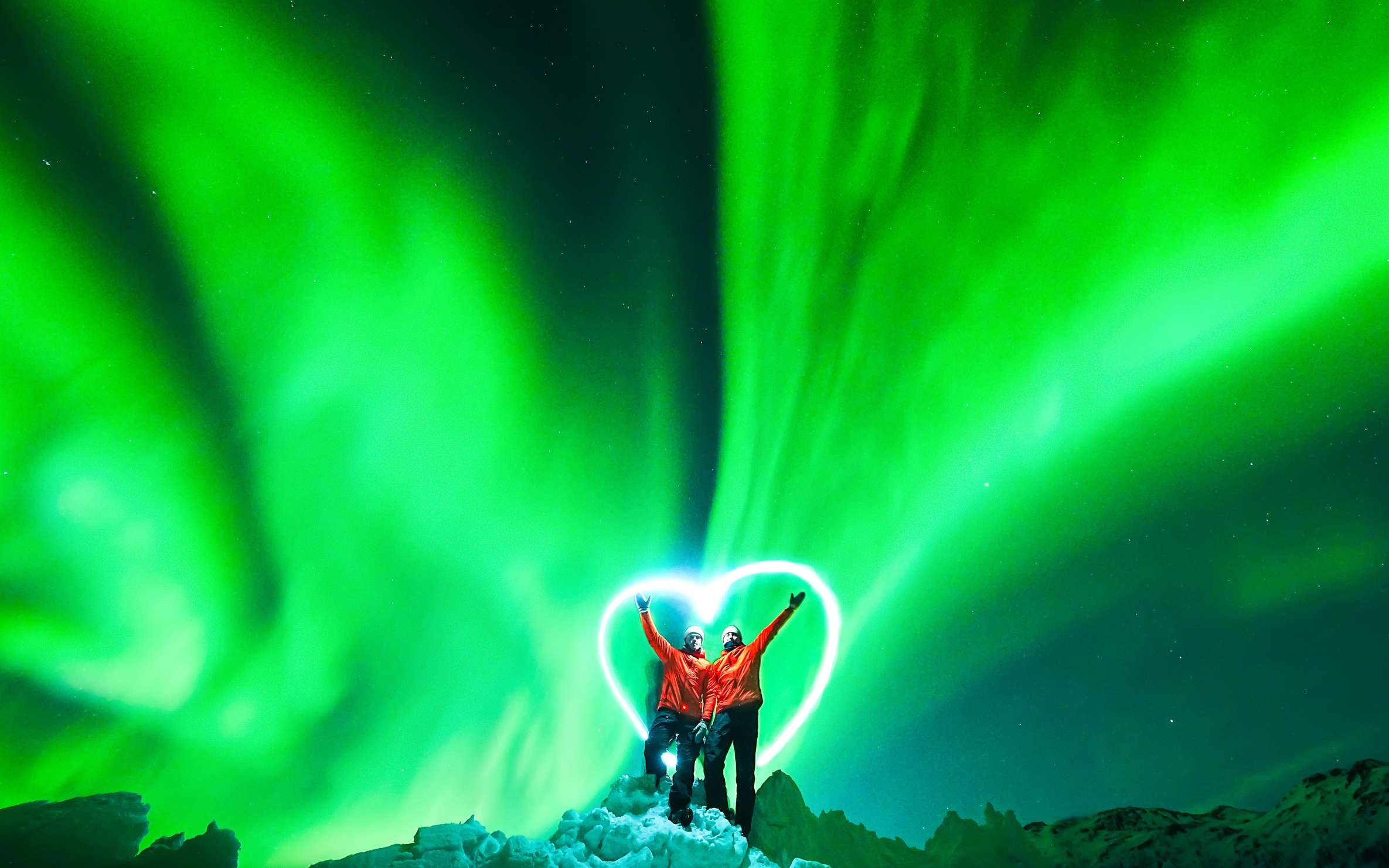
Plan your dates, then chase the clear skies. Pick your month with an honest look at darkness, snow and cold, and turn any night from September to April into a real chance - guides who track satellite cloud data and drive inland, even across the Finnish border, to find the lights. Book your chase for your first night in town.
"Excellent. Our guide Brynjar was amazing. Despite clouds in Tromsø, he found us a great viewing spot. The highlight of our Arctic adventure!"
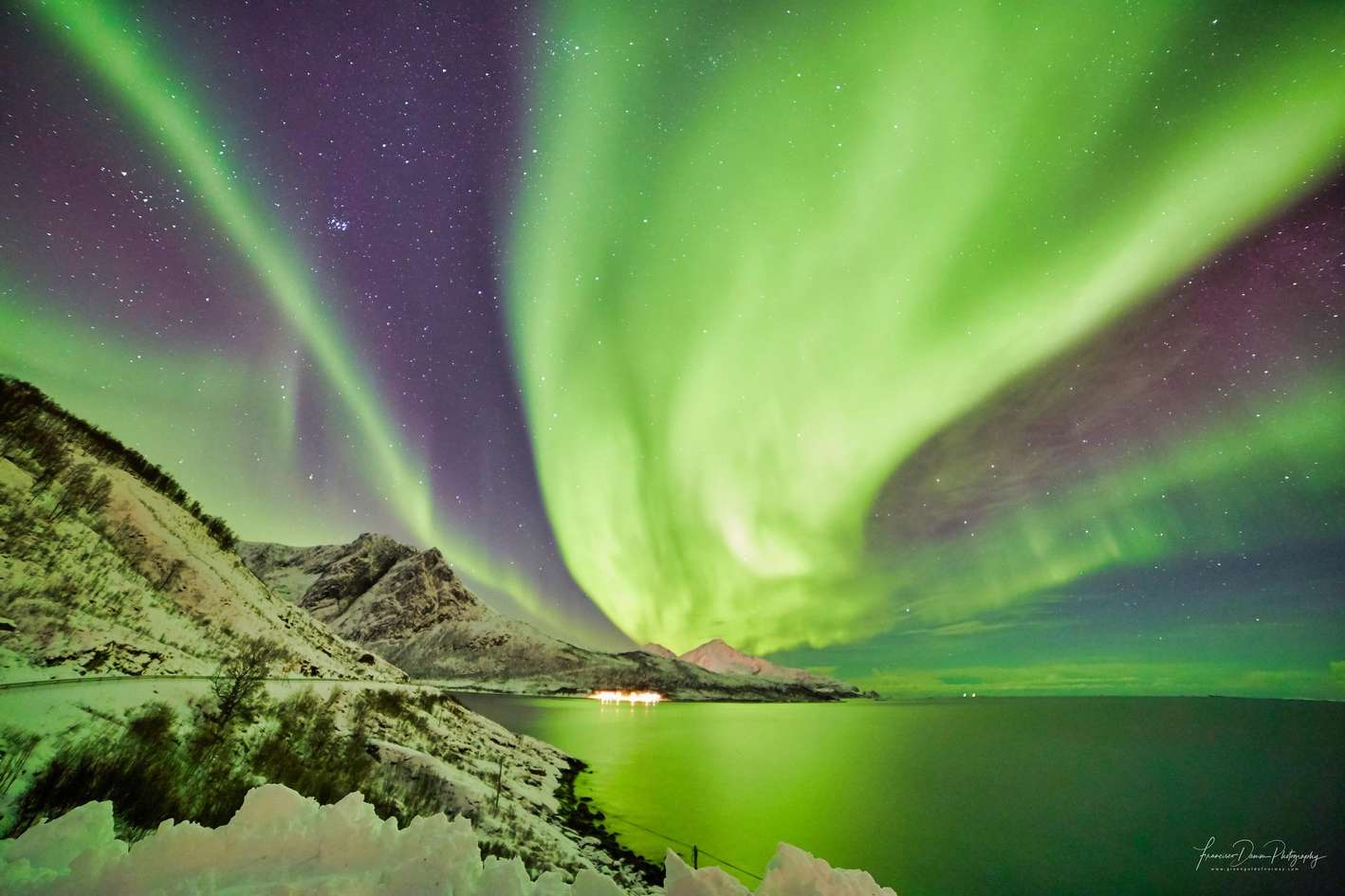
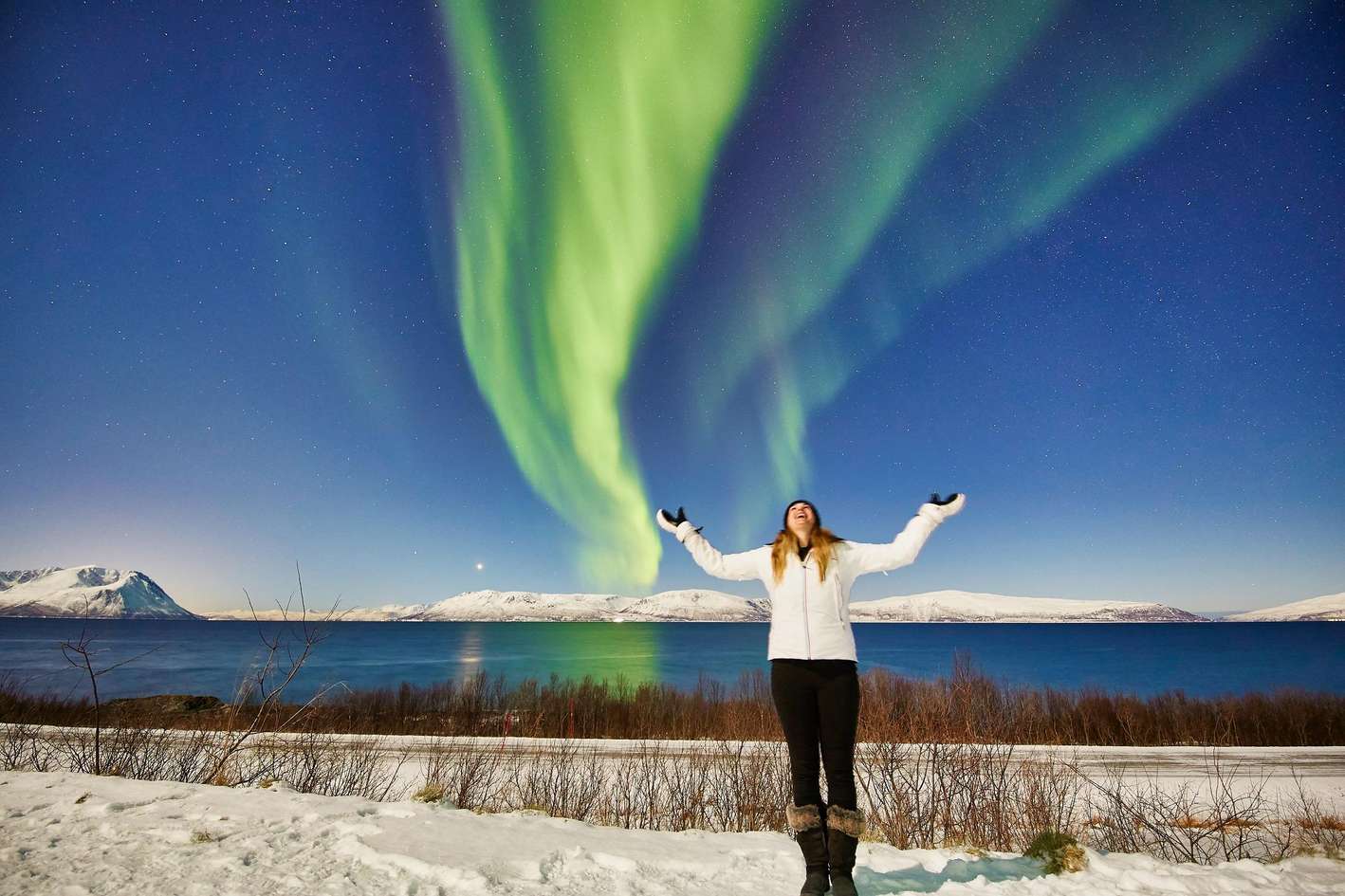
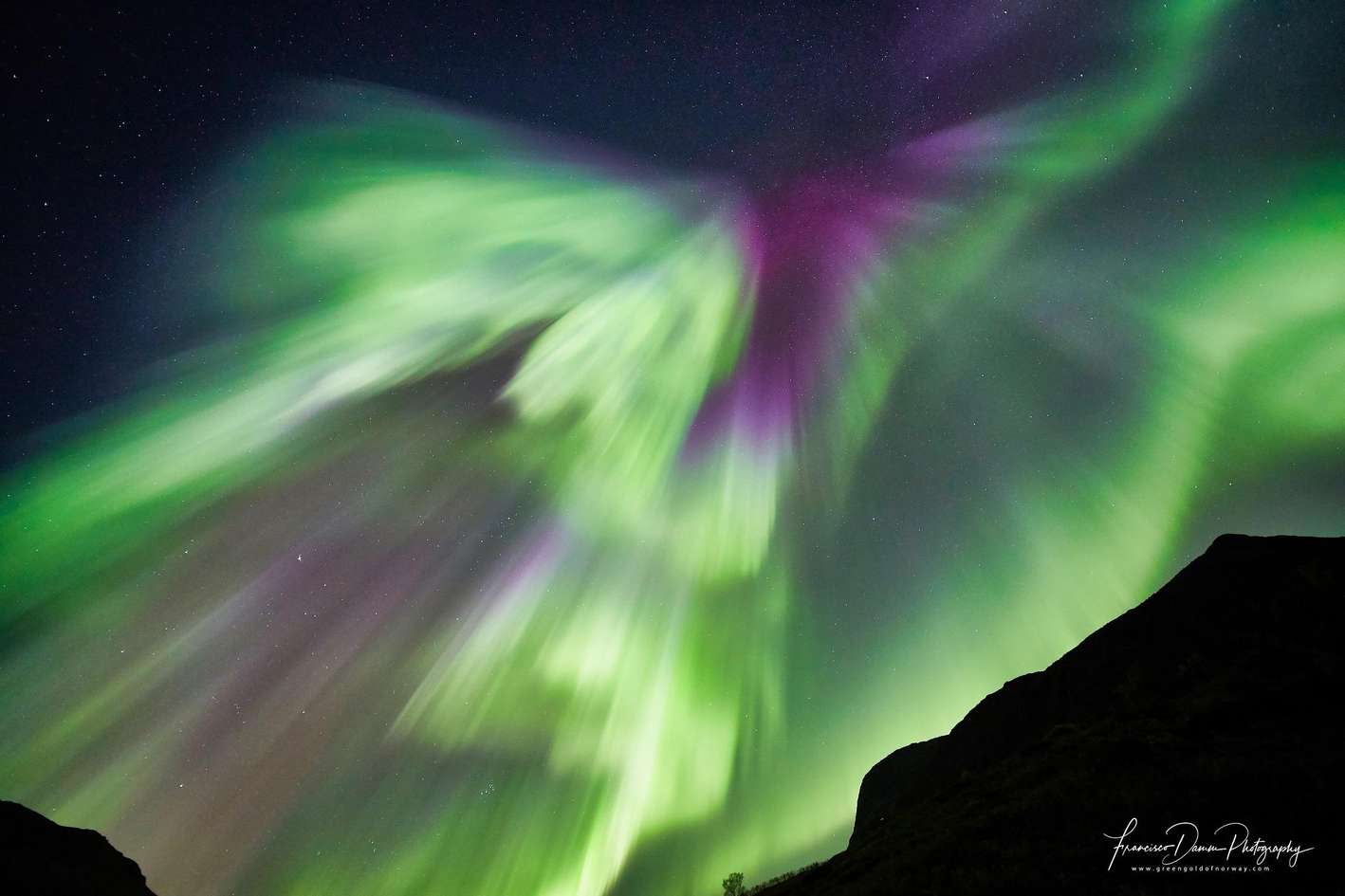
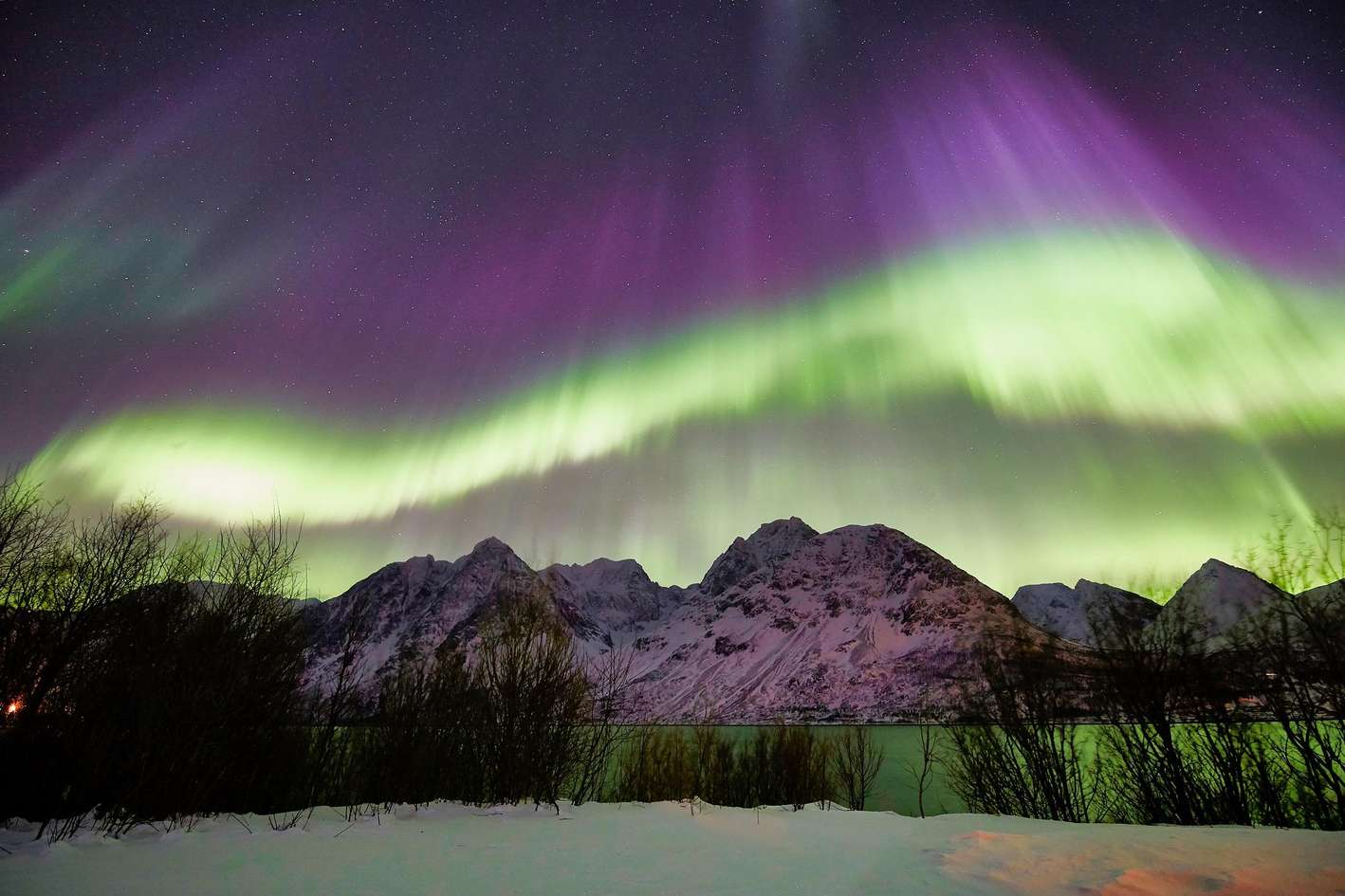
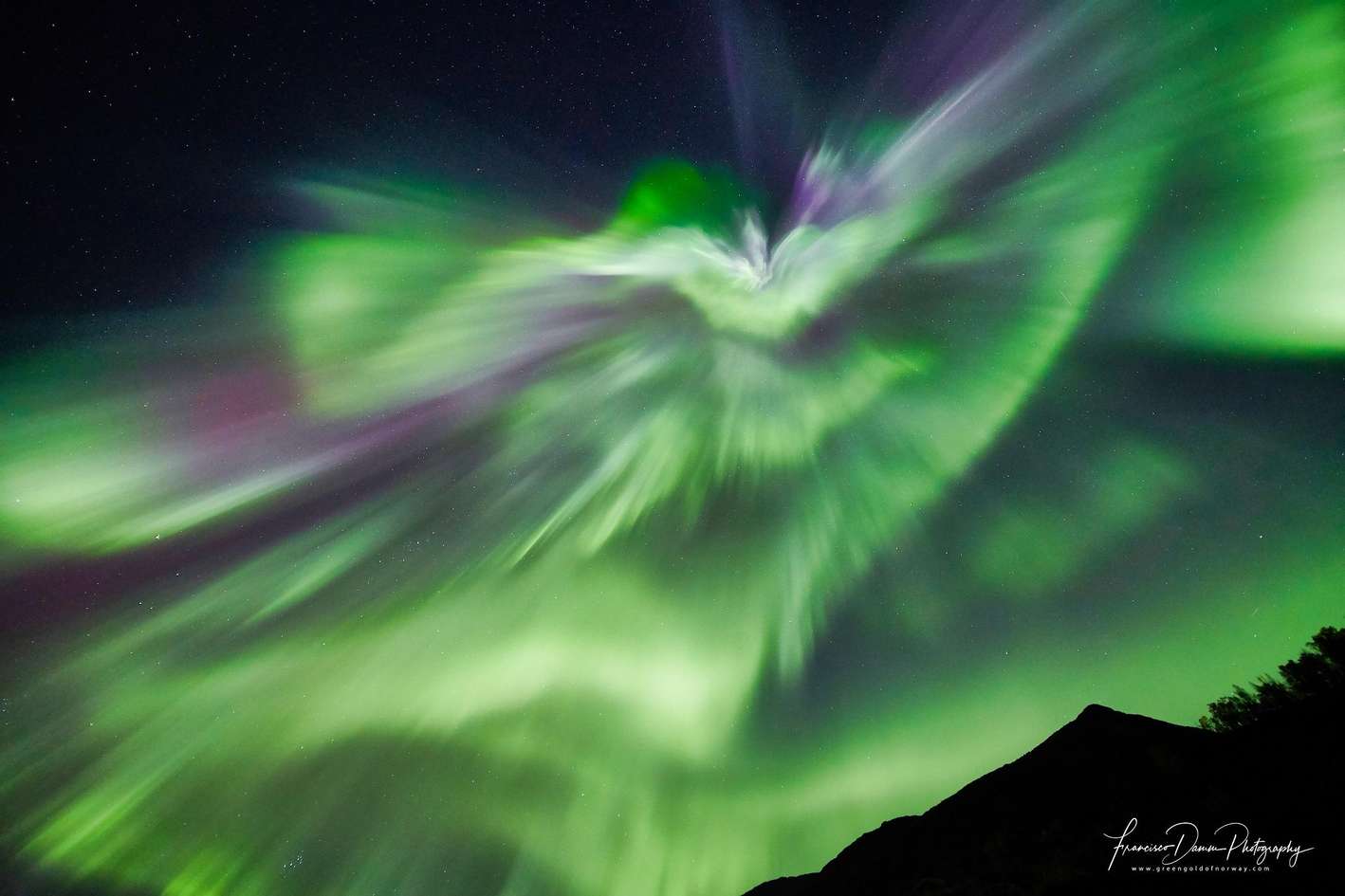
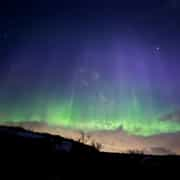


Tromsø sits directly under the auroral oval, so the lights can appear overhead on any dark, clear night. Which month you pick decides the mix of darkness, clear skies and cold you will stand in, and that mix is what this guide settles.
The season runs from mid-September to late March, when true darkness exists; tours also run in the twilight months at each end.
**February and March win the whole question**: 12.7 to 14.7 clear dark nights within chase distance, plus daylight for daytime trips, though October's 15 tops both on skies alone.
In town you get 2 to 5 clear nights a month; inland chases find 12 to 16, which is why a mobile chase matters more than your dates.
Plan 4 to 5 nights in Tromsø, and book your chase for the first night to leave buffer evenings.
Dodge 20 December to 7 January and week 8 in February, when rates jump 40 to 60 percent and small-group tours sell out weeks ahead.
Pack your original passport or national ID card in your jacket pocket before you leave your hotel, and leave a photo copy behind, since a copy on your phone will not get you across the border.
The honest calendar starts mid-September, when the sun finally drops far enough for full darkness, and closes in late March. Outside that window there is no true night, only twilight, and weak displays get lost in it. Commercial tours push the edges, running from late August into early April.
Within the season, the months are not equal. February and March take the crown: February pairs 12 hours of darkness with 12.7 clear dark nights within chase distance, and March edges past January with 14.7 clear nights while also handing you 11.7 hours of daylight for daytime plans.
October's 15 clear nights actually beats both on skies alone; those figures all count clear dark nights a chase can reach within 75 kilometres, and February and March win on the mix of skies, snow and daylight.
The polar night months are not wrong, just different. November through January deliver 14 to 16 hours of darkness and deep snow, but coastal cloud sits heavier over town and the days are short. October is the quiet middle path: 10.6 hours of darkness, moderate crowds, and the strongest clear-night count reachable by chase.
One belief worth dropping: deep winter does not mean stronger lights. Aurora follows solar wind; air temperature and the calendar have no say in it.
January: 5 out of 5 for how busy it gets. Peak winter tour crowds face heavy coastal cloud with only about 3 clear nights in town, though inland chase tours reach clear skies on over 13 nights.
Tap a month to read it.
December: 16 clear dark nights within 75 km. Holiday crowds peak during the polar night, when driving beyond coastal clouds provides around 16 clear dark nights across the region.
Tap a month to read it.
October: rain on 20.4 days. Tour bookings rise alongside lengthening darkness, with inland chase routes offering around 15 clear nights despite coastal cloud.
Tap a month to read it.
December: 18 dry days. Holiday crowds peak during the polar night, when driving beyond coastal clouds provides around 16 clear dark nights across the region.
Tap a month to read it.
January: snow on 13.6 days. Peak winter tour crowds face heavy coastal cloud with only about 3 clear nights in town, though inland chase tours reach clear skies on over 13 nights.
Tap a month to read it.
The numbers point the same way: if clear skies rule your trip, aim at February or March. If you want snow scenes and maximum darkness, accept more cloud in town and lean on a guide who drives.

A fixed spot only gets whatever sky sits above it. A city beach, a husky camp, a boat in the fjord: when the coastal cloud rolls in, they all stay under it. Tromsø sits under cloud most winter nights, and no amount of waiting changes that from a stationary position.
A vehicle changes the game. Guides on road chases watch satellite data and drive inland across microclimates, sometimes as far as the Finnish border, to reach clear pockets the coast never sees. Boats cannot take inland roads, and camps cannot move their trails. That is why mobile chases beat fixed spots almost every cloudy night.
The months play into this too. Early autumn gives the coast slightly more clear nights than late winter, 6.7 in September against 4.0 in February, but once you drive 75 kilometres inland, both seasons land in the same range. Your month matters less than your vehicle.
There is a whole page of this site on the best viewing spots in and around Tromsø, from city beaches to fjord viewpoints: where to stand. Pair it with this one: pick the place, then pick the month.
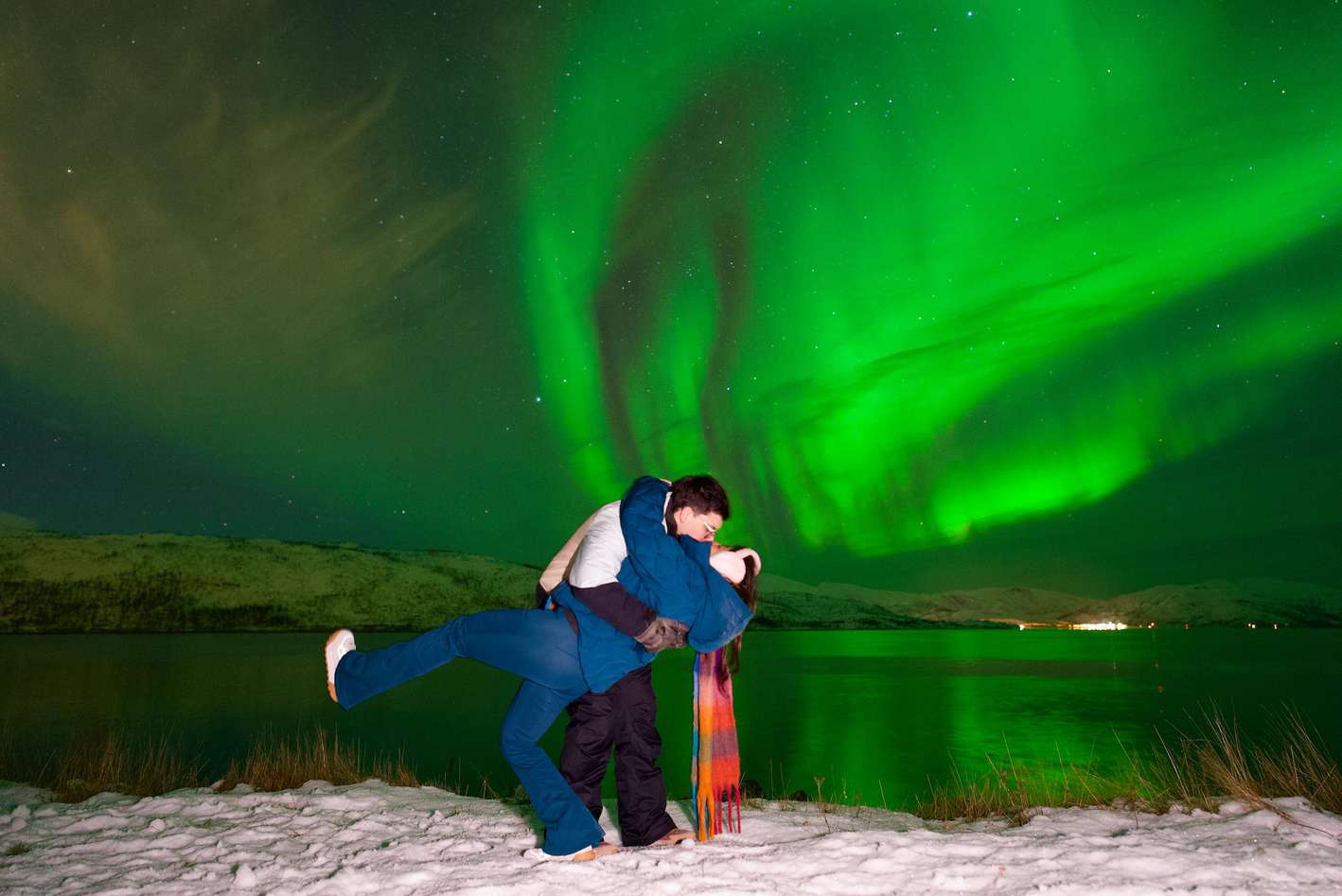
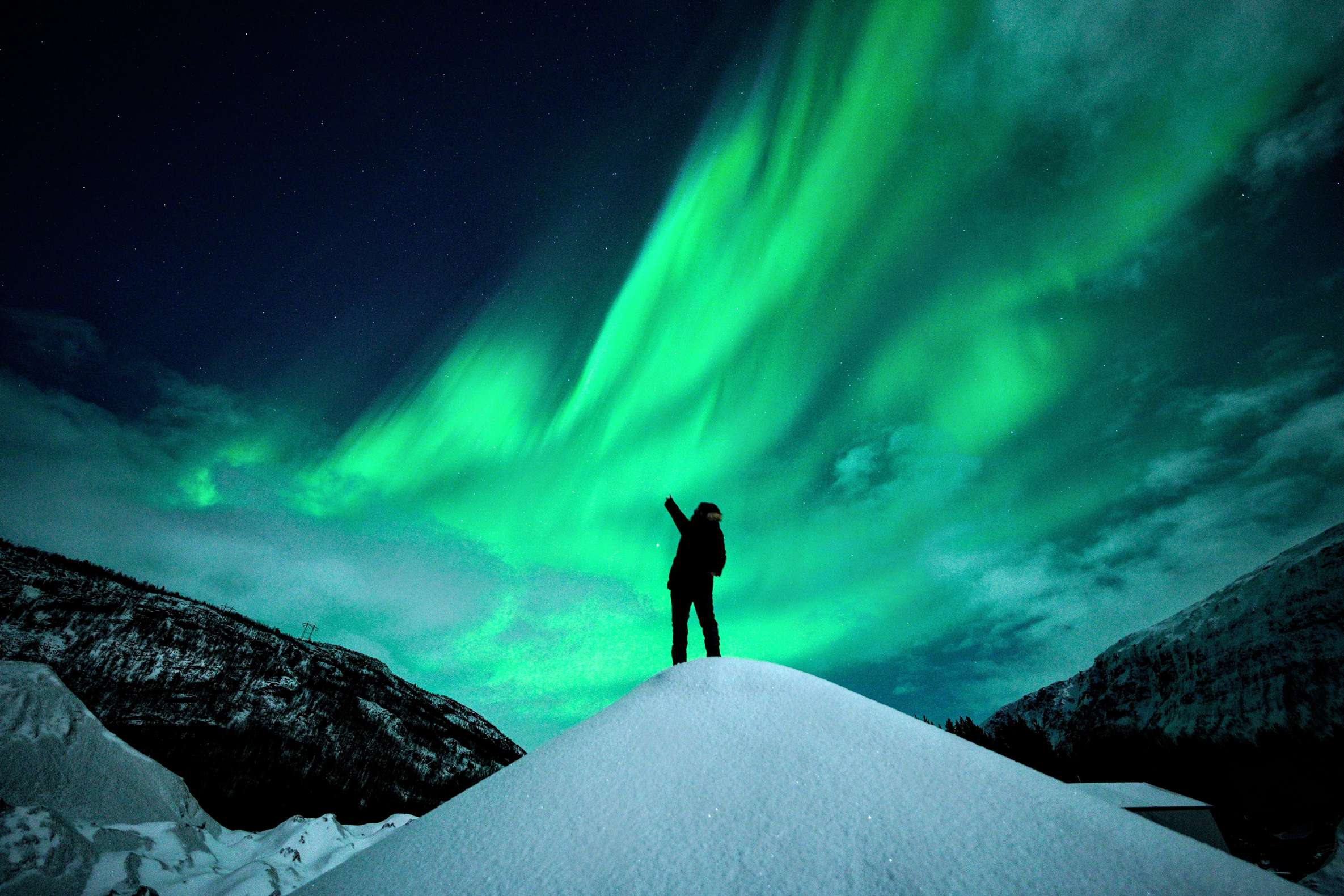
Here is the number that decides your whole trip. In town, winter averages 85 to 90 percent cloud cover, which leaves 2 to 5 clear dark nights a month. Drive inland behind the Lyngen Alps or toward Finland and the odds climb to 12 to 16 clear nights a month from October through March.
The reason is geography. Clouds rolling off the Norwegian Sea rise over the Lyngen peaks and drop their moisture on the coast, leaving the inland valleys dry. Skibotn gets a fraction of Tromsø's annual precipitation.
Kilpisjärvi, on a plateau at the Finnish border, sits in a colder, drier continental climate. Overcast in town often coincides with clear sky an hour or two east.
This is what the Tromso: Minivan Aurora Excursion with Pictures & Warm Suits is built for. It runs with no more than eight guests per minivan, briefs you on the night's chances before departure, and searches around Tromsø or all the way inside Finland. Warm overalls, boots, coffee and muffins are included.
The gap, said plainly: no date and no tour can guarantee clear sky. Severe blizzards can blanket every route. A three-night stay still carries real odds of zero clear nights at a fixed spot, so stay four to five nights and give the chase room to work.
Book your dates for the season, then let the vehicle handle the sky.
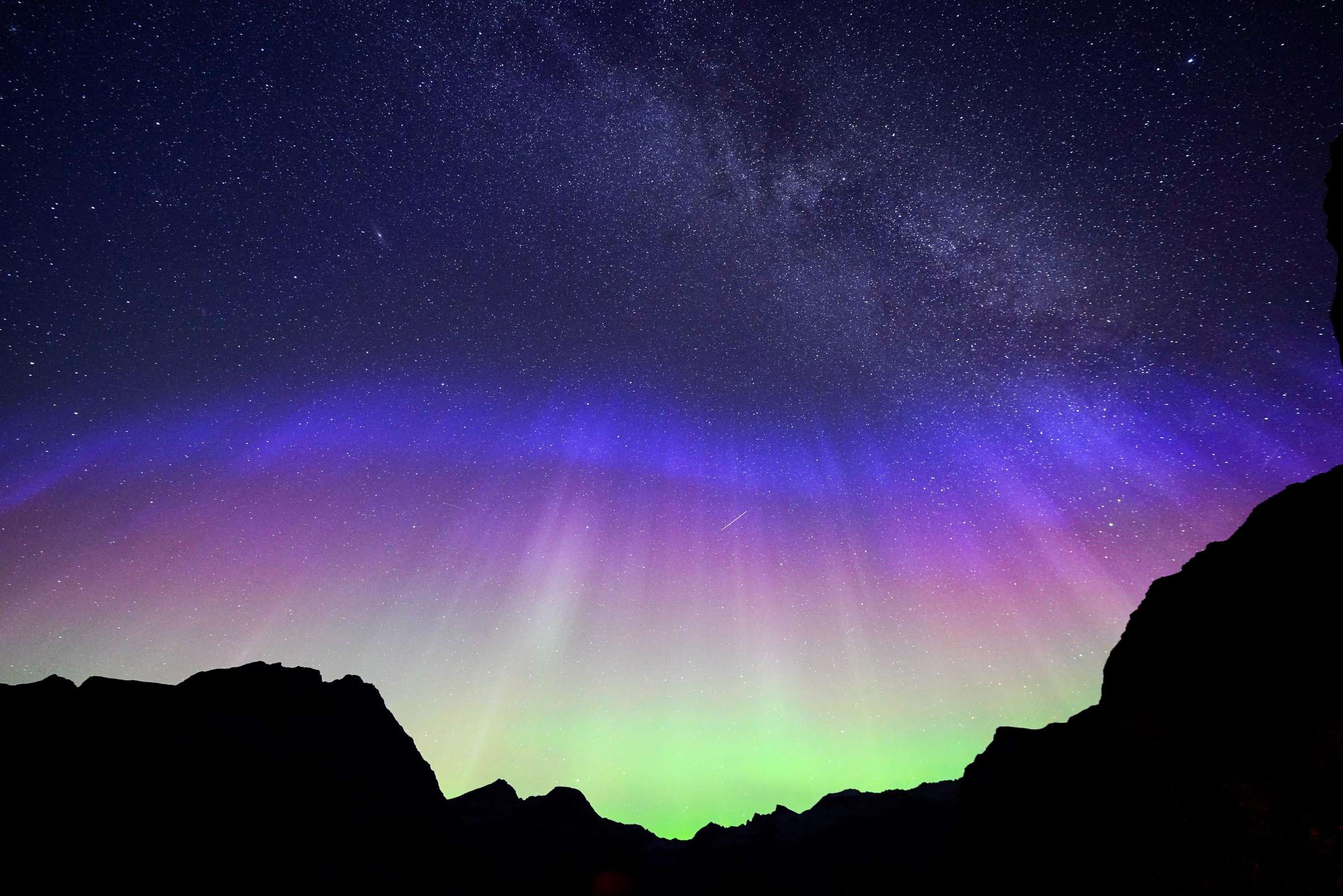
September is the gentle entry: average lows of 5 to 7 degrees, no snow, and a fleece and a good jacket will do. October sits near freezing.
From November through March, coastal night lows run 4 to 8 degrees below zero, and a clear night, the night you actually want, drops to -10 to -15 in town.
Standing still is what makes it brutal. Your body stops generating heat when you wait motionless for the sky to perform, so even a mild coastal wind makes it feel far colder than the number says.
Inland is another world. A chase that pushes to Skibotn or over the Finnish border can meet temperatures of -25 to -30. That is the price of the clear skies in the last chapter, and it is why thermal suits and a hot drink between stops are not luxuries.
The Tromsø: Northern Lights Tour with Minibus, and Free Photos handles this well: a thermal suit and hot chocolate come included, you ride a new minibus, and a guide briefs you honestly on the night's conditions before you commit.
you only need wool layers underneath
keep them in an inner pocket until you shoot
slip-on ice grips matter more than one heavy coat
Phone and camera batteries are part of the cold equation too. Below -15, a smartphone can shut down in under fifteen minutes even showing half its charge, so keep it in an inner pocket until you need it.
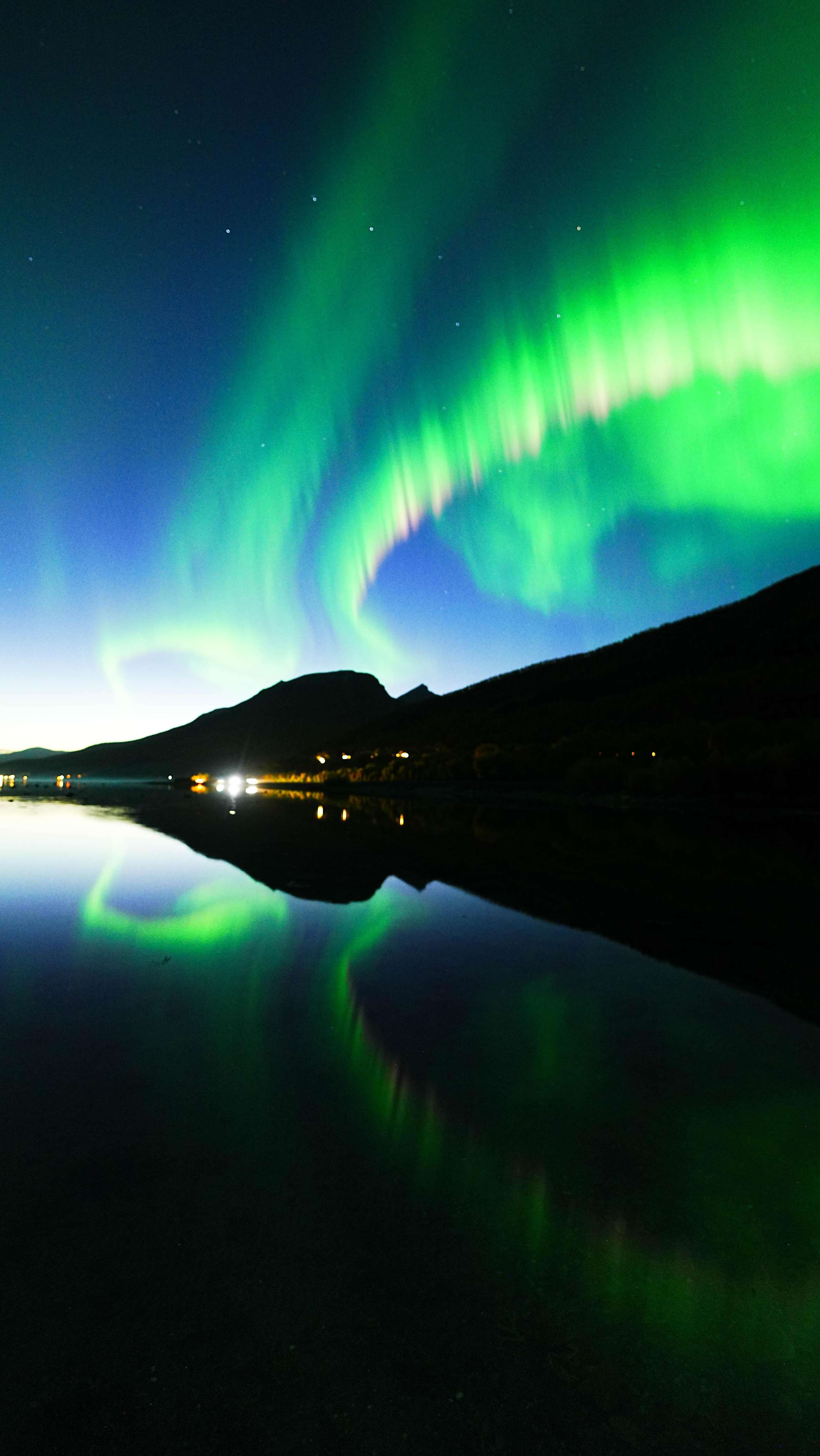
Snow changes the trip. January, February and March are the months with reliable cover for daytime dog sledding and snowmobile runs alongside dark evenings for a chase, and January to mid-March is the most dependable stretch of the whole winter.
The daylight math works in your favour here. January gives you deep snow and 15 hours of darkness but under 2 hours of daylight, so everything happens in the dark.
February and March offer 7 to 12 hours of daylight for daytime tours while keeping 8 to 12 dark hours for the evening chase. That is the window where you can do both in one day without feeling robbed of either.
Book too early and the snow is not there yet. In November and early December, cover is often too thin for snowmobile tours to run. By April, full darkness is leaving.
The sledding and snowmobile evenings come from camps in the Tamok Valley, about 90 minutes from the city centre, and are booked separately from the chases on this page. If snow is thin, those camps can cancel for safety and offer rescheduling, an alternative or a refund, and some run wheeled carts instead.
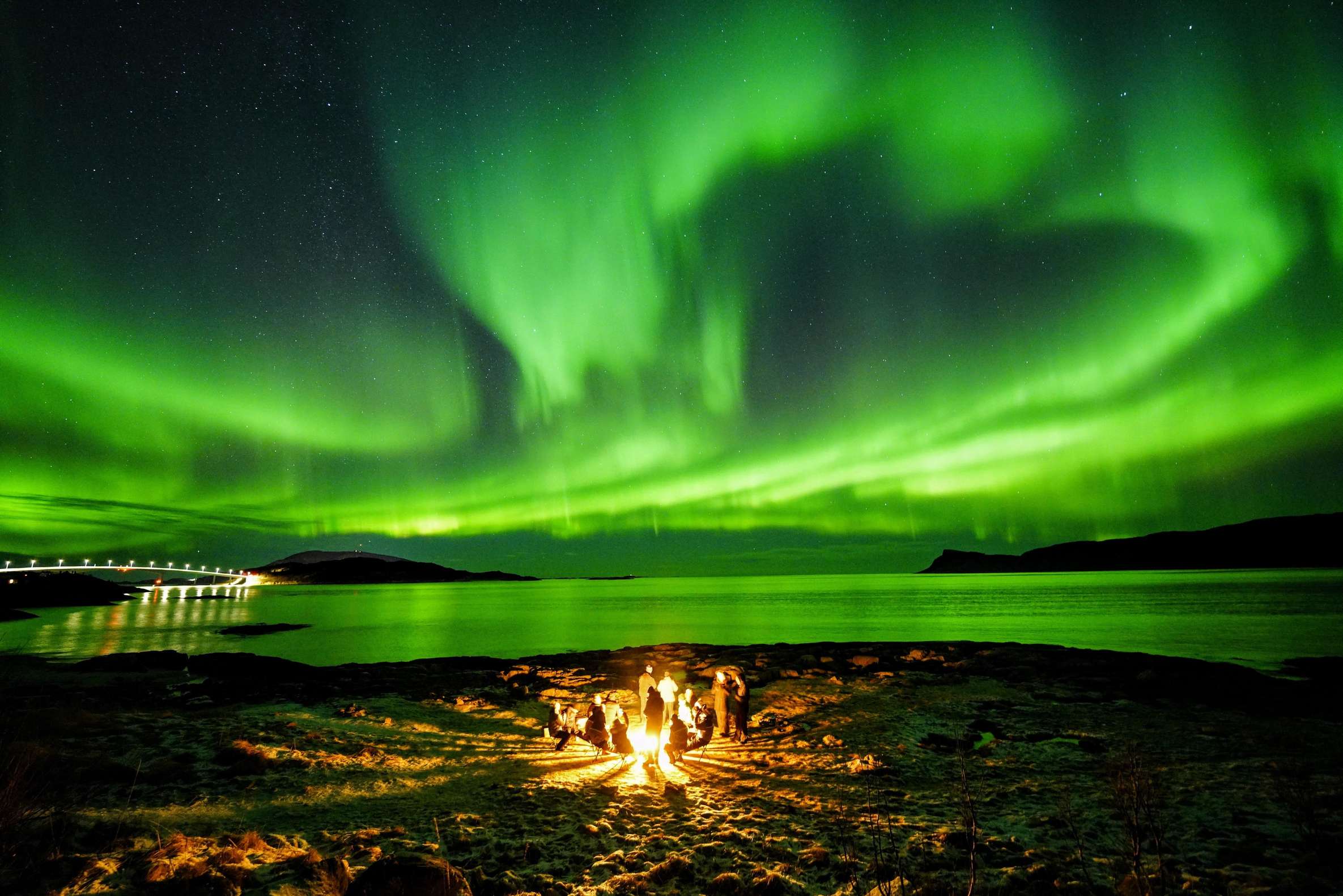
Two surges hit the Tromsø winter. The big one runs from about 20 December to 7 January: hotel rates jump 40 to 60 percent above the winter baseline, flights fill completely, and small-group aurora tours book out weeks to months ahead.
The second lands in mid-February, week 8, when Norwegian and European school holidays send families into the same hotels and activities.
Dog sledding feels it most. Through December to February, evening dog sledding tours typically sell out 2 to 4 weeks ahead, Christmas and New Year departures 6 to 8 weeks ahead, and February dates 4 to 6 weeks out.
The quieter windows are easy to name. October carries moderate crowds well below peak winter levels. Late January, after the holidays clear, and most of March, once week 8 has passed, give you good skies without the crush.
The chases themselves hold a single price all winter, so your travel dates move the hotel and flight bill alone. Book the small-group vehicles early anyway; they are the first thing to vanish in the peak weeks.
Norwegian holidays anchor those crowds: Christmas Eve, Christmas Day, St Stephen's Day and New Year's Day close the country down, and the school calendar sets week 8. Plan around them and the rest of winter stays open.
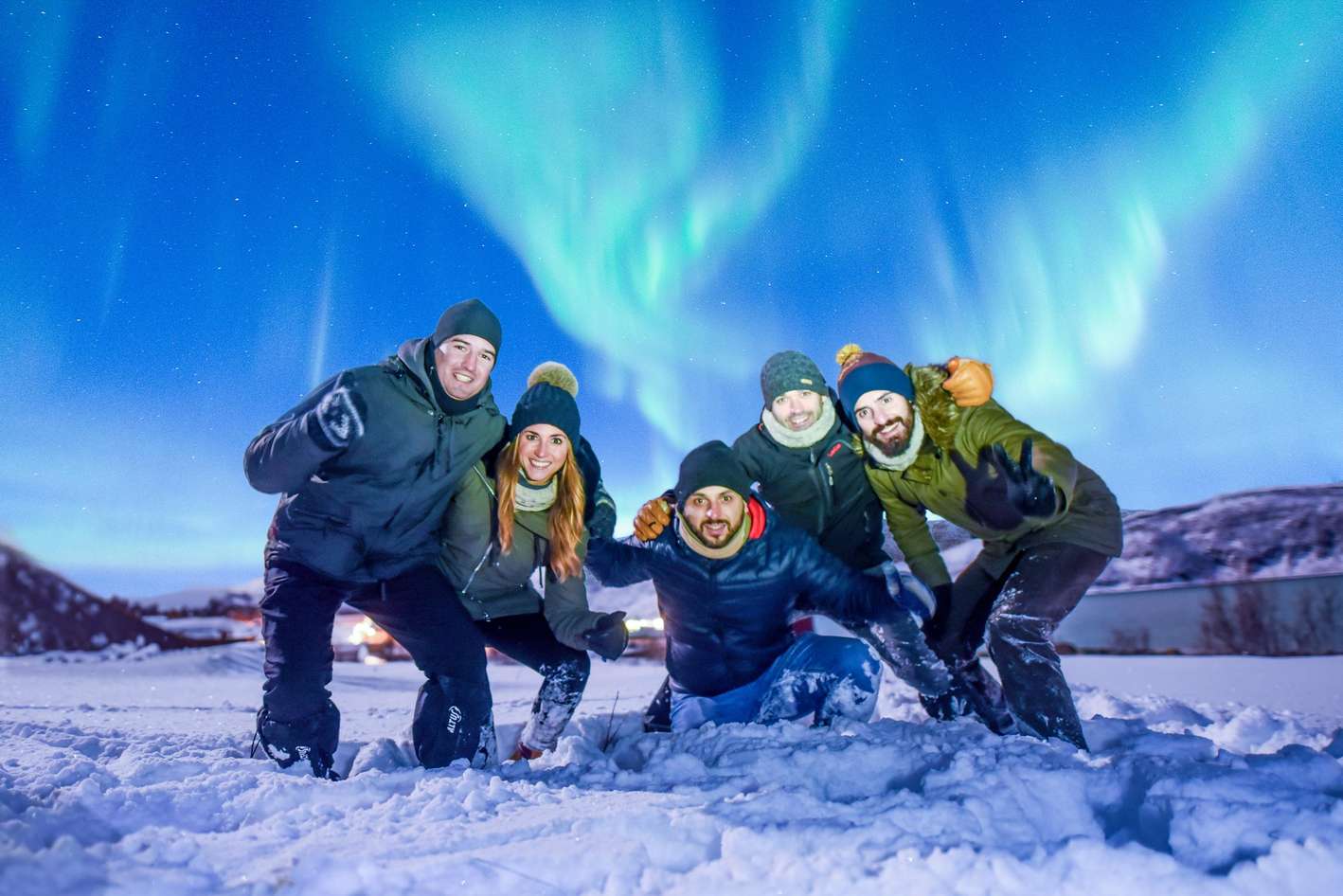

The sun does not rise in Tromsø from about 27 November to 15 January. That is the part people fear, and the part that matters less than they think.
The city is never in total blackness. Roughly four to four and a half hours of twilight settle around midday, typically from about 9:30 am to 2 pm, painting the snow in soft blue and pink. Locals do their shopping and their sightseeing in that glow.
Then the evening comes early. The sky turns dark enough for aurora from about 3:30 pm, which means a chase can start while visitors further south are still eating dinner.
The sun climbs back above the horizon around mid-January, though the surrounding mountains keep direct sunlight out of the city centre until later in the month.
So the polar night trades daylight for darkness, and darkness is exactly what an aurora trip needs. If your days are for museums, cafés and short walks in twilight, and your nights for the lights, December gives you more of both than any other month.
None of the figures change the advice: darkness is not the problem in December, cloud is. Pick your dates for skies, and let the long dark hours work for you.
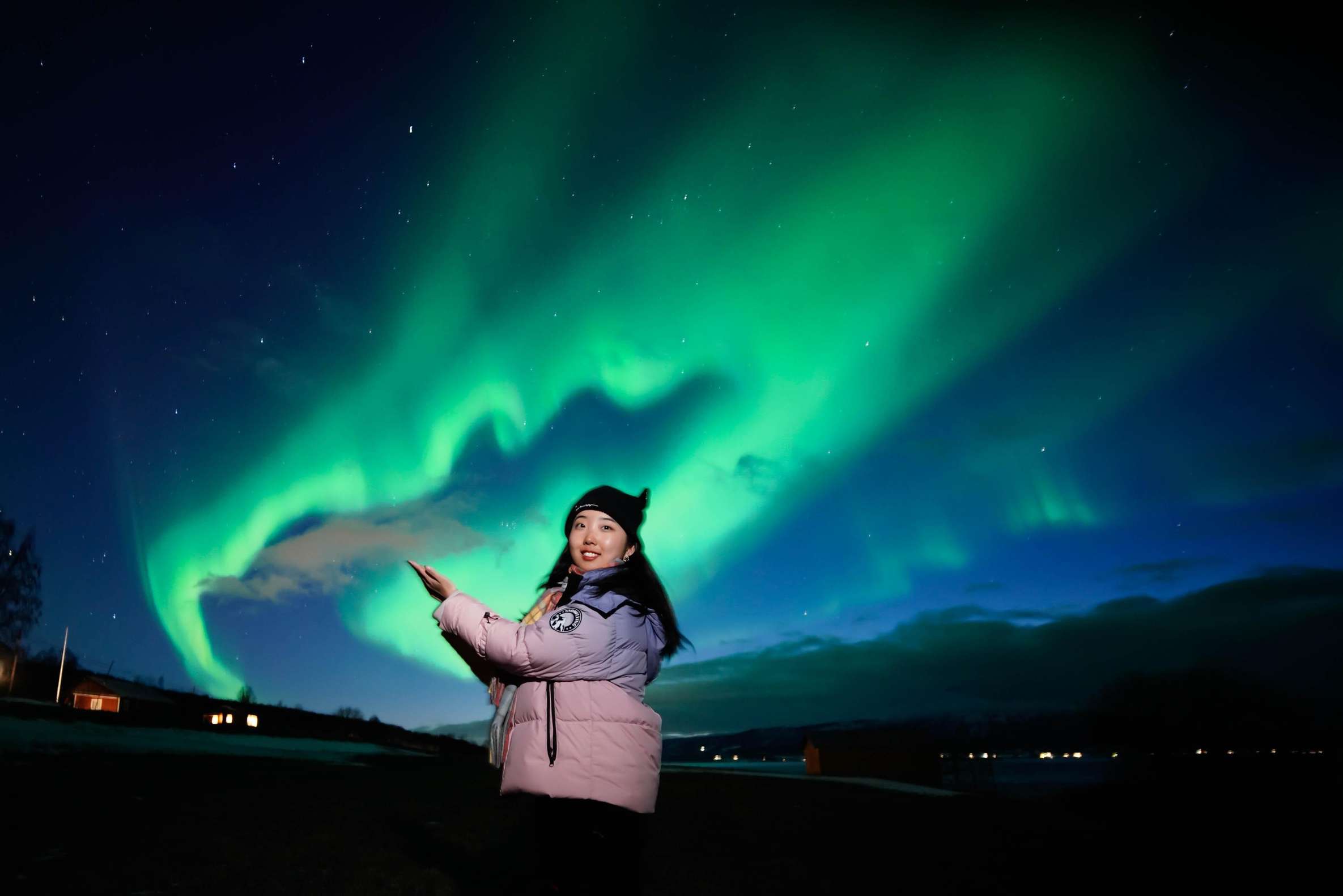
The auroral oval sits directly overhead closest to 11 pm local time, which makes 9 pm to 1 am the peak window. Displays can appear any time the sky is fully dark, from around 6 pm to 2 am, but the strongest and most frequent outbursts cluster around that magnetic midnight.
The shape of the evening follows from it. A typical chase runs about 4 to 4 and a quarter hours door to door, with roughly 25 to 30 minutes of driving each way when the skies stay close. On cloudy nights the vehicle pushes further, and the evening stretches accordingly.
That gives you a simple way to read any departure time. A 6 pm start puts you in position for the early dark hours and holds you through the peak. Later departures lean entirely on the strongest window and finish closer to 1 am or after.
Plan the evening around that peak window, then fit the tour's start around it. Eat a proper meal before you board, because some chases run long, and a night spent watching the sky goes easier on a full stomach and a rested body than on the tail end of a sightseeing day.
Auroras can appear as soon as the sky is dark, but outbursts are generally less frequent.
Activity peaks around magnetic midnight near 11 pm when the auroral oval sits directly overhead.
Displays taper off after magnetic midnight, but active solar storms can keep skies vibrant.
The peak window is also why most chases run six hours: they hold you through magnetic midnight before turning home. Choose a departure that keeps you out past 11 pm, and the tour's clock works in your favour.
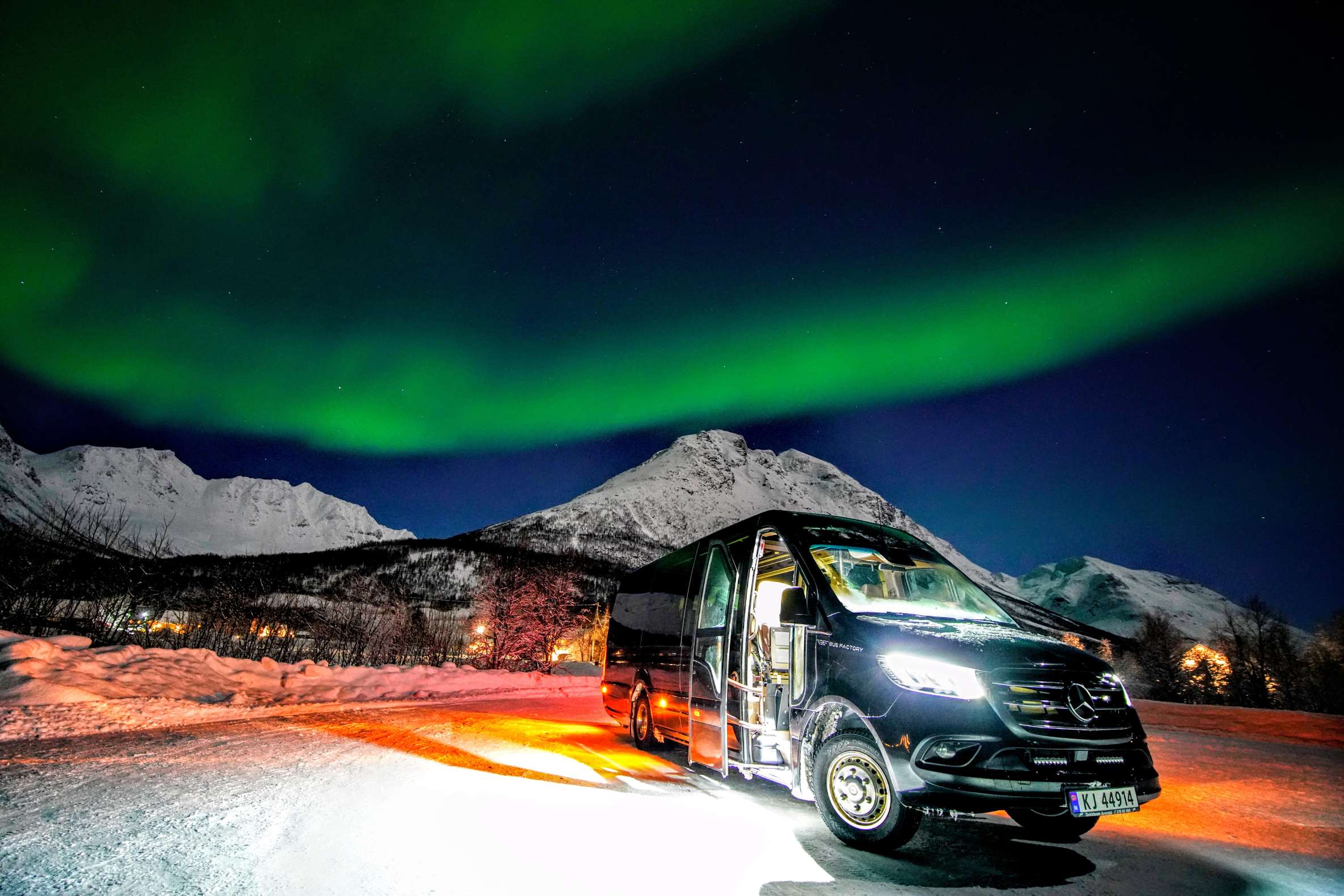
Layers decide whether you enjoy the wait. Pack wool base layers, winter boots, a hat, a scarf and insulated gloves, then let the tour's thermal suit go over the top. Most chases supply the heavy outer layer; nobody supplies your socks.
Documents come next, and this one can stop the trip. Chases that cross into Finland or Sweden require a physical passport or official national identity card, not a phone photo of either.
Anyone can travel between Schengen countries without border checks, but you must carry the required travel document, and a visa if your nationality needs one.
For the camera, manual mode is the whole game: a shutter speed of 3 to 8 seconds, ISO 3200, the widest aperture your lens allows, and a sturdy tripod. Automatic settings produce black frames. Bring spare batteries and keep them in an inner pocket.
Downtown, most tours depart from harbourfront meeting points within a couple of minutes of each other: the Prostneset bus terminal, the Radisson Blu entrance and the quay outside Scandic Ishavshotel.
The pavements there freeze into packed snow and sheet ice from autumn through April, so slip-on ice grips over your boots are worth the small bag space.
Start with the rule behind all of it: no operator can guarantee the lights. If a tour runs as scheduled and the sky stays shut, most operators do not refund. What you bought was the guiding, the transport and the time outdoors.
What varies is what comes next. Some operators give a 50 percent discount on a new tour after a failed first night, others 30 percent.
A few offer a free second chance, and a handful go further with an unlimited retry guarantee: you keep joining chases until the camera catches a clear shot of the lights, for as long as your stay allows.
Structure your trip around that. Book your chase for the first night, so failed evenings leave buffer nights to rebook. Across a 3 to 5 night stay, run chases on two or three nights without gaps, and pick free-cancellation tours you can drop once an early night succeeds.
The Tromsø: Northern Lights Chase + Unlimited Free Retry Option is the tour that answers this chapter. Professional photos come included either way, and the unlimited guarantee turns a cloudy first night into a second boarding at no cost.
| If this happens | What happens then |
|---|---|
| Blizzard or unsafe roads cancel the tour outright | you get a full refund or a new date |
| The tour runs but the lights never show | no refund by default; some operators give 30 to 50 percent off a second chase |
| The camera catches no clear shot on your chase | with the Unlimited Free Retry Option you join another chase free, as often as your stay allows |
Whichever line applies to your night, the move is the same: book early dates you can cancel, chase on night one, and let a retry guarantee carry the risk of the weather.
Winter gives you a second show in the fjords. Humpback whales and orcas follow the herring in from November through January, then the fish disperse and sightings drop off sharply in February.
November carries the highest concentration of whales alongside long dark nights. If whales are on your list, that three-month overlap is the only one that exists.
December and January stack everything at once: snow for daytime activities, 15 to 16 hours of darkness for the chase, and whales in the fjords. That completeness is also why those weeks book out first.
The harbourfront where your tours start rewards a slow hour. Strandtorget and Kirkeparken sit a couple of minutes away, the Northern Norway Art Museum is close by, and the streets carry Roald Amundsen's name on more than one monument.
From the airport, the express bus reaches these hubs in 15 minutes, a taxi in 10 to 16.
For a five-night stay, keep the pattern simple: chase the first night, leave one evening unbooked as a buffer, spend a day inland or on the water, and hold the last day free to rebook whatever the weather cancelled.
That rhythm leaves the last evening free for exactly the thing this page is about: one more clear night, and one more chance at the lights.
Any month from October to March can deliver the lights, but February and March give you the best odds with daylight to spare. October quietly matches them on clear nights with milder air and thinner crowds.
The month sets the stage; a mobile chase that drives inland decides the night. Stay four to five nights, chase from your first evening, and carry a passport.
Chasing the lights comes down to weather, not dates: see how mobile hunts outdrive coastal cloud in any month.
Minibus chases reach the narrow inland roads where clear-sky odds climb, campfire and photos included.
On cold midwinter nights, a big coach gives you a heated cabin, an onboard toilet and a lower fare.
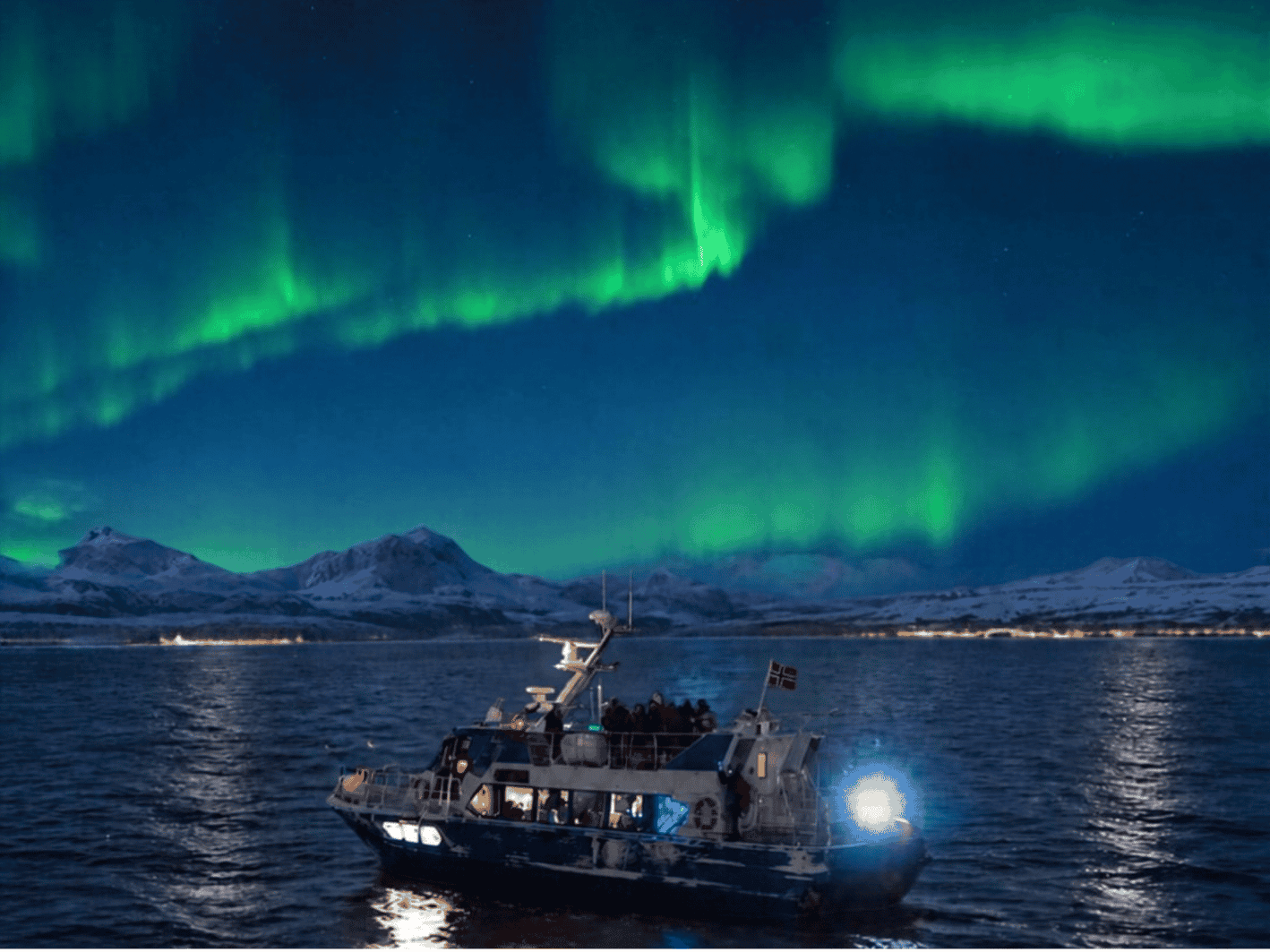
Watch the aurora from a heated fjord cabin and step on deck only when the crew spots the lights.
Small groups board faster and stop sooner: worth weighing against coach prices in the busiest weeks.
Travelling in the crowded holiday window? A private minivan keeps your party away from the tour crush.
Cloud can waste any night you book: compare second-chance and unlimited-retry tours before you commit.
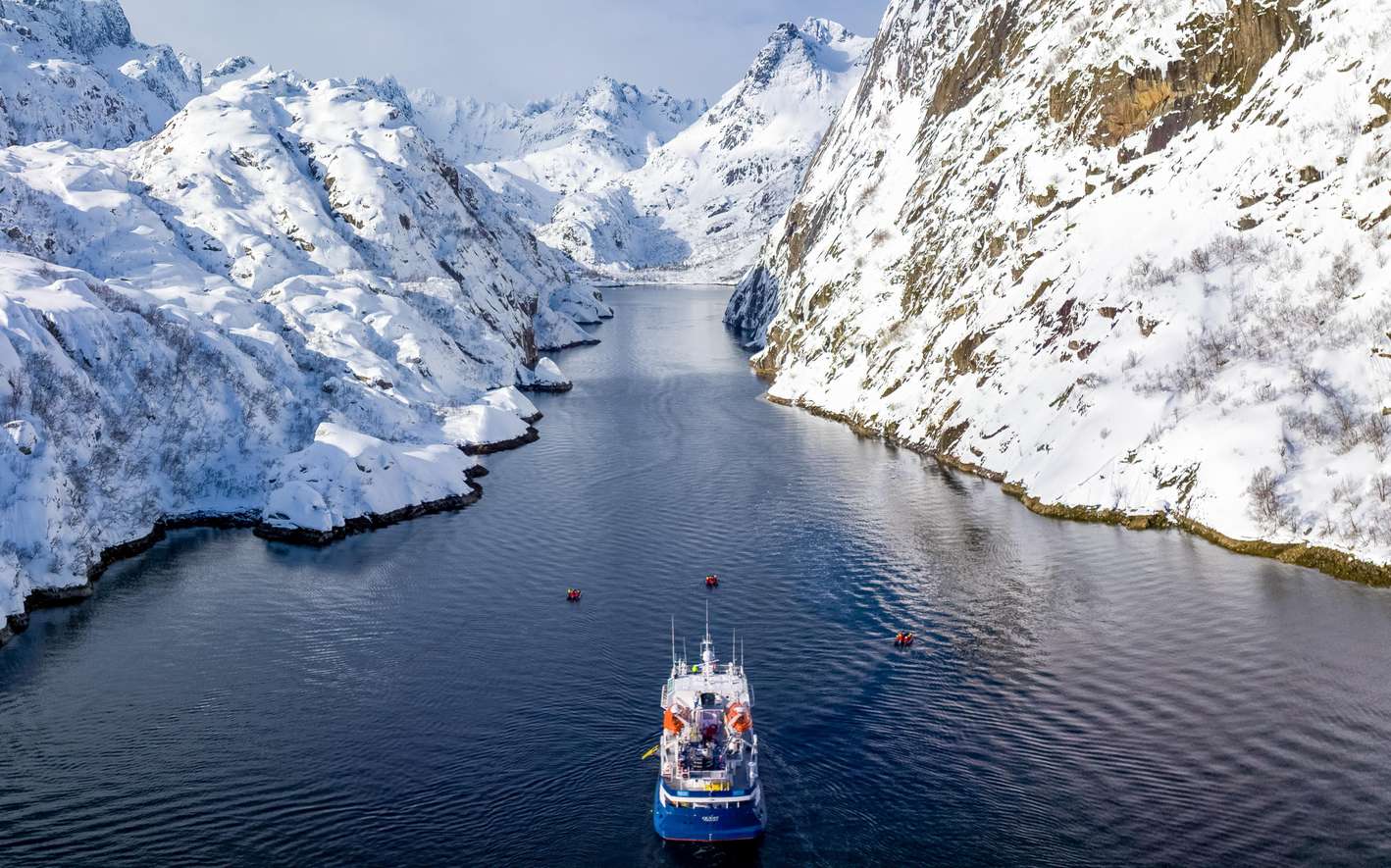
Once your dates are set, a multi-day package bundles chases, snow activities and stays into one plan.
The short answers to the questions travelers ask most before picking their dates.
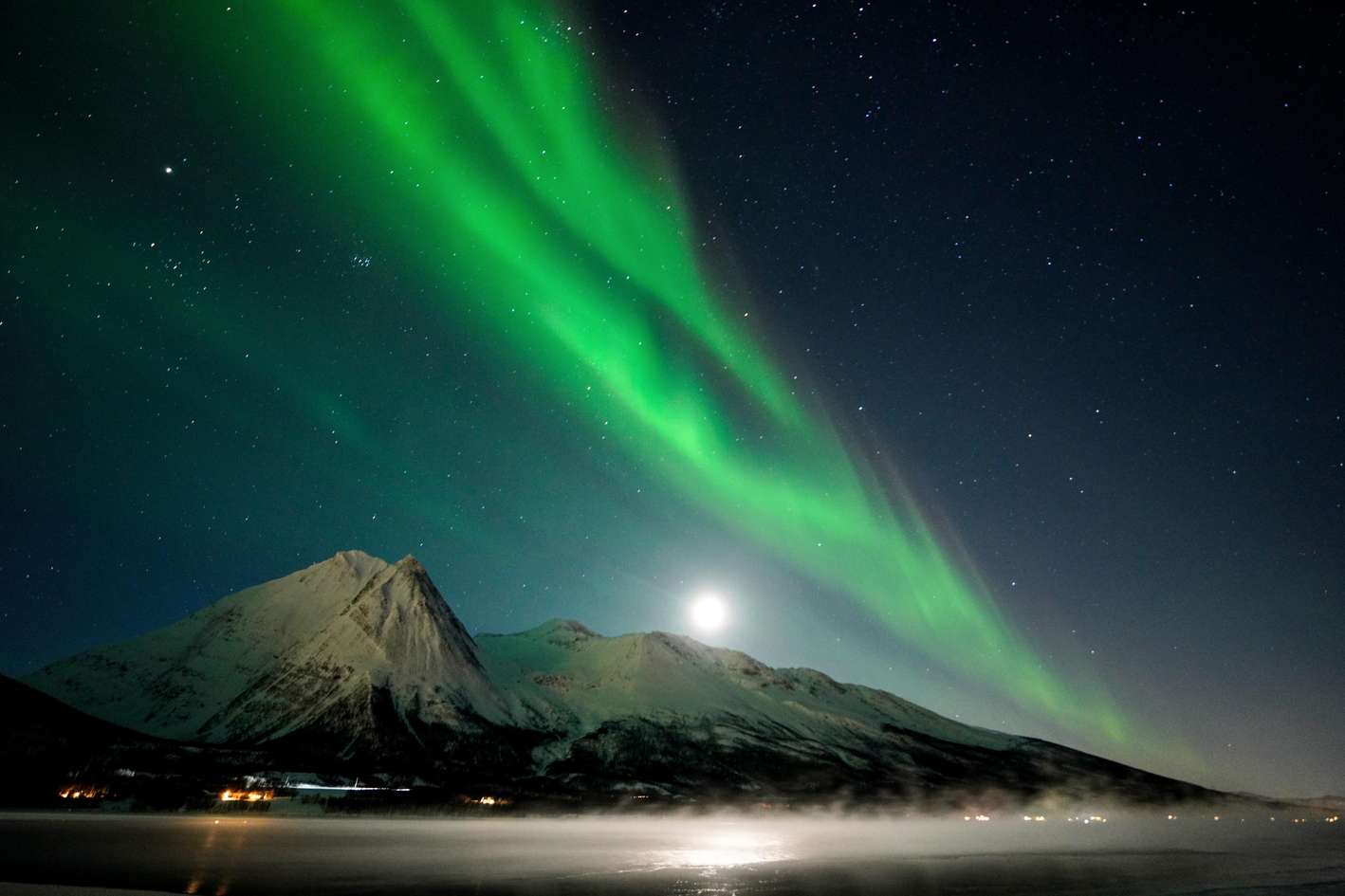 Tromsø2026
The dark-sky season runs from around mid-September to late March, when the sun drops far enough below the horizon for true darkness. Tours also run in the partial twilight of late August and early April.
February and March give the strongest combination: dark nights, snow cover, and 12 to 15 clear dark nights within chase driving distance. February has 12 hours of darkness a day, and March adds daylight back for daytime activities.
Yes. October has 10.6 hours of full darkness a day, and while the town itself averages only 5.3 clear dark nights, chases within about 75 km reach an average of 15. Crowds stay moderate and snow has not yet made the roads difficult.
The lights need both solar activity and a cloudless sky. Tromsø sits under 85 to 90 percent cloud cover on many winter nights, so thick cloud hides the aurora no matter how high the forecast reads.
Plan at least 3 to 5 nights. A 3-night stay gives a 51 percent chance of one clear night at a fixed spot, while mobile chases that drive inland find clear skies on 93 percent of departures.
The week around Christmas and New Year, roughly 20 December to early January, brings the sharpest surge: hotel rates 40 to 60 percent above normal and small-group tours booked out weeks ahead. Mid-February, during the Norwegian school holiday, is the second busiest stretch.
January, February and March are the months with reliable snow for daytime dog sledding and snowmobile trips alongside evening chases. In November and early December the snow cover is often still too thin for snowmobiles.
September and October lows sit around 0 to 7°C. From November to March coastal nights average -4 to -8°C, clear nights drop to -10 to -15°C, and chases inland toward Finland can hit -25 to -30°C. Standing still makes it feel colder, so layer up properly.
Between 9 pm and 1 am, with peak activity around 11 pm local time. Displays can appear any time the sky is fully dark, from about 6 pm to 2 am.
No. Bright moonlight can wash out very faint bands, but it lights up the snowy mountains and fjords for photos. Around the new moon the skies are darkest and the aurora looks stronger.
Often, yes. The Lyngen Alps block the coastal moisture, so inland valleys and Finland clear on far more nights than town. Chasing inland raises the odds to 12 to 16 clear nights a month from October to March, against 2 to 5 in the city.
It is worth doing. Booking your first chase for the first evening of your stay leaves you spare nights to rebook if the weather turns, so pick your dates and reserve ahead before the small-group tours fill.
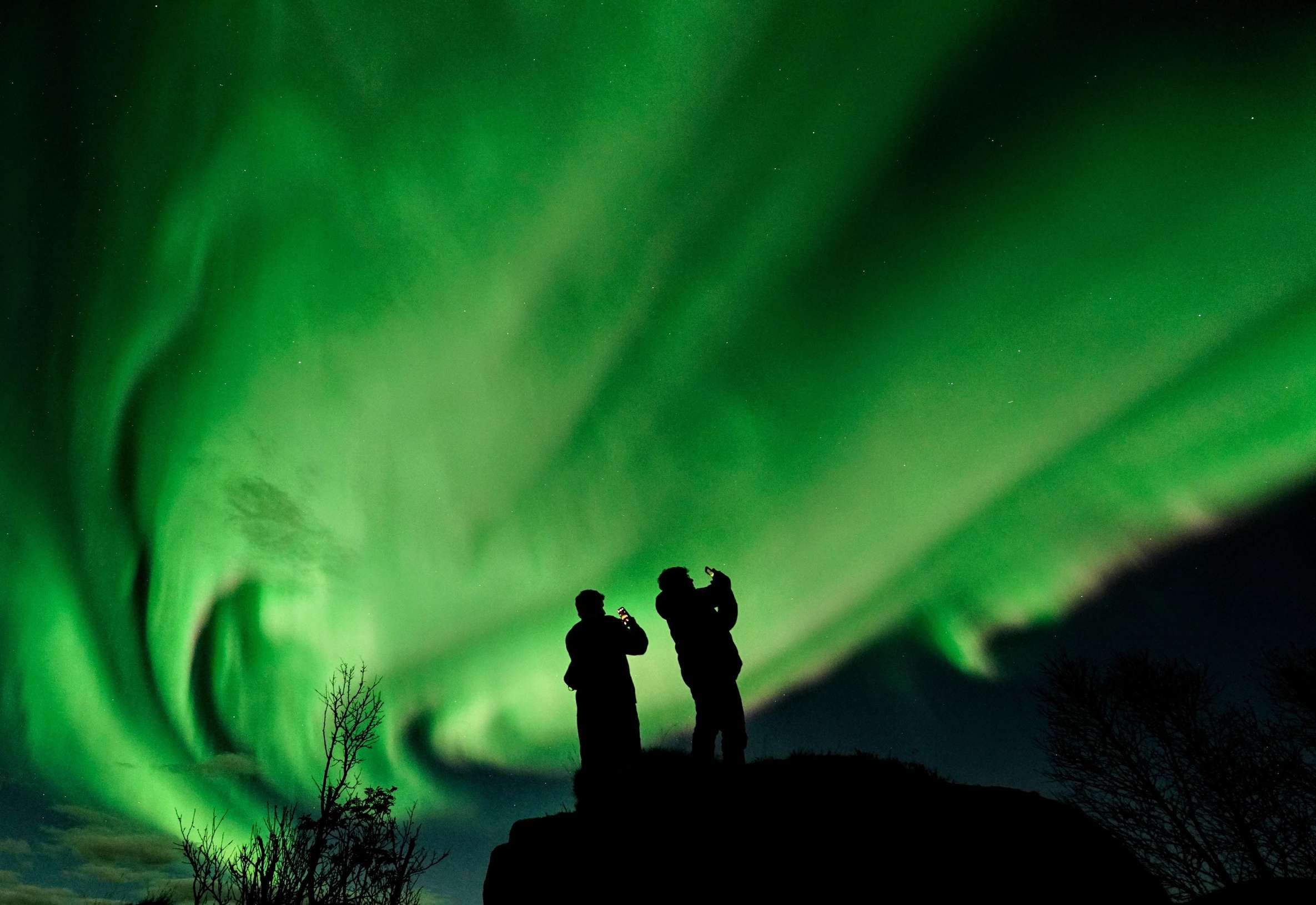
Book this six-hour minibus chase with free photos, thermal suits and hot chocolate, and cancel up to 24 hours in advance for a full refund.