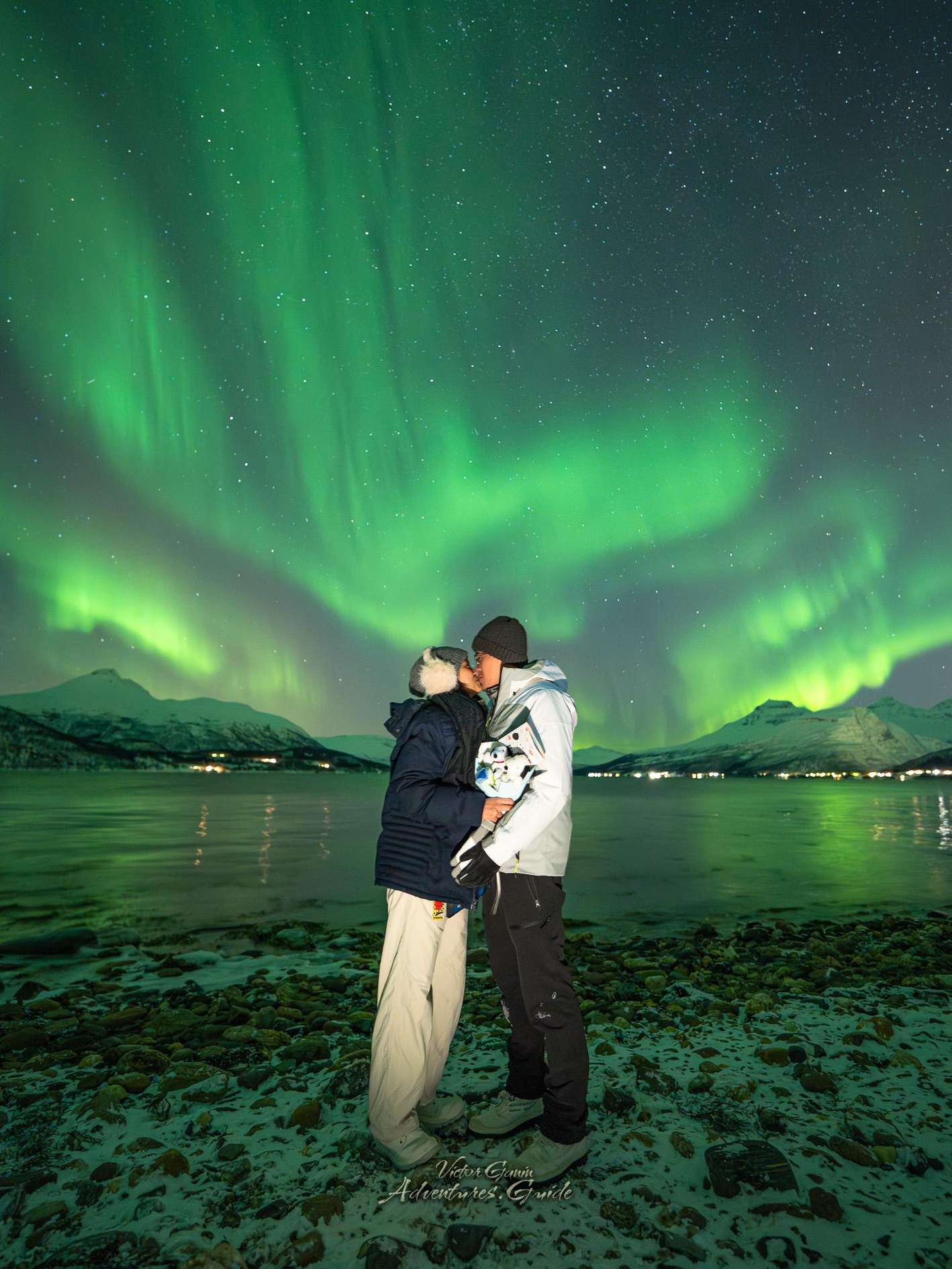
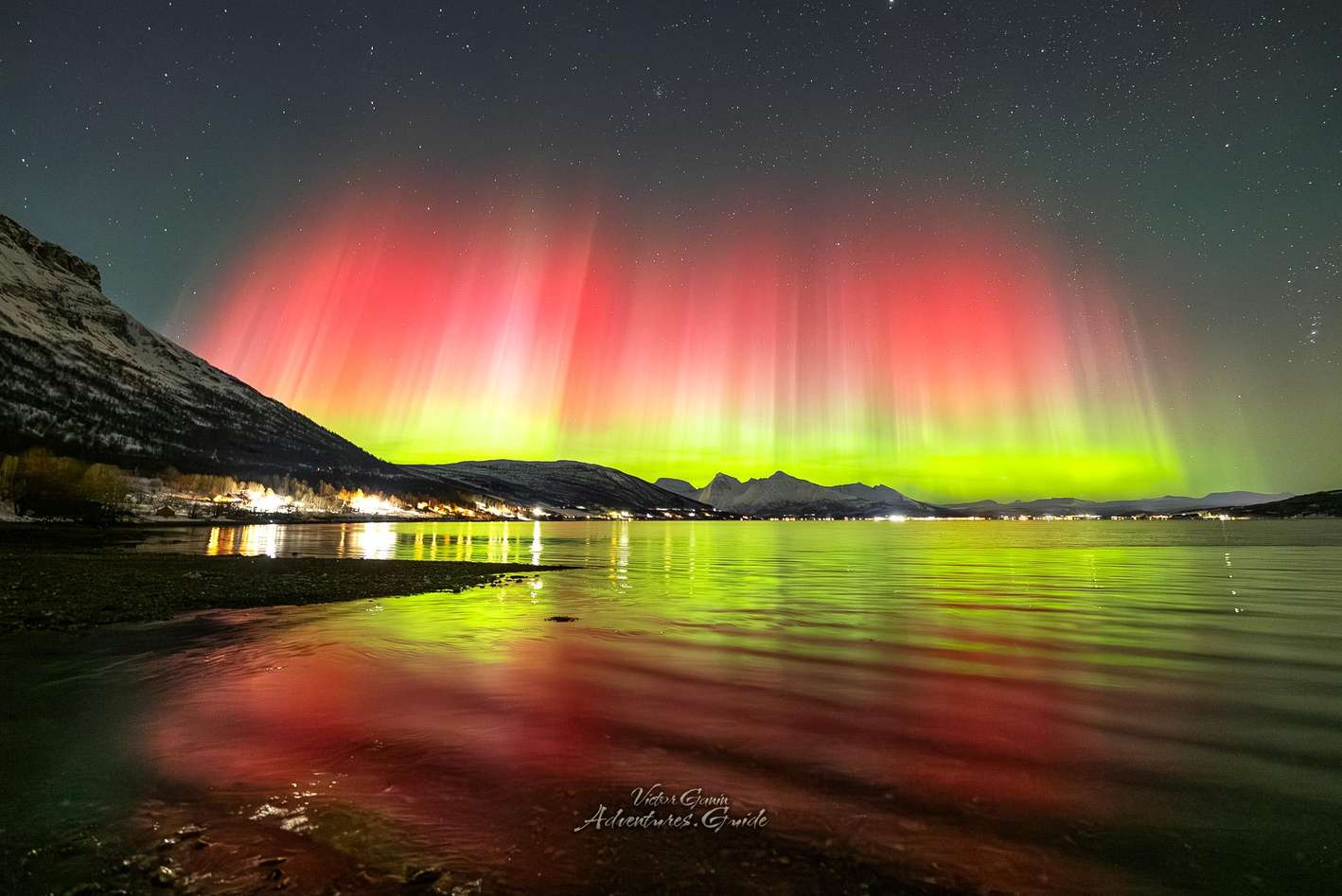
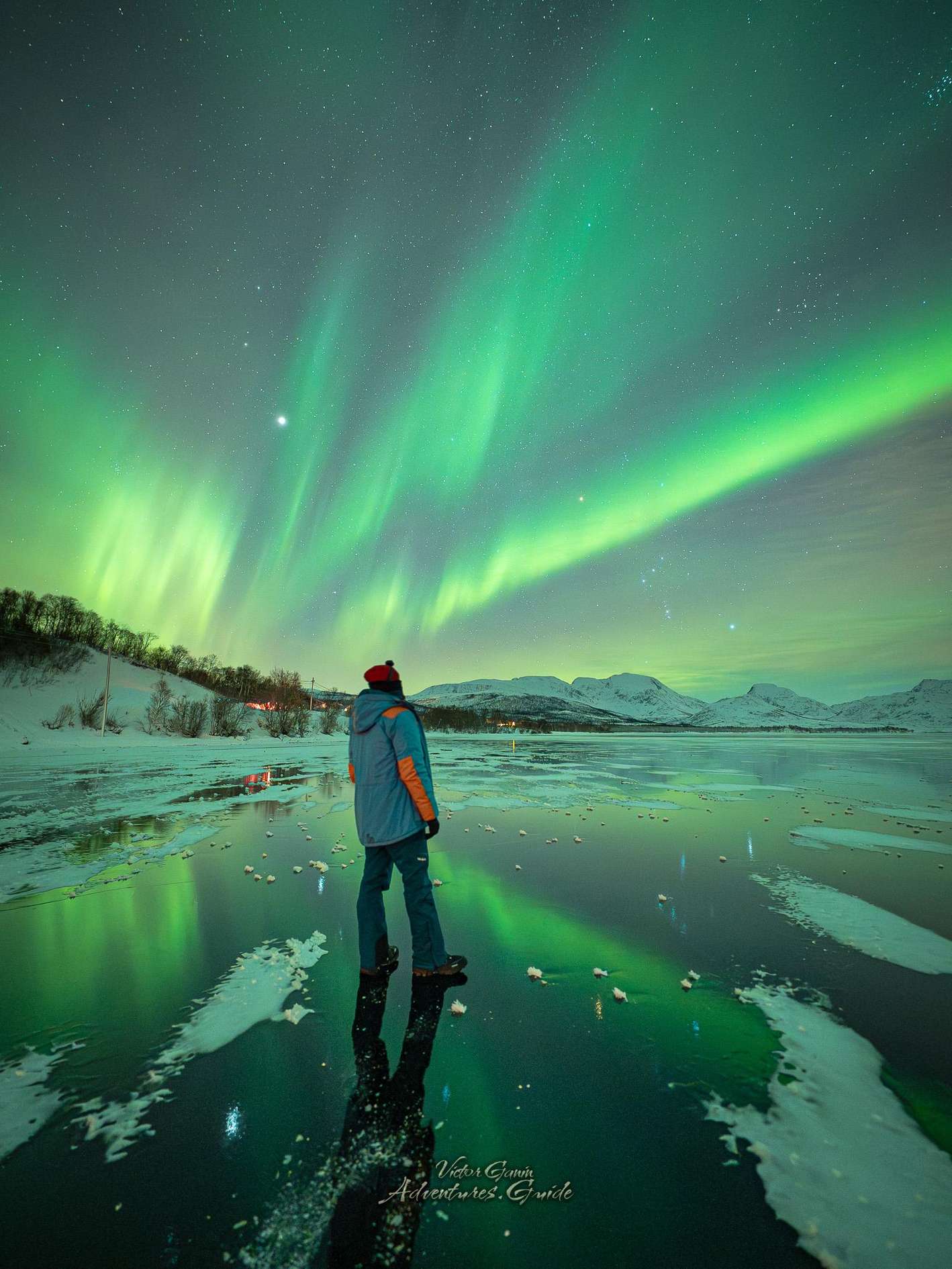
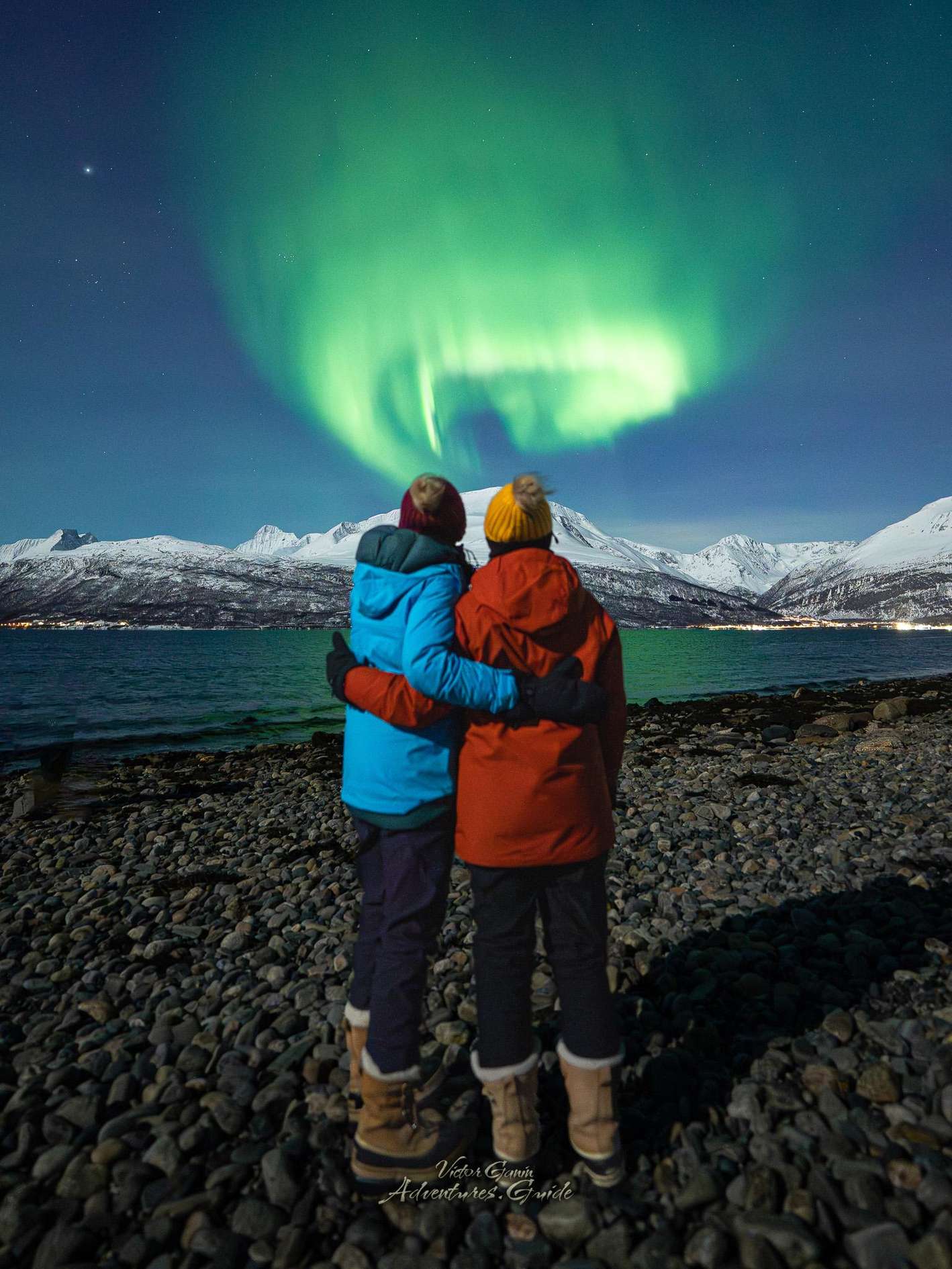
11,260 photographers got their keeper aurora frame
Tromsø Northern Lights Photography Tour - Photo Excursion with Guide and Portraits
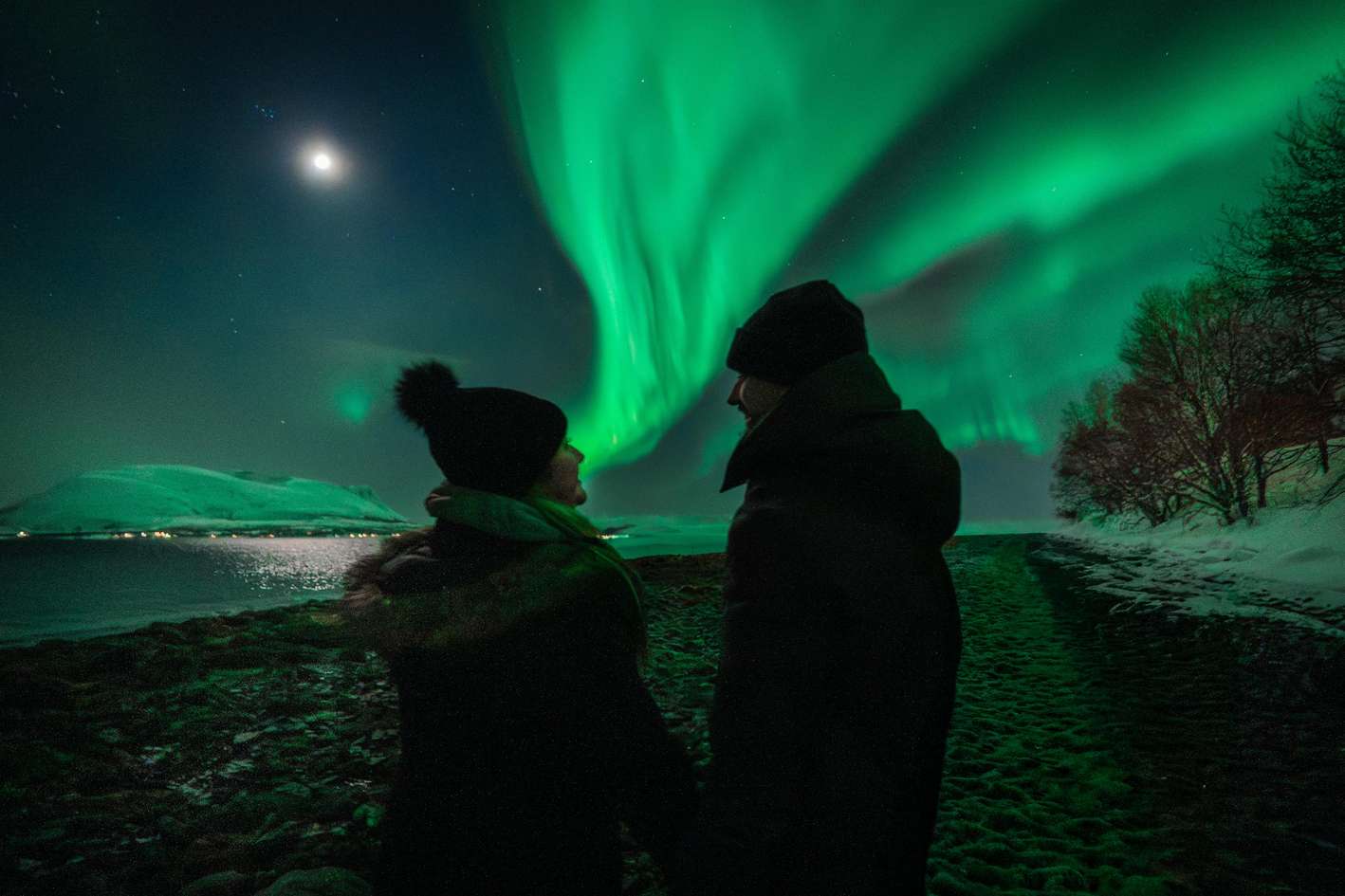
Book a Tromsø northern lights photography tour and stop hoping your camera gets it right. Learn manual settings, ISO and composition from a guide who shoots the aurora every night, use a provided tripod, and go home with professional portraits of yourself under the lights. Six hours, thermal suits, soup by the campfire. Pick your night now.
4.8★average rating11,260traveler reviews100%free cancellation42countries travelers came from
Choosing your tromso photography tour
Photography-led aurora outings in Tromsø come in two main shapes: tours built around teaching you your own camera, and tours where the guide photographs you under the lights. Both travel far from the city glow and both hand you a set of pictures afterwards. The difference is how much of the evening belongs to your shutter.
documentSome Tromsø photography tours chase clear skies across the border into Finland or Sweden, and border crossings require a valid physical passport or official national identity card.
Carry your original passport or national ID card on your body, inside a zippered pocket of your thermal suit, so it stays with you at every stop. A photocopy or a photo of the document on your phone will not pass a border check.
Tromso photography tours for the northern lights
Cheapest photo tour
7 hours·English
4.3(876)
Tromso: Northern Lights Photography Tour
The lowest starting price on this page, with a photography tutorial, hot drinks and cookies on a 7-hour coach chase.
What a Tromsø Northern Lights Photography Tour looks like
the loaner tripods don't fit phones
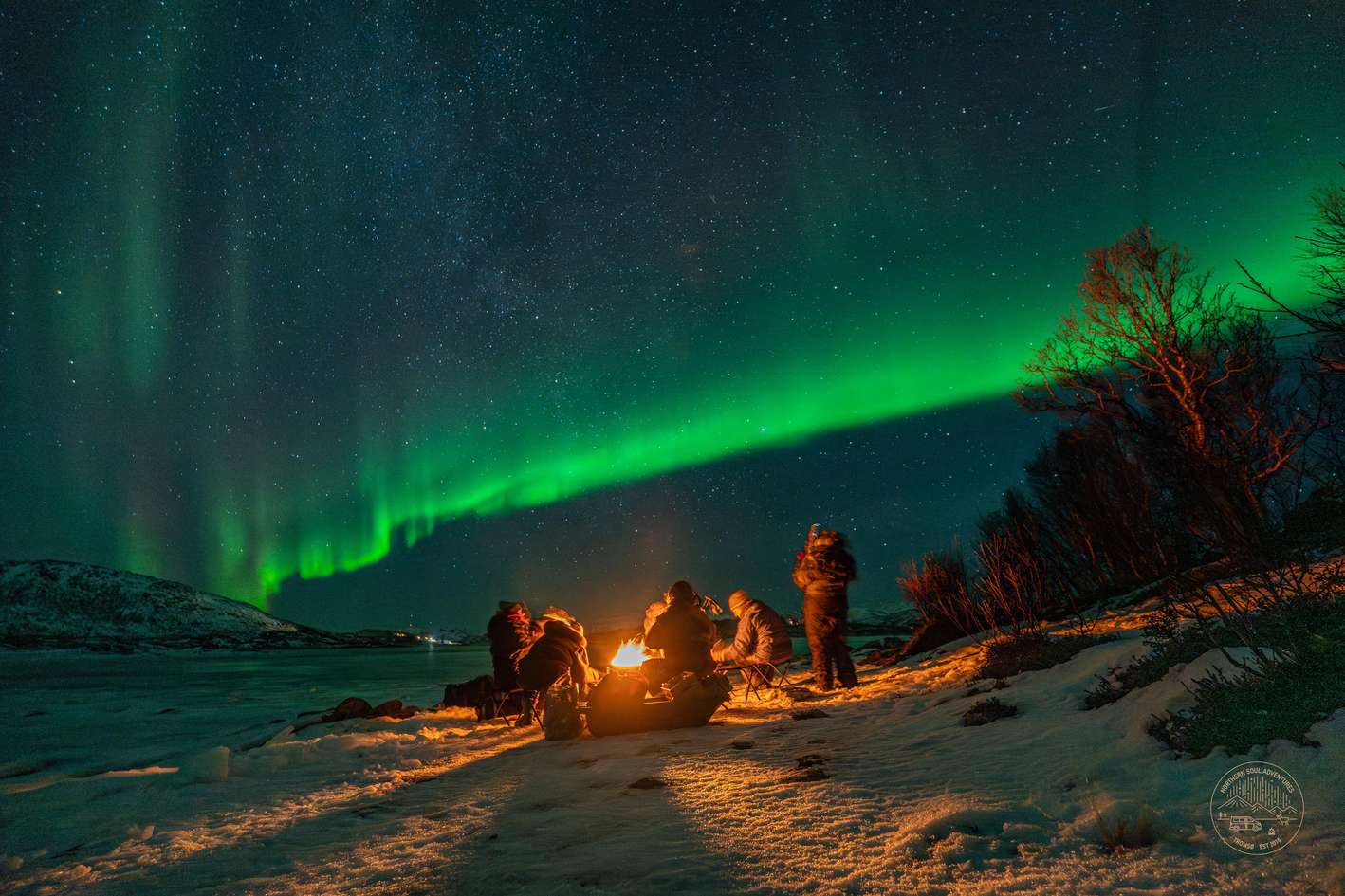
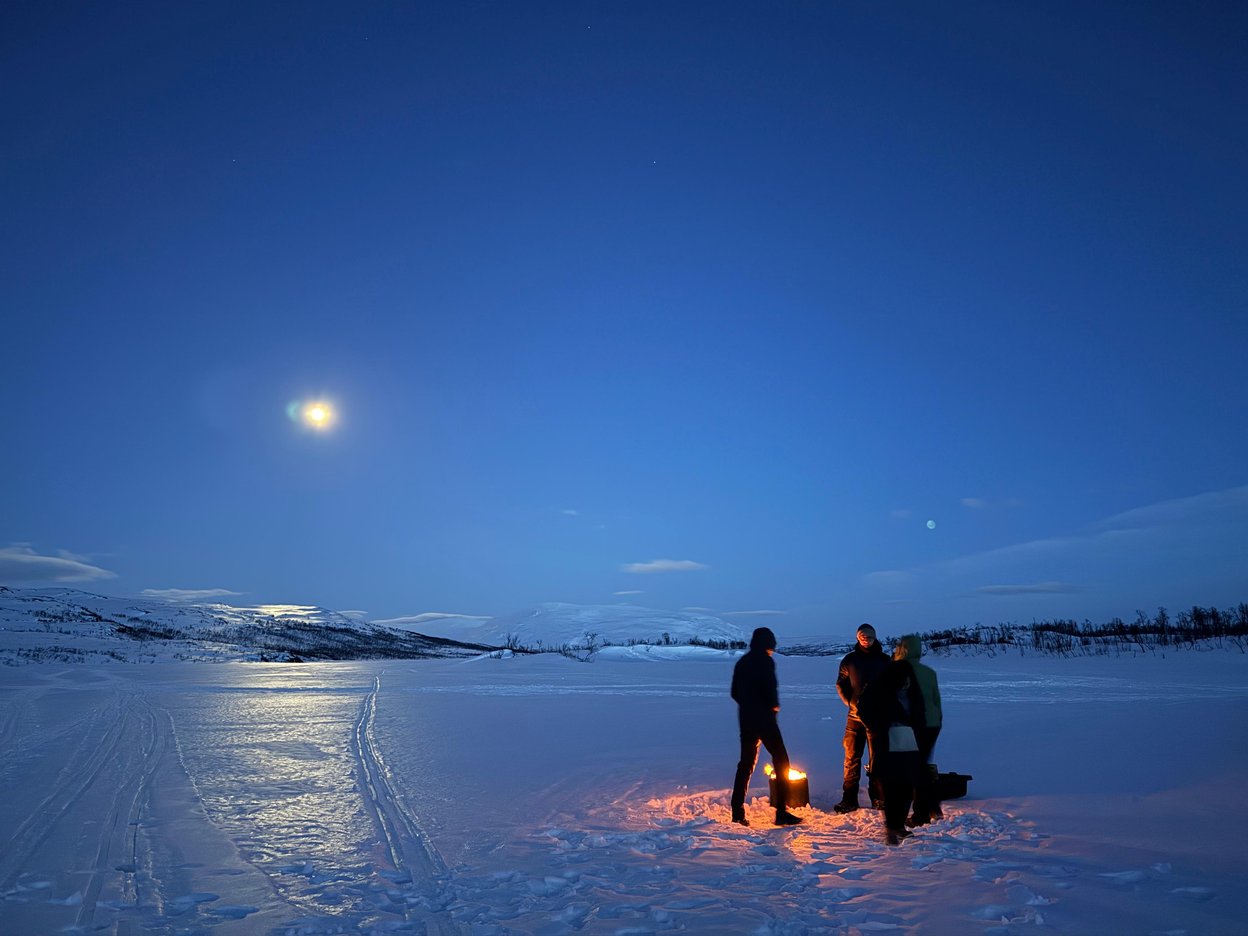
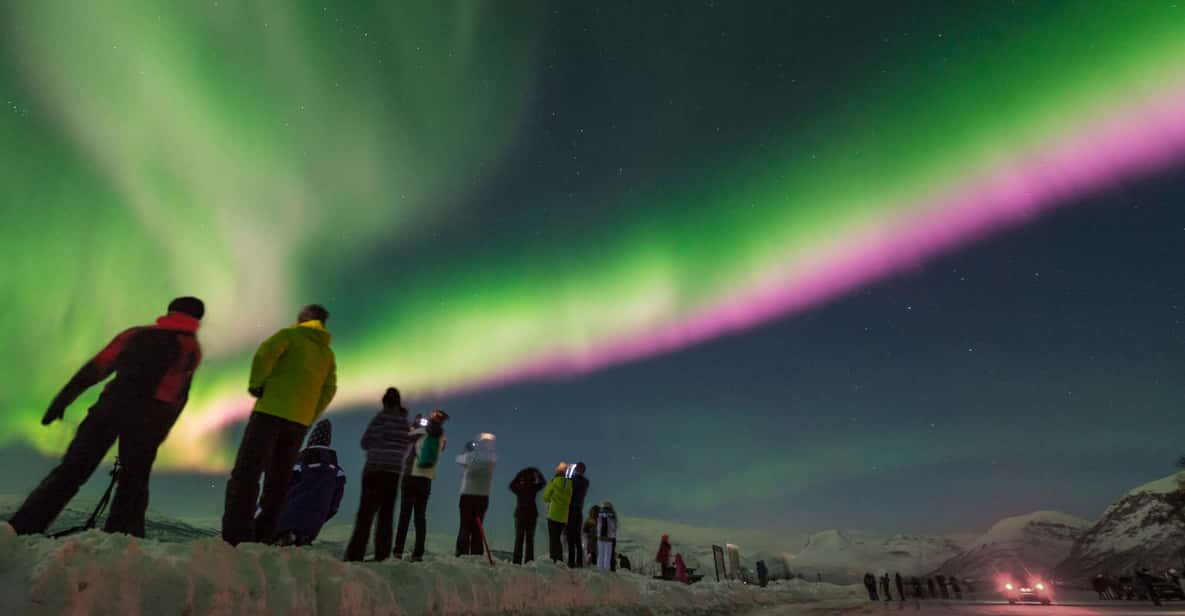
The first thing worth framing is the sky itself. Your guide drives out of Tromsø's city glow into the Arctic wilderness, watching satellite cloud maps and picking the route for that night's conditions. When clear skies appear, you stop at a remote spot away from other groups and set up camp.
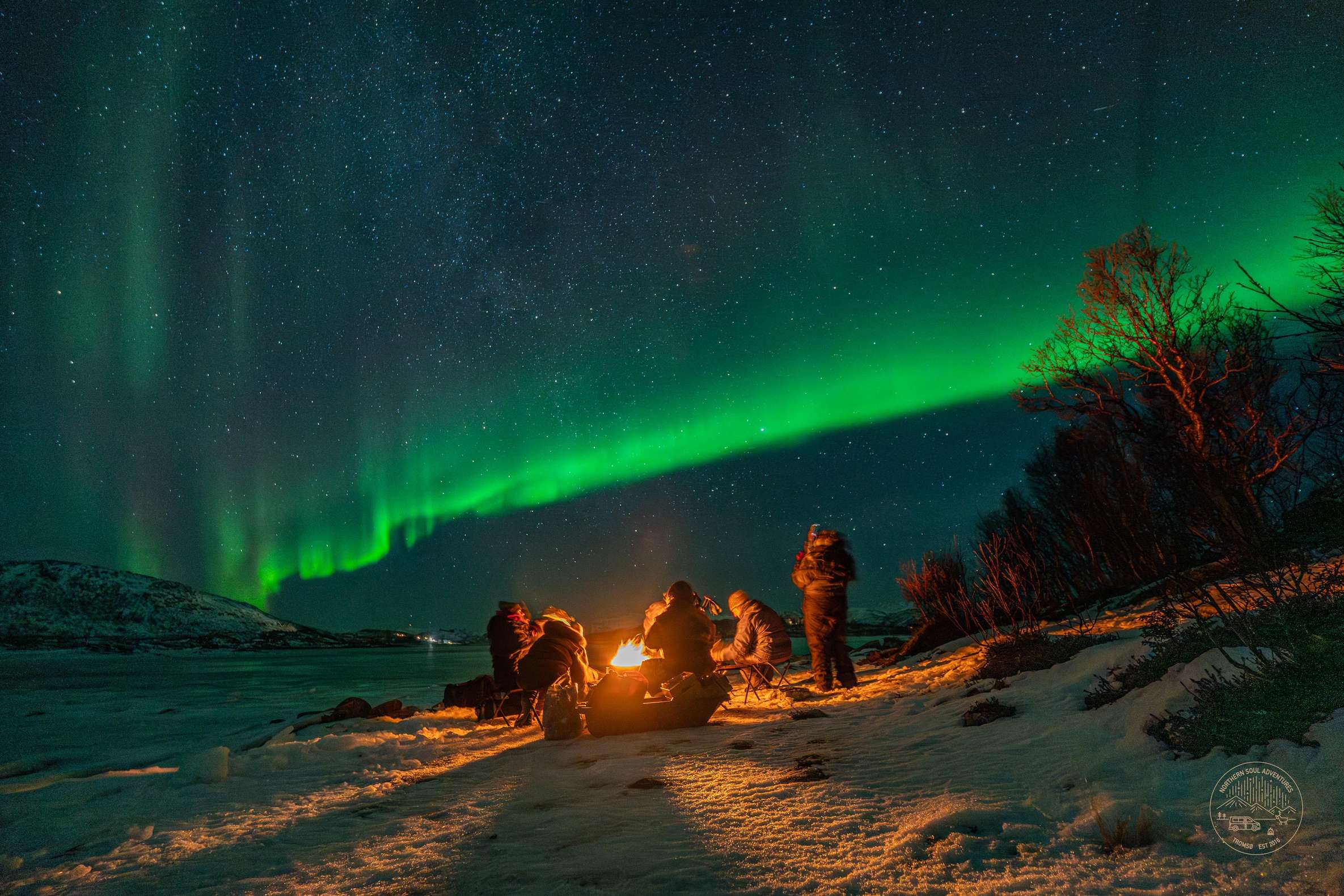
From there the evening belongs to photography. Your guide helps you configure your own camera, lends you a professional tripod and headlamp, and walks you through shutter speed, aperture and ISO while the campfire warms the soup.
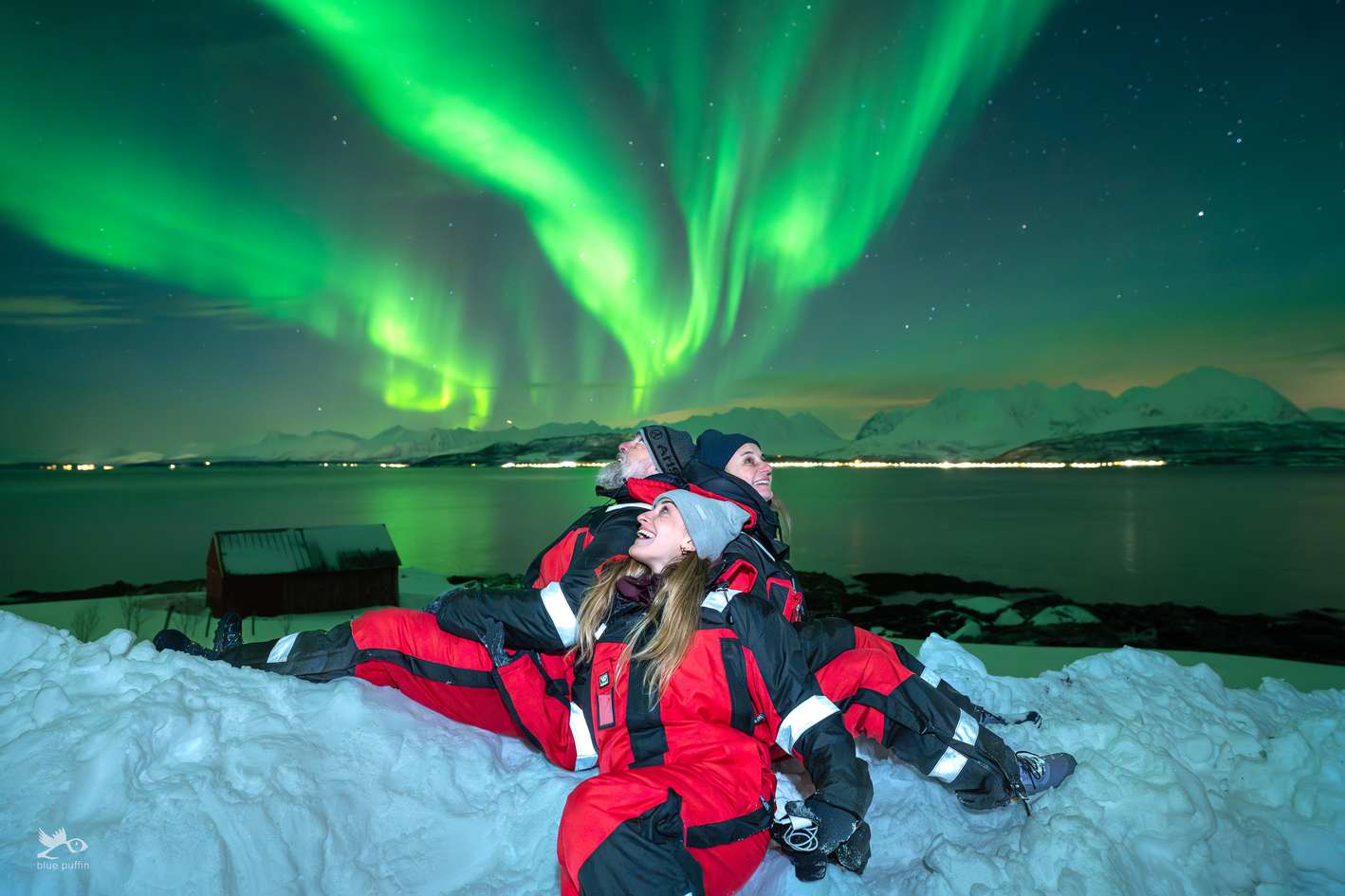
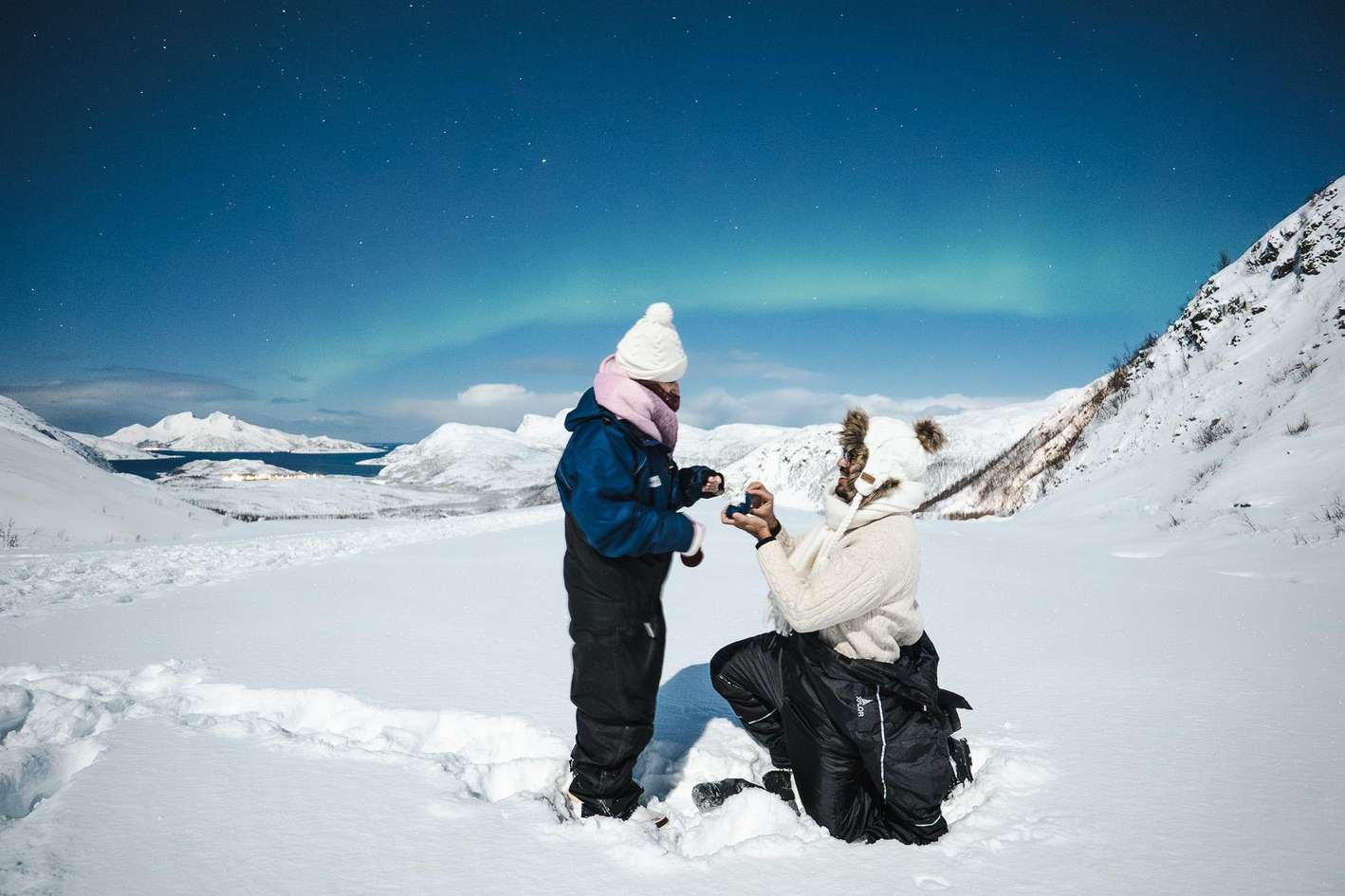
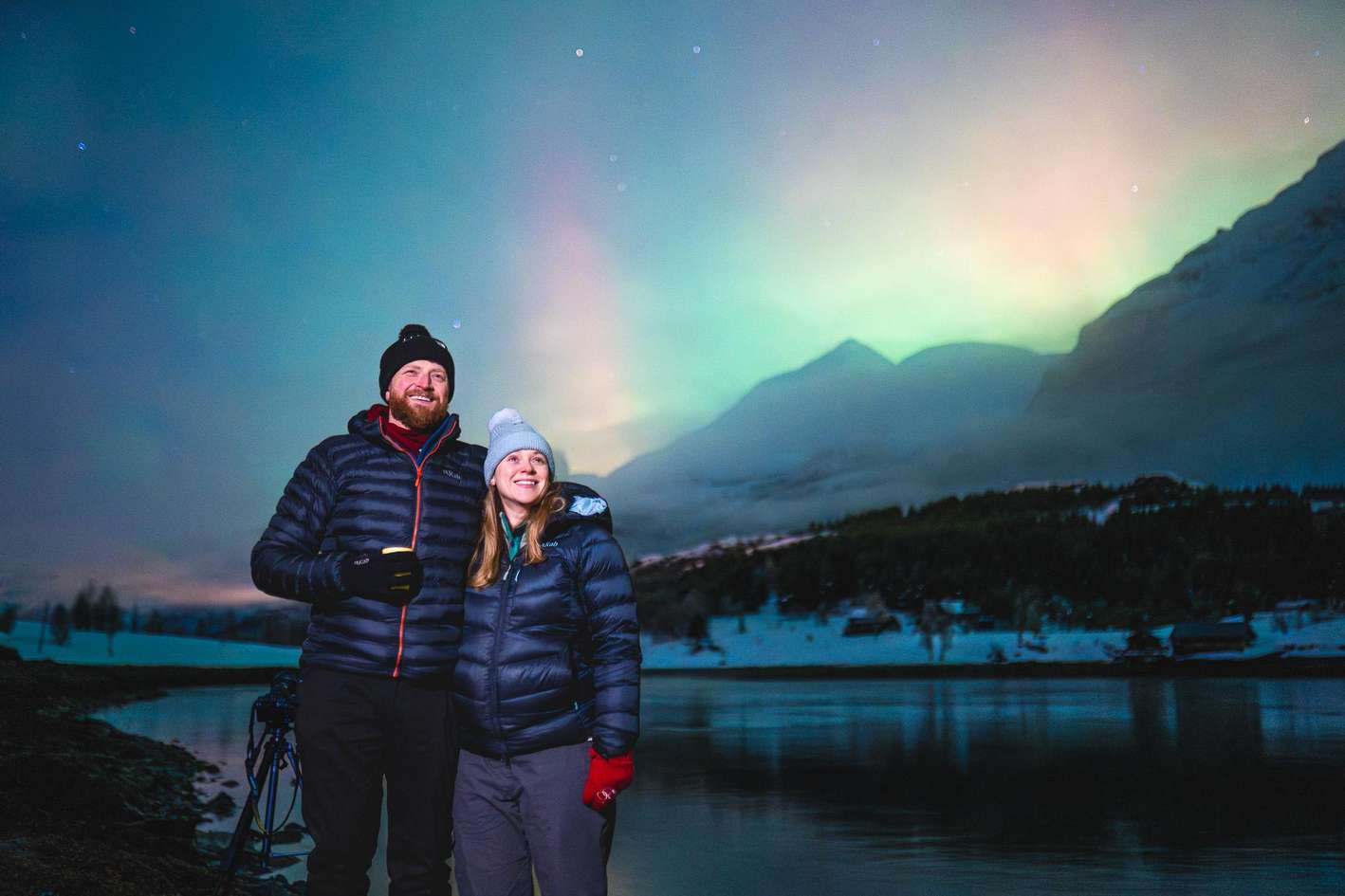
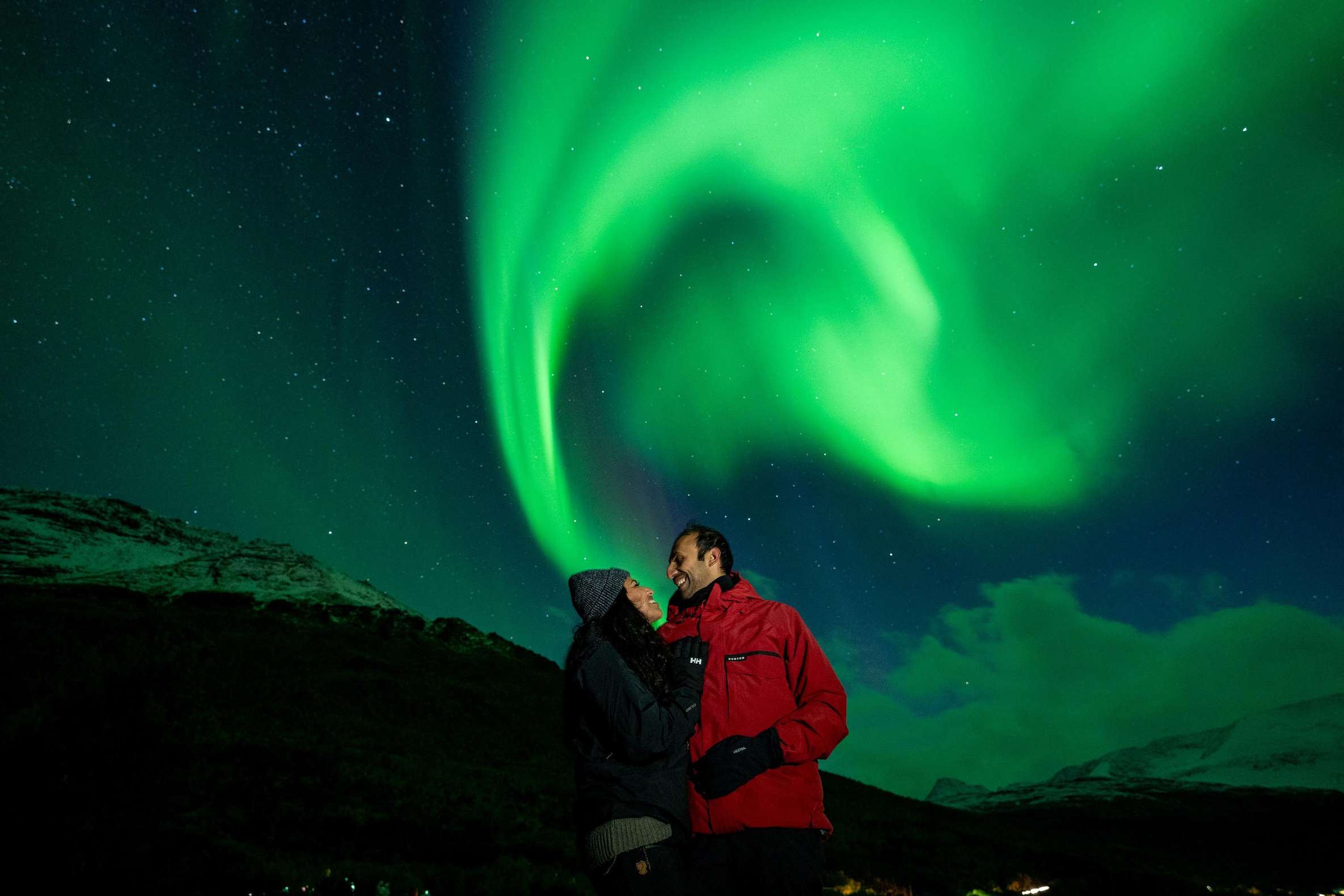
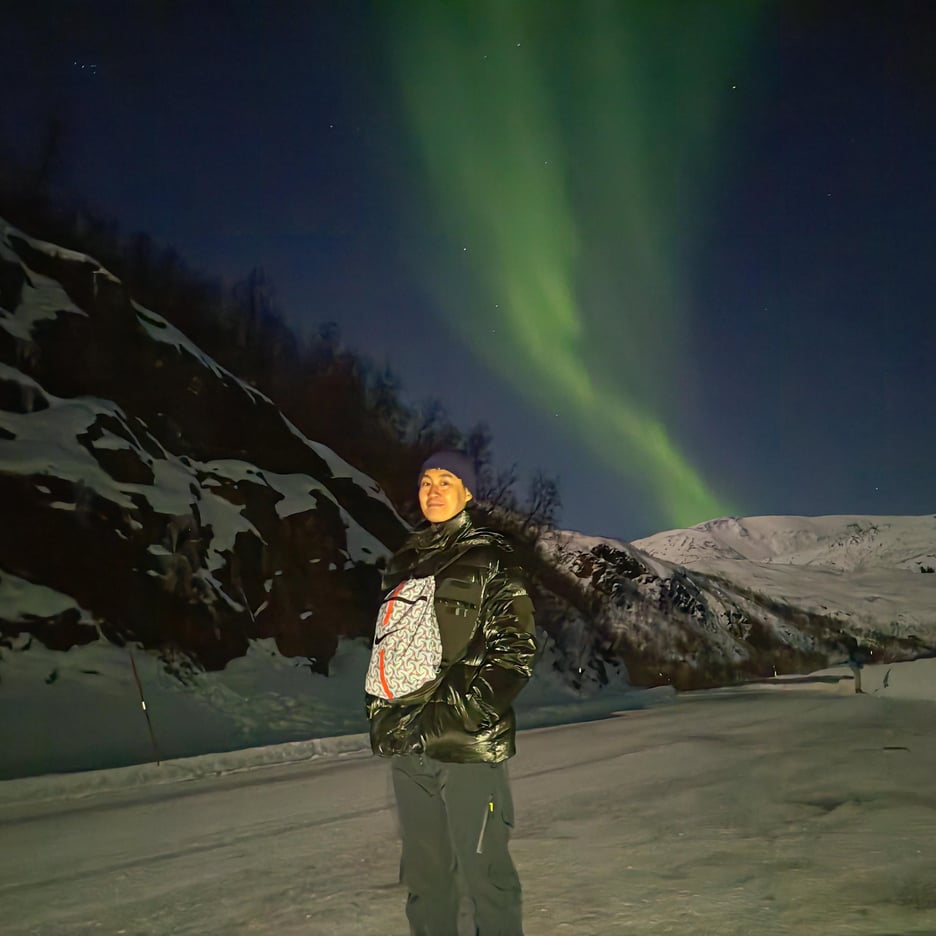
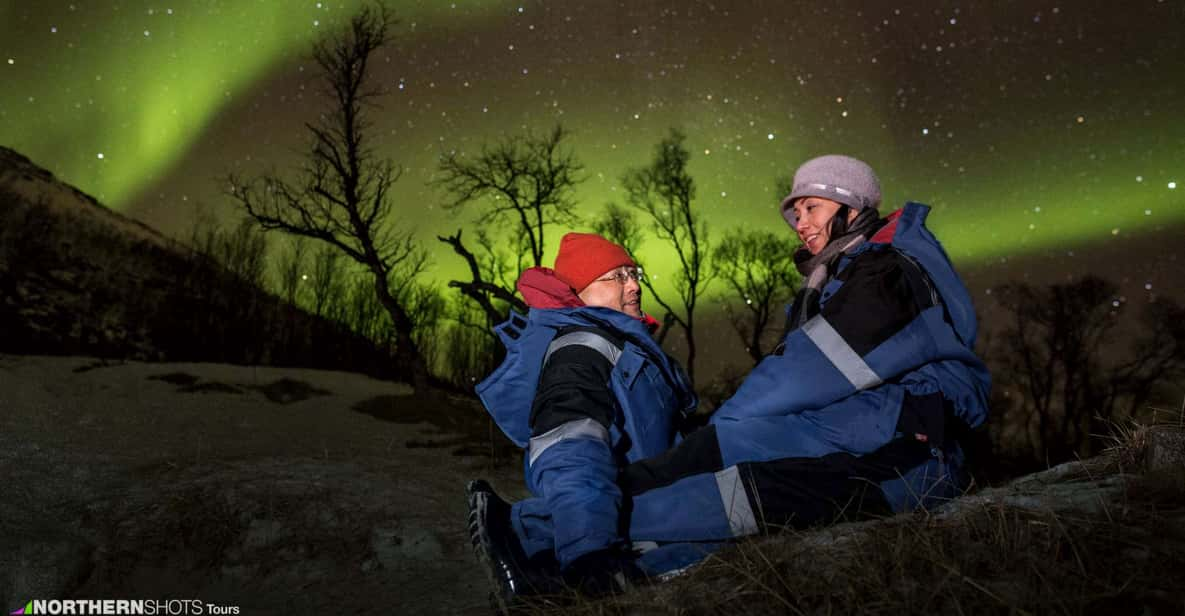
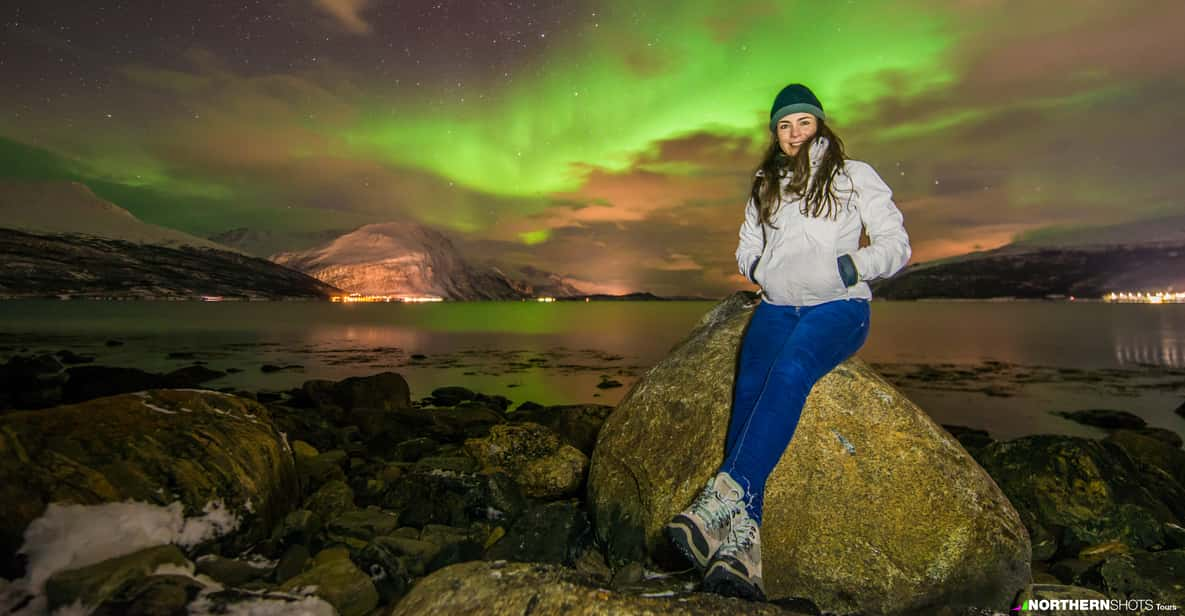
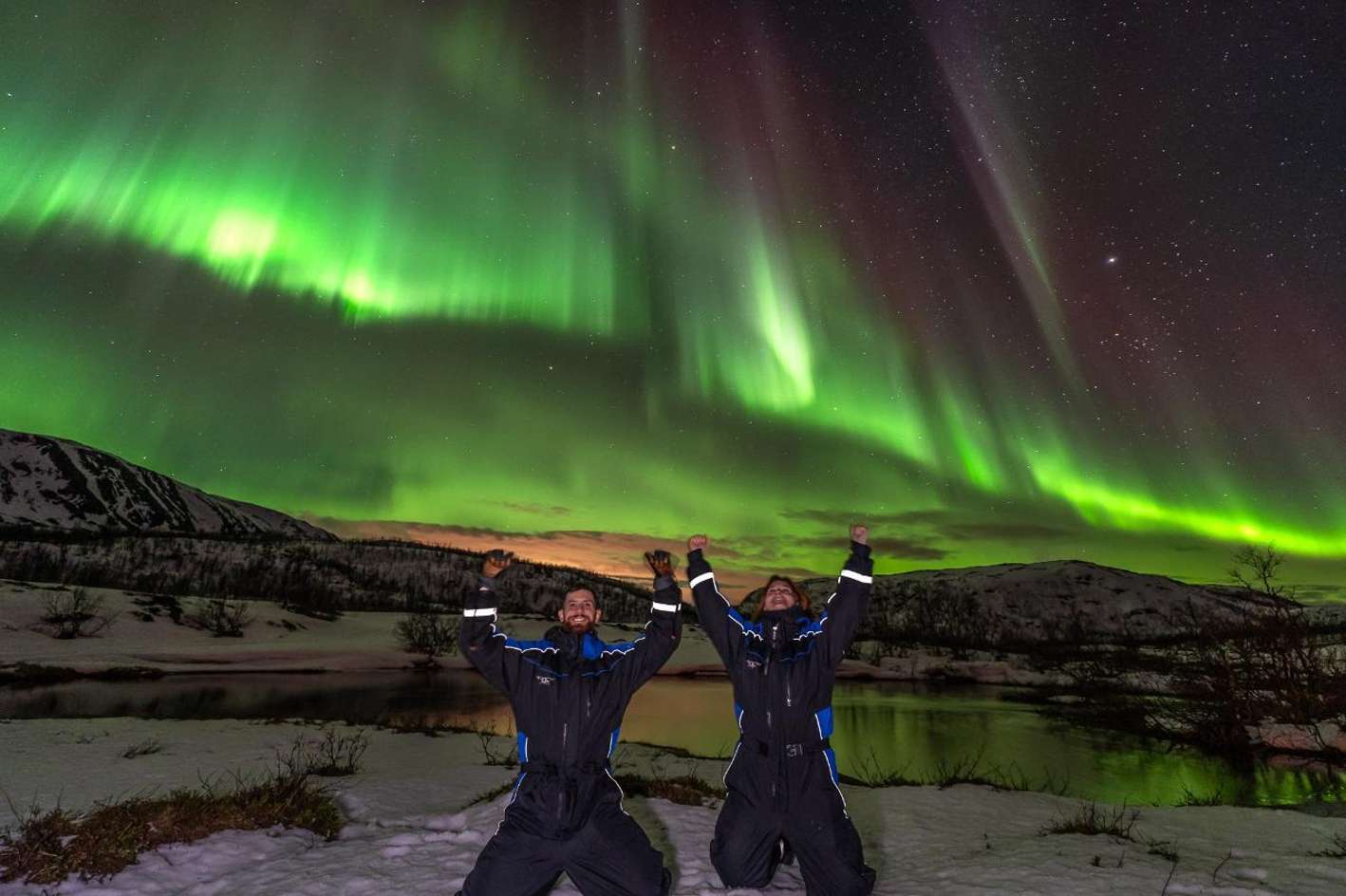
If you carry no camera at all, the guide photographs you under the aurora and sends the professional photos afterwards at no extra cost.
Stop 1Driving to clear skies· about 90 minThe vehicle leaves Tromsø and travels through Arctic microclimates while the guide monitors conditions, hunting a patch of cloudless night sky.Stop 2Setting up the shot· about 30 minYour guide assists with your camera settings and hands out tripods and headlamps, readying the gear for long exposures of the aurora.Stop 3Campfire wait under the lights· about 150 minYou wait by the fire over locally made soup, cookies and hot drinks while the guide watches the sky and shares aurora knowledge.Stop 4Shooting the aurora· about 60 minWhen the lights appear, you compose and shoot with guidance, and the guide takes professional portraits of you beneath them.Stop 5Heading back and drop-off· about 30 minYou return to Tromsø and get dropped off at your accommodation in the city centre, with free professional photos in web resolution to follow.
Included
Transportation by comfortable vehicleLocally made soupCookies, tea, coffee, and hot chocolateInstructions on how to photograph the AuroraTripods (not suitable for mobile phones) and headlampsFree professional photos from the tour in web resolution
Not included
Child safety car seats (required by law for children under 120 cm)Child seat booster (minimum height 120 cm) available on request
Tromsø photography chases - northern lights tours with photos compared
tripods on one tour don't fit phones
Green marks the lowest price. Each price says whether it is per person or per group.
Tour
Price
Duration
Pickup
Languages
Best for
Our pick
Tromsø: Northern Lights Photography Tour
4.8★ (811)
from $242per person
6 hours
no
English
photographers who want tripods, camera coaching and portraits in one small group
Their guides kept driving for hours, often into Finland, until the clouds broke and the aurora showed.
Best surprise
Many couples learned to shoot the aurora on their own camera and came home with photos they had taken themselves.
Most common wish
Several travelers wished the display had lasted longer, so they could keep shooting after those first few minutes.
How to book your tromso photography tour, step by step
01
Pick your date early
Choose the first or second evening of your stay so cloudy skies leave you spare nights to rebook. Photography tours run from December through March at more than double ordinary volumes and frequently sell out, so reserve weeks ahead.
Common mistakeLeaving the chase for the last night of your trip, when a cloudy sky leaves no second chance
RecommendedCheck that the tour allows free cancellation up to 24 hours before, so you can shift if the forecast turns
02
Choose the right option
Several tours offer more than one option, such as a small group of 8 instead of a standard minibus departure. Pick by group size and how much personal camera help you want, then set the number of adults and children.
Pro tipChildren have minimum ages on these tours, some from 8 and some from 14, so check the limits before you book
03
Pay and watch for confirmation
Complete the booking and the confirmation and the operator's messages arrive through the booking platform. Read them closely, since some operators ask about allergies, dietary needs or children's details before departure.
RecommendedSave the operator's contact details offline, because mobile data disappears in the remote valleys outside Tromsø
04
Plan the meeting point
Most tours meet in the harbourfront cluster downtown, within a 2- to 3-minute walk of the Prostneset bus terminal and the Radisson Blu and Scandic Ishavshotel entrances. Wear ice grips over your boots, since the quay walkways freeze over from autumn to April.
Common mistakeDriving to the meeting point yourself, when icy downtown streets and scarce parking make city buses and taxis the easier way
RecommendedWarm up at the Prostneset terminal, which stays open until 1:30 am
05
Get ready on the day
Dress in wool layers under the thermal suits the tours lend you, and keep spare camera batteries in an inner pocket, since cold drains them fast. Bring your passport or ID card, because chases chasing clear skies can cross into Finland.
ImportantA valid physical passport or national ID card is required whenever the chase crosses the Finnish border
What to know before you book a tromso photography tour for the northern lights
Can stop the dayGood to knowGood news
01
ChoosingWhat it is, who it suits, when to go
4
Camera help
This is the main difference from a standard chase: guides run a short workshop on manual settings, composition and white balance, and help you configure your own camera or phone. Automatic settings produce black frames, so the coaching matters.
Stop length
Photo tours pace the evening differently from a fast hunt. Stops often last two to four hours in one place, so there is time to set up, adjust exposures and wait for the aurora to build instead of being hurried back to the vehicle.
Group size
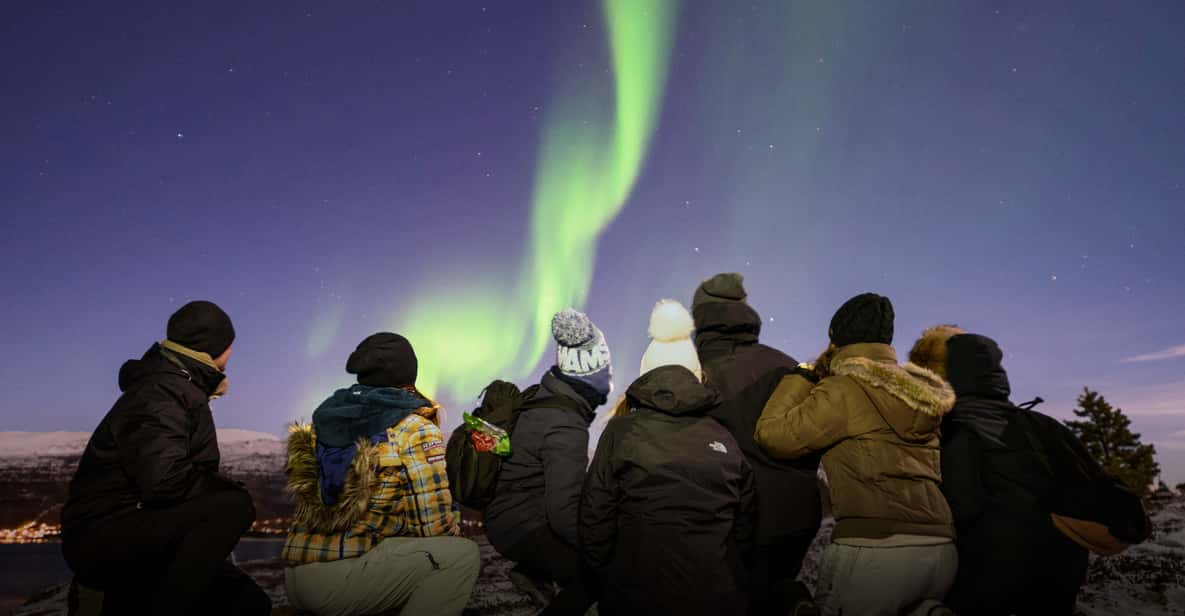
Several of these tours run in small groups, with options capped at 8 or 15 guests on one operator's photo tour. Smaller groups mean quicker stops, more personal coaching and room to set up without crowds in your frame.
Light rules
At group stops, keep phone screens, flashlights and flashes off and let your eyes adjust to the dark. White light blinds other guests and ruins their long-exposure shots, and red headlamp modes are the polite choice.
02
BookingHow far ahead, and what happens if plans change
2
RefundsCan stop the day
If the tour runs and no lights appear, most operators do not refund. Some soften this: one offers a 50% discount on a rebooking and another lets guests choose between half-price rebooking or a half refund. No operator can guarantee a display.
Cancellation
All the tours on this page can be cancelled up to 24 hours in advance for a full refund. If a tour is cancelled for dangerous weather or unsafe roads, you get a full refund or can move to another date.
03
Before you goPapers, health, what to bring
2
DocumentsCan stop the day
Bring a physical passport or official ID card. When coastal clouds force the chase inland, some of these tours cross the border into Finland, and everyone on board needs valid travel documents.
Gloves
Bring thin glove liners under thick mittens or flip-top mittens. That way you can slip off the outer layer to work camera dials and touchscreens without exposing bare skin to the cold.
04
During the tourWhat is expected of you
4
Photos
Most of these tours include professional photos taken by your guide with their own camera gear, shared afterward as digital files at no extra cost. You do not need to own a camera to go home with portraits of yourself under the lights.
Tripods
Long exposures need a steady camera, and most photo excursions lend tripods as part of the package. One tour states its tripods do not suit mobile phones; phones can instead be rested on a rock, a wall or the car roof.
Batteries
Sub-zero cold drains camera batteries and phones fast, and devices can shut down even with charge left. Keep spares in an inner pocket close to your body, and put the camera under your jacket between shots to avoid condensation.
Age limits
The photography tours set firm minimums: one accepts children from 8 years old, while the photographer-led chases require guests to be at least 14. One also rules out guests over 70. Check the limit before you book with children.
Tromso northern lights photography tour - from black frames to keeper shots
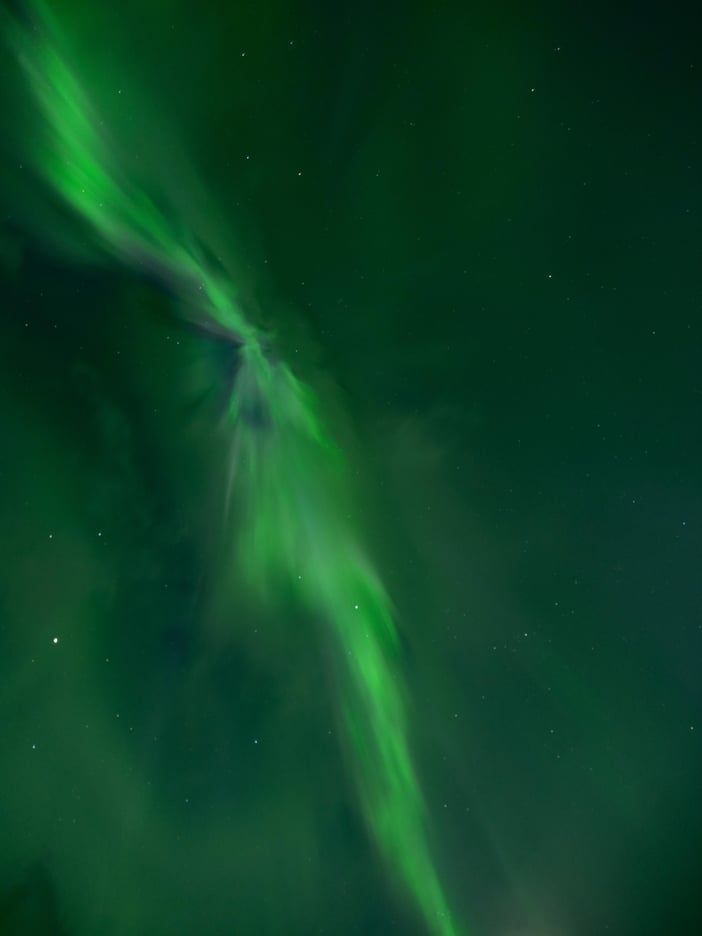
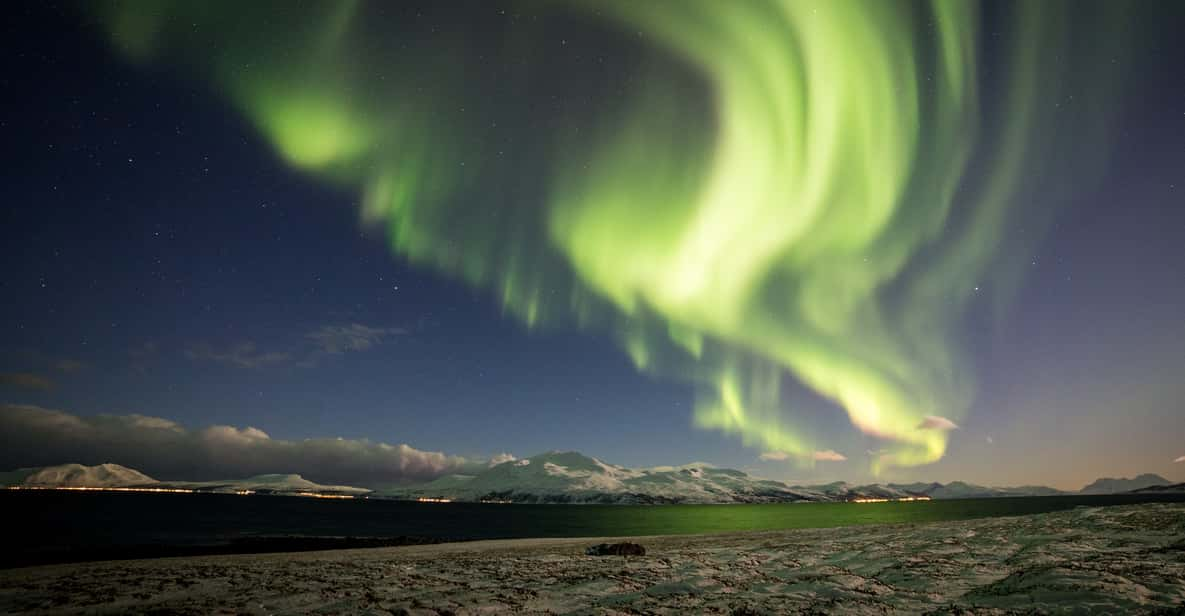
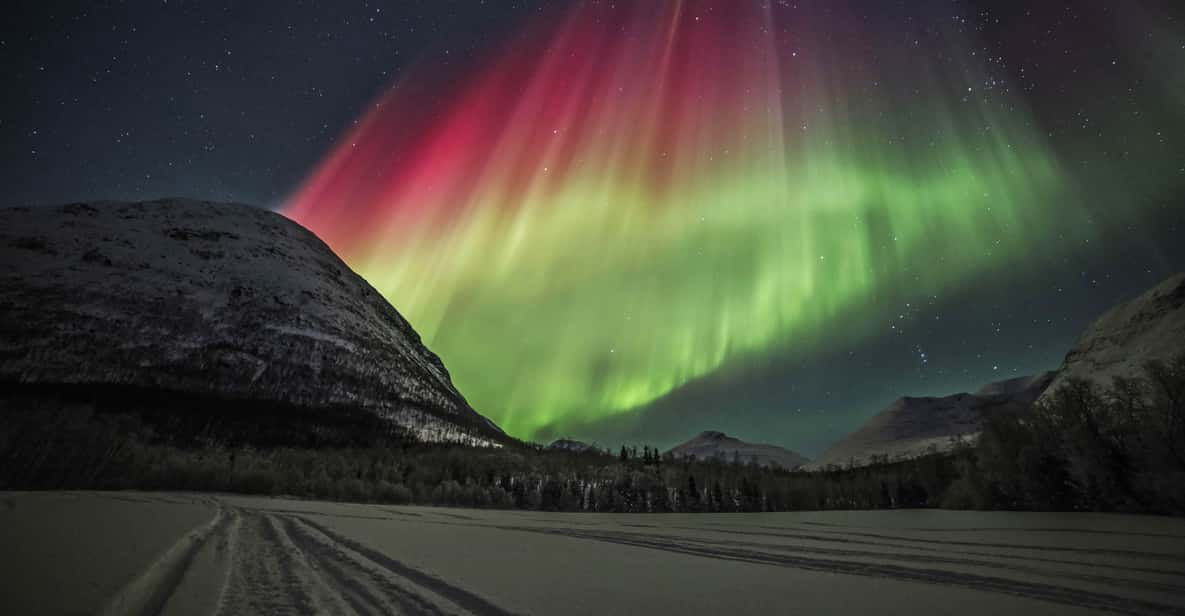
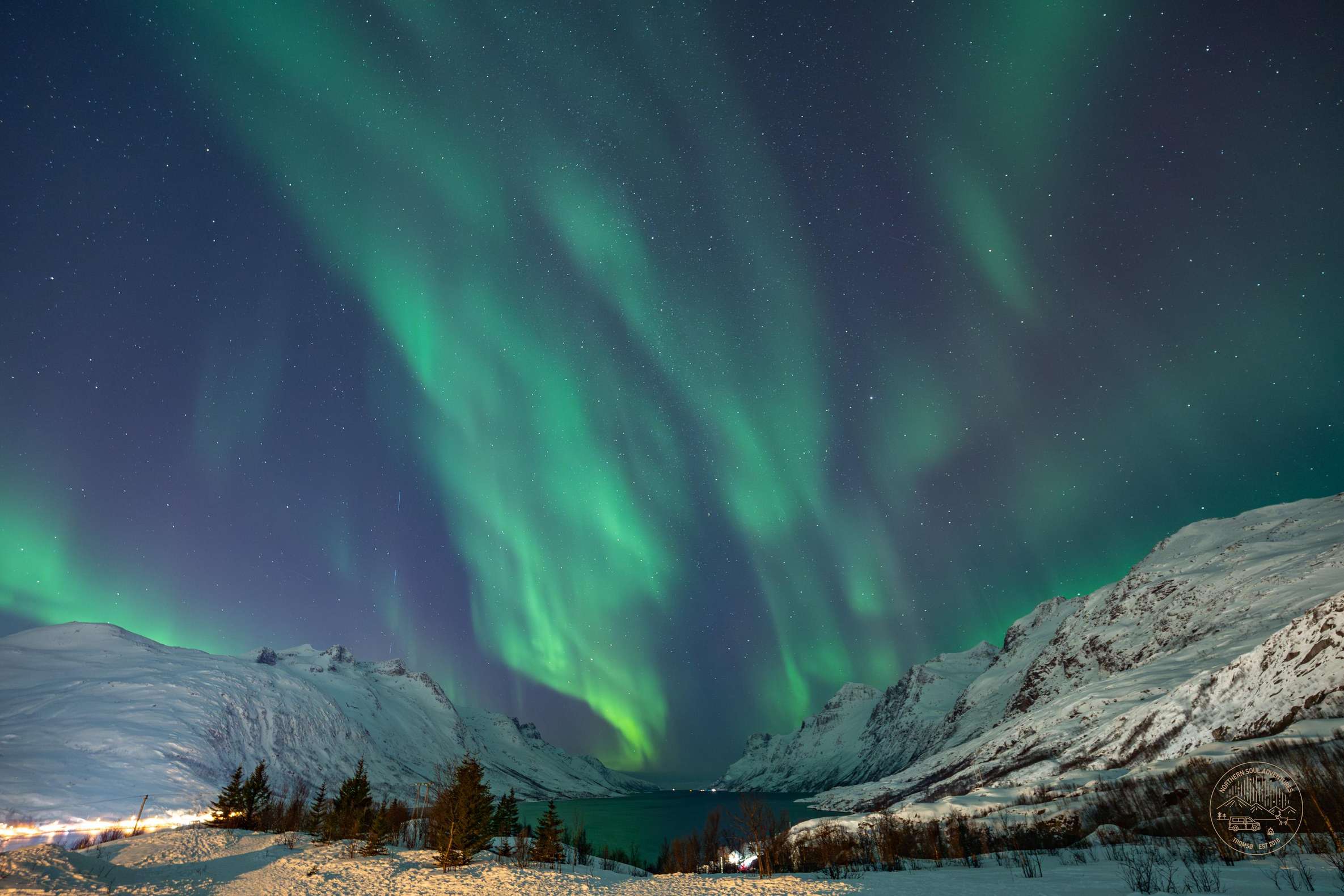
Faint auroras show grey to your eye and green only once the camera does its work. A night with a photo guide settles both: sharp frames you shot yourself and portraits taken for you.
Tromsø· 69.65° N, 18.96° E
If you only remember three things
1
Book for your first night in town, so a cloudy evening leaves you buffer nights to rebook.
2
Photo stops run long, often 2 to 4 hours in one spot, and peak aurora odds fall between 9 pm and 1 am.
3
Switch to manual mode: aperture f/2.8, ISO between 400 and 3200, shutter of several seconds, camera on a tripod.
Do you need an expensive camera for Tromsø photography?
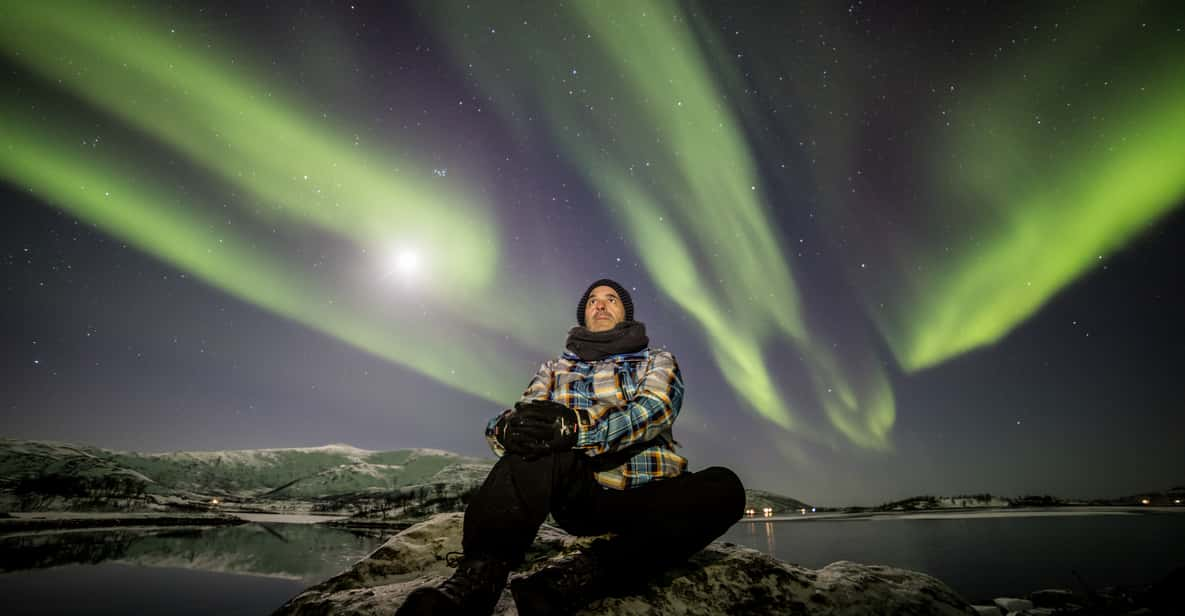
Faint auroras look grey or whitish to the naked eye, because human eyes need more light than the night sky gives to register colour. Cameras store the colour your eyes miss. That surprises everyone the first time, and it settles the packing question before it starts.
It settles it like this: a professional camera is optional. Modern smartphones capture the aurora in night mode or in manual and Pro modes, handheld on newer iPhones for exposures of several seconds. Compact and bridge cameras work too, as long as they carry a manual mode or a dedicated starry-sky function with long exposure.
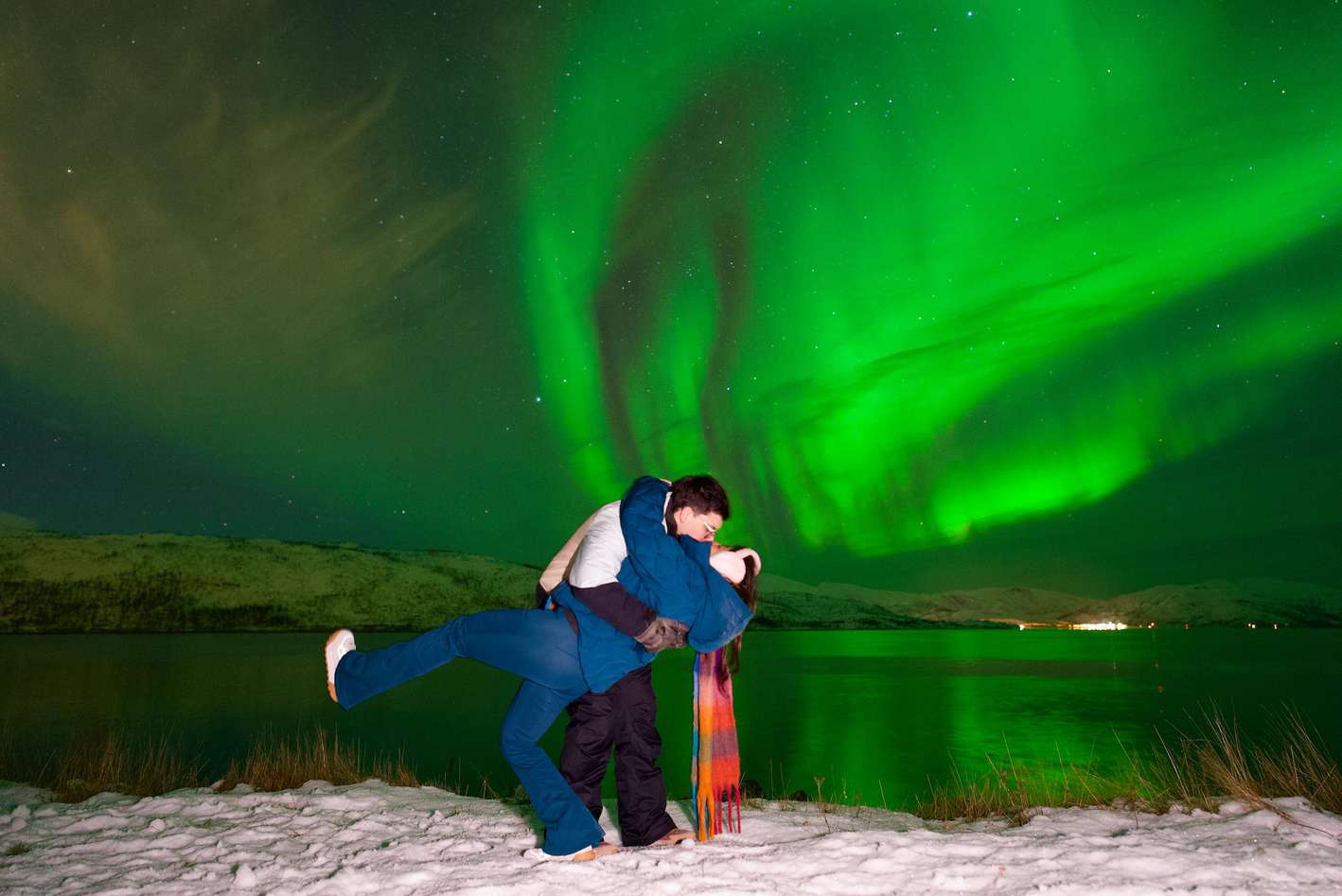
What you cannot do alone is shoot the portraits. On a dedicated photo tour, the guide photographs every guest under the lights with professional gear and shares the files after the tour at no extra charge. Guides also move through the group helping with settings, so your own camera comes home with keepers.
Delivery varies. A fair standard is a link within 24 to 48 hours, and some operators send images the next morning; a few take up to a week. Budget bus tours advertise low tickets, then charge per photo download, so a photo tour with files included usually costs less by the end.
A traveler's note
Absolutely spectacular tour! Strong solar activity, perfectly clear skies, seamless arrangements. Guide Thomas's passion, knowledge, and photography skills gave us stunning photos of an unforgettable night. Couldn't ask for more.
How a Tromsø photography night unfolds, hour by hour
Pickup happens in central Tromsø in the early evening, often around 6 pm. The vehicle leaves the city lights behind and drives toward a dark location chosen from satellite cloud maps and word from other guides on the road.
Some nights the stop sits close; on clouded-over nights it can sit well past the Finnish border.
A photography tour moves differently from a fast hunt. Stops run 2 to 4 hours in one place, long enough to set up, compose, adjust exposures and simply wait.
The campfire comes out, along with hot soup, grilled sausages or marshmallows, and hot chocolate or coffee. The insulated thermal suits pull on over your regular clothing as an extra layer.
The sky pays attention to the clock. Displays can appear any time from about 6 pm to 2 am, but the best window sits between 9 pm and 1 am, with the strongest odds near 11 pm.
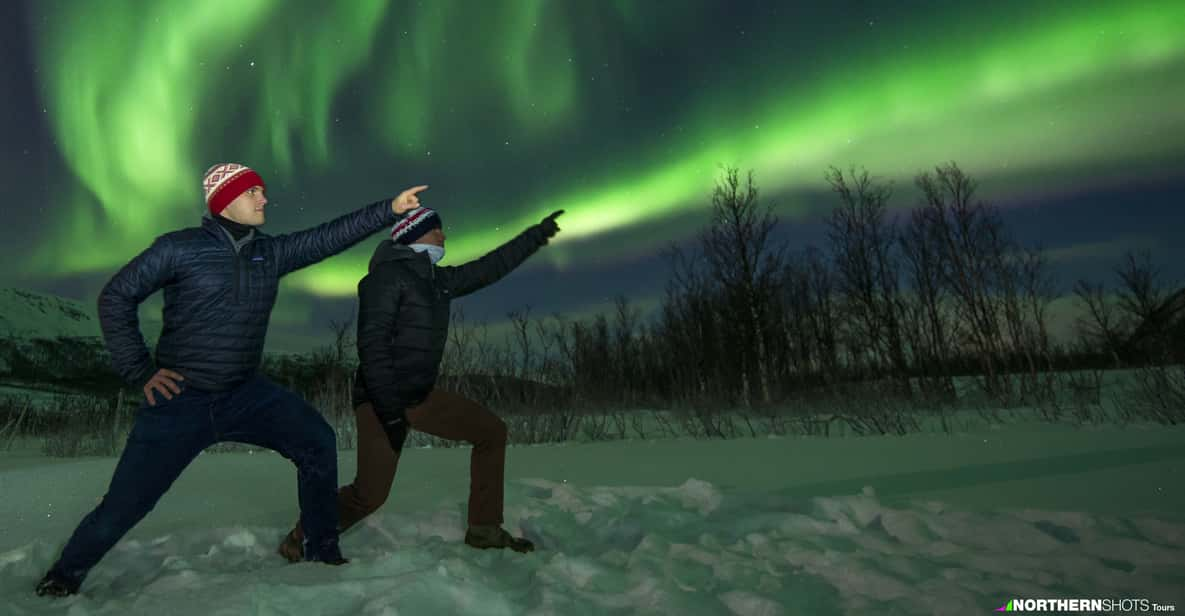
When a display flares briefly, guide photographers move fast to get at least one frame of each guest before it fades.
One honest note: at remote stops there may be no facilities at all, and small vans carry no toilet, so breaks happen outdoors or at petrol stations. Return to town can land near 2 am. The Tromsø: Northern Lights Photography Tour runs six hours with soup, hot drinks and photography instruction included.
How the evening runs
1
Early evening
Pickup in central Tromsø
Bring passport or ID in case the chase crosses a border
2
Drive out
To a dark-sky spot picked from live cloud maps
Small vans have no onboard toilet
3
Main stop
2 to 4 hours at one location
Campfire food, hot drinks and long exposures
4
9 pm to 1 am
Peak aurora window
Portraits shot the moment lights appear
5
Around 2 am
Back in Tromsø
Tours drop off at city hotels
Read that row for 9 pm to 1 am as your stamina plan: the long stop is deliberate, so eat, drink and pace yourself for a full night outdoors.
Tour for this
Tromsø: Northern Lights Chase with Professional Photographer in Italian5.0★ (6) · 7 hours · Free cancellation
September and October suit photographers who hate frozen fingers. The fjords and lakes stay unfrozen, so the lights mirror in open water, lows sit near 7 degrees in September and just above freezing in October, and camera batteries hold their charge.
September gives about 5.5 hours of full darkness a night; October stretches that past 10 hours with barely any snow on the roads.
Midwinter flips the trade. December and January hand you 15 to 16 hours of darkness, but snow underfoot, road ice and cold that drains batteries fast.
March has quietly become the photographer's favourite: 7.6 hours of full darkness a night, more clear dark nights within reach than January, temperatures near zero to minus five, and daylight left for daytime shooting.
The moon matters too. Around the new moon, skies reach their darkest and faint bands read strongest. A full moon can dim weak aurora, yet it lights the snowy foreground for landscape frames.
Tromsø aurora photography conditions by month
January: 5 out of 5 for how busy it gets. Polar night brings peak tour crowds, 15 hours of darkness, sub-zero cold, and snowy foregrounds.
HighestNov to Mar
In betweenOct
LowestApr to Sep
Darker: a higher how busy it gets score, out of 5
Tap a month to read it.
June: 24 hours of daylight. No northern lights tours operate during the 24-hour daylight of the midnight sun.
HighestApr to Aug16.2 to 24 h
In betweenMar, Sep to Oct9 to 13.3 h
LowestNov to Feb0 to 7.4 h
Darker months: higher, from 0 to 24 h
Tap a month to read it.
December: 16 hours of darkness. Polar night delivers 16 hours of full darkness, zero daylight, heavy snow, and busy tour departures.
HighestNov to Feb12 to 16 h
In betweenMar, Sep to Oct5.5 to 10.6 h
LowestApr to Aug0 to 1.1 h
Darker months: higher, from 0 to 16 h
Tap a month to read it.
September: 6.7 clear dark nights. Quiet tours, unfrozen fjords for water reflections, zero snow days, and 5.5 hours of darkness offer comfortable autumn photography.
HighestSep to Oct5.3 to 6.7 nights
In betweenDec to Mar3 to 4.3 nights
LowestApr to Aug, Nov0 to 1.7 nights
Darker months: higher, from 0 to 6.7 nights
Tap a month to read it.
January: snow on 13.6 days. Polar night brings peak tour crowds, 15 hours of darkness, sub-zero cold, and snowy foregrounds.
HighestNov to Apr9.4 to 13.6 days
LowestMay to Oct0 to 2.8 days
Darker months: higher, from 0 to 13.6 days
Tap a month to read it.
What the month rows tell you: darkness peaks from November to February, yet Tromsø island itself has few clear dark nights those months, which is exactly why chases drive inland. Pick October or March if you want workable cold with solid odds.
Small group or private - picking a Tromsø photography chase
The vehicle is the tour. Minibuses reach secluded spots on narrow side roads that a full-size coach physically cannot turn into, reposition faster when a cloud gap opens, and unload a handful of guests in moments instead of forty.
Coaches hold a toilet on board and more room to stretch; small vans give you the quiet spots away from headlights.
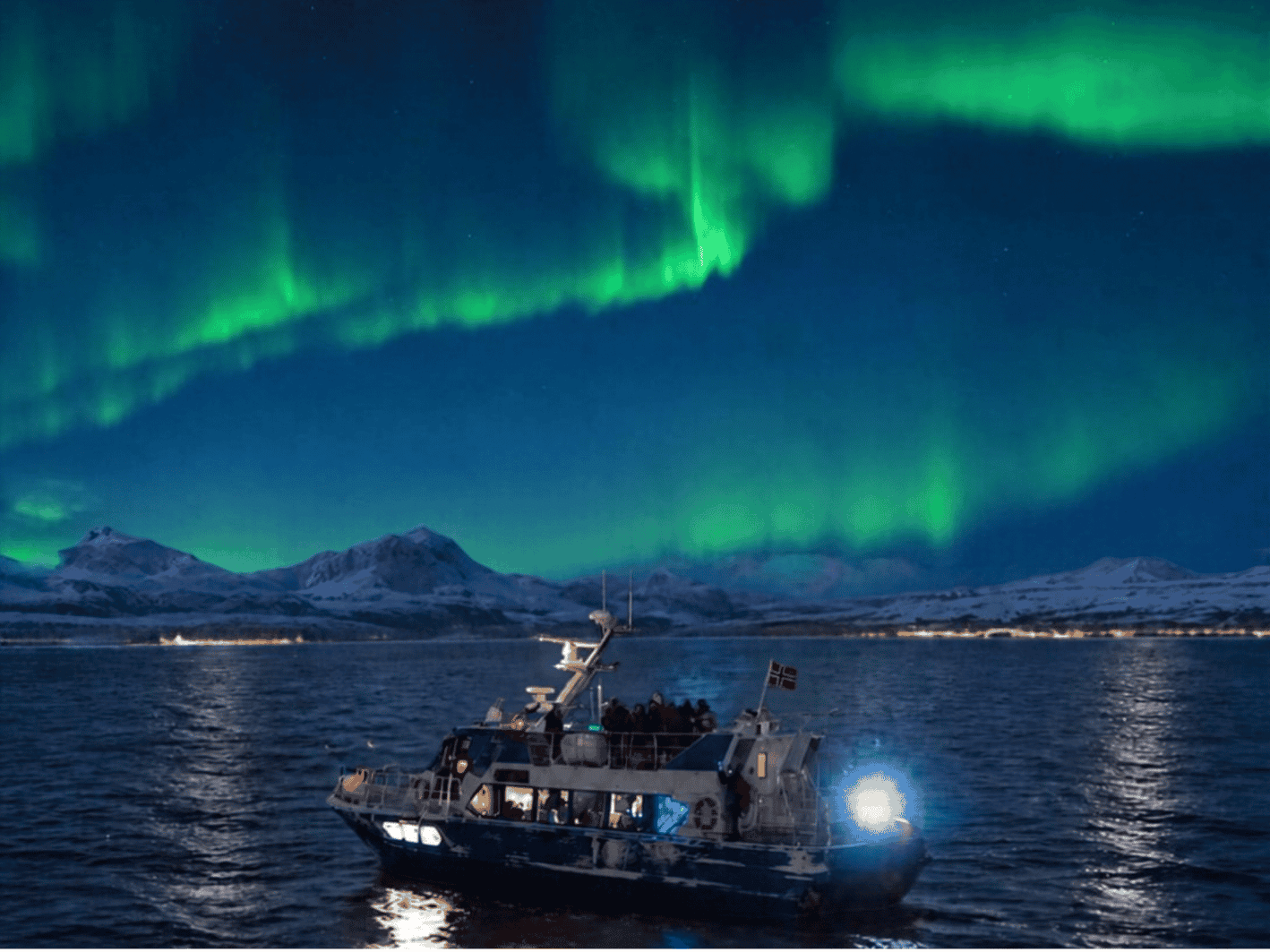
For sharp long exposures, a boat is the wrong platform. Engine vibration and constant movement make multi-second exposures from the water difficult at best, so dedicated photographers stay on land.
Watch what a low headline price hides. Some budget tours rent thermal clothing, boots or tripods as extras, and some hand out low-resolution photos free while charging for high-resolution, watermark-free files.
A quick check on legitimacy: legal Norwegian passenger vans carry a licence number on a sticker outside, run Norwegian plates, and confirm permits when asked.
The Tromsø: 6 people only | Northern Lights + Photos & Videos tour takes the small-group idea further, with six guests, high-quality photos and video sent the next morning, and no hidden photo fees.
Three photo-led formats side by side
Shared small-group photography minibus
Photographer chase in your language
Private hunt with photographer guide
Group size
Fixed small group, usually up to 15 or 20
Intimate small group, French, Italian, German or Chinese
One group only, the night shaped around you
Camera help
Guided instruction with your own camera
Photo workshop plus guide-shot portraits
Coaching plus portraits built into the night
Food and warmth
Soup or campfire snacks on many tours
Homemade soup, bread and hot drinks by the fire
Set by your group
Cost logic
Usually the lowest per person
Mid-range for the intimacy
Highest, for the exclusivity
Shared small-group photography minibus
Group size
Fixed small group, usually up to 15 or 20
Camera help
Guided instruction with your own camera
Food and warmth
Soup or campfire snacks on many tours
Cost logic
Usually the lowest per person
Photographer chase in your language
Group size
Intimate small group, French, Italian, German or Chinese
Camera help
Photo workshop plus guide-shot portraits
Food and warmth
Homemade soup, bread and hot drinks by the fire
Cost logic
Mid-range for the intimacy
Private hunt with photographer guide
Group size
One group only, the night shaped around you
Camera help
Coaching plus portraits built into the night
Food and warmth
Set by your group
Cost logic
Highest, for the exclusivity
Pick the row that matches what you lack: shared tours suit camera owners who want instruction, language-specific chases add intimacy and a cooked dinner, and a private van reshapes the whole evening around your shot list.
Tour for this
Tromsø: Northern Lights Hunt with a Professional Photographer in German5.0★ (5) · 7 hours · Free cancellation
Finding your Tromsø photography departure point after dark
Most evening departures gather in one harbourfront cluster, all within a two- to three-minute walk: the bus terminal inside Tromsø Havn Prostneset, the entrance of Radisson Blu Hotel Tromsø, and outside Scandic Ishavshotel along the quayside. Once you know the cluster, finding your vehicle is easy even in polar-night darkness.
Getting there from the airport takes 15 minutes on the airport express bus, about 20 on city bus 40 or 42, or 10 to 16 minutes by taxi from the rank outside arrivals. The Prostneset terminal building stays open from 6:30 am to 1:30 am, so there is a warm place to wait.
From autumn to April the pavements and quay walkways glaze over with packed snow and sheet ice, so locals wear slip-on ice grips over winter boots. One word confuses newcomers: on address boards and meeting instructions, the Norwegian word gate simply means street.
However you arrive, budget the last stretch on foot: the whole harbourfront cluster sits steps apart, and a warm terminal or hotel lobby beats waiting on an icy quay.
Tour for this
Tromsø: Northern Lights by Minibus with Free Photos and a Warm Meal!4.9★ (452) · 7 hours · Free cancellation
Warmth comes first, because inland chases drop to minus twenty-five or colder and you will stand still on snow for hours.
Merino wool base layers, insulated snow pants, solid winter boots, a windproof outer shell, thick mittens and a warm hat carry the night. One trick regulars swear by: change socks every 30 to 60 minutes so sweat never freezes into your boots.
Photographers pack a two-layer glove system, thin merino or silk liners under heavy mittens. Slip off the outer mitten and your fingers can still turn dials without touching bare skin to the air.
Keep spare batteries in an inner jacket pocket; at around minus thirty a cold phone can shut down within fifteen minutes even showing battery left.
Lens choice: a wide-angle from 14 to 24 millimetres on full frame, or the crop equivalent, opened to f/2.8 or faster, frames both the mountains and the overhead corona.
Leave cheap plastic tripods home, as fittings turn brittle and snap near minus twenty. There is little camera equipment to rent in Tromsø, so bring what you need or buy a basic tripod locally.
The settings that work are the opposite of what your camera does by default. Automatic mode produces black frames; the aurora needs manual mode, f/2.8 wide open, ISO between 400 and 3200 and a shutter of 3 to 8 seconds, all on a tripod.
Use the built-in timer or a remote release so tapping the button does not shake the frame.
Phone shooters have it easier than they fear. Night mode kicks in on its own in the dark on newer iPhones, and Androids take the aurora in Pro mode with the same shutter and ISO ideas.
Rest the phone on a rock or car roof for stability, or bring a small travel tripod, since many loaner tripods on tours are built for cameras only.
Group etiquette matters in total darkness. White phone screens, flashlights and flashes blind other photographers and ruin their long exposures, so keep lights low and red if you can. And when the night ends, seal the cold camera in a bag before it enters a warm room, or condensation fogs every surface.
What first-timers don't know
Autofocus fails in the dark
Pre-focus on a bright star manually before shooting
Your breath frosts the lens
Keep your face back from the camera in the cold
One white headlamp spoils the shot
It ruins night vision and long exposures for everyone nearby
Campfire smoke hazes frames
The orange glow and smoke layer leak into exposures if you shoot close
None of these cost money to fix, and all four have ended more aurora shoots than the weather has. Learn them before the first shutter click and the rest is just patience.
Where Tromsø photography chases go when the coast clouds over
Coastal clouds are the reason the chase exists, and the geography solves them. Weather rolling in from the Norwegian Sea rises over the islands around Tromsø and the Lyngen Alps, drops its moisture on the western slopes, and descends into the Skibotn valley much drier.
On many evenings when Tromsø island sits under a lid of grey, valleys inland are clear.
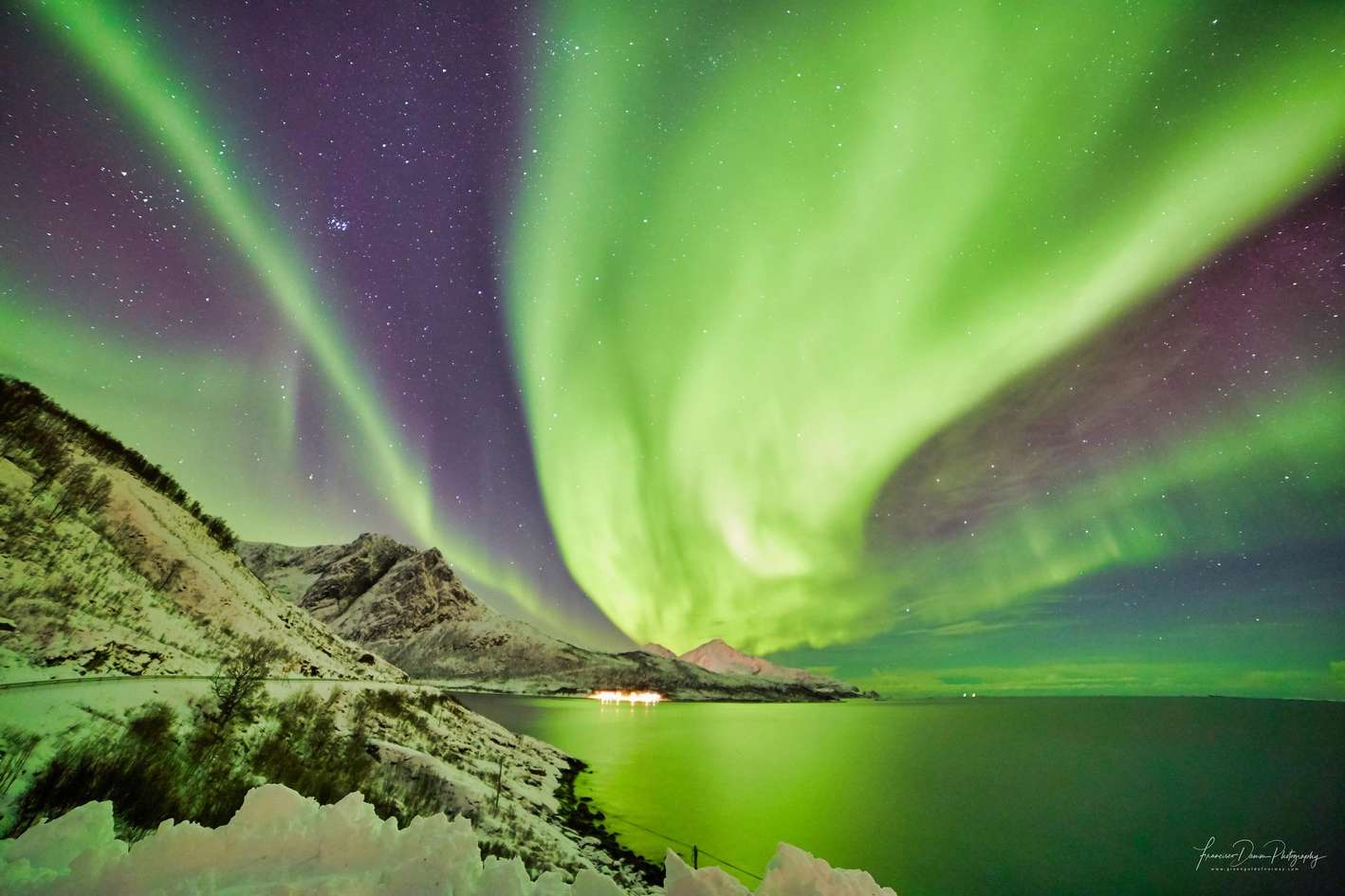
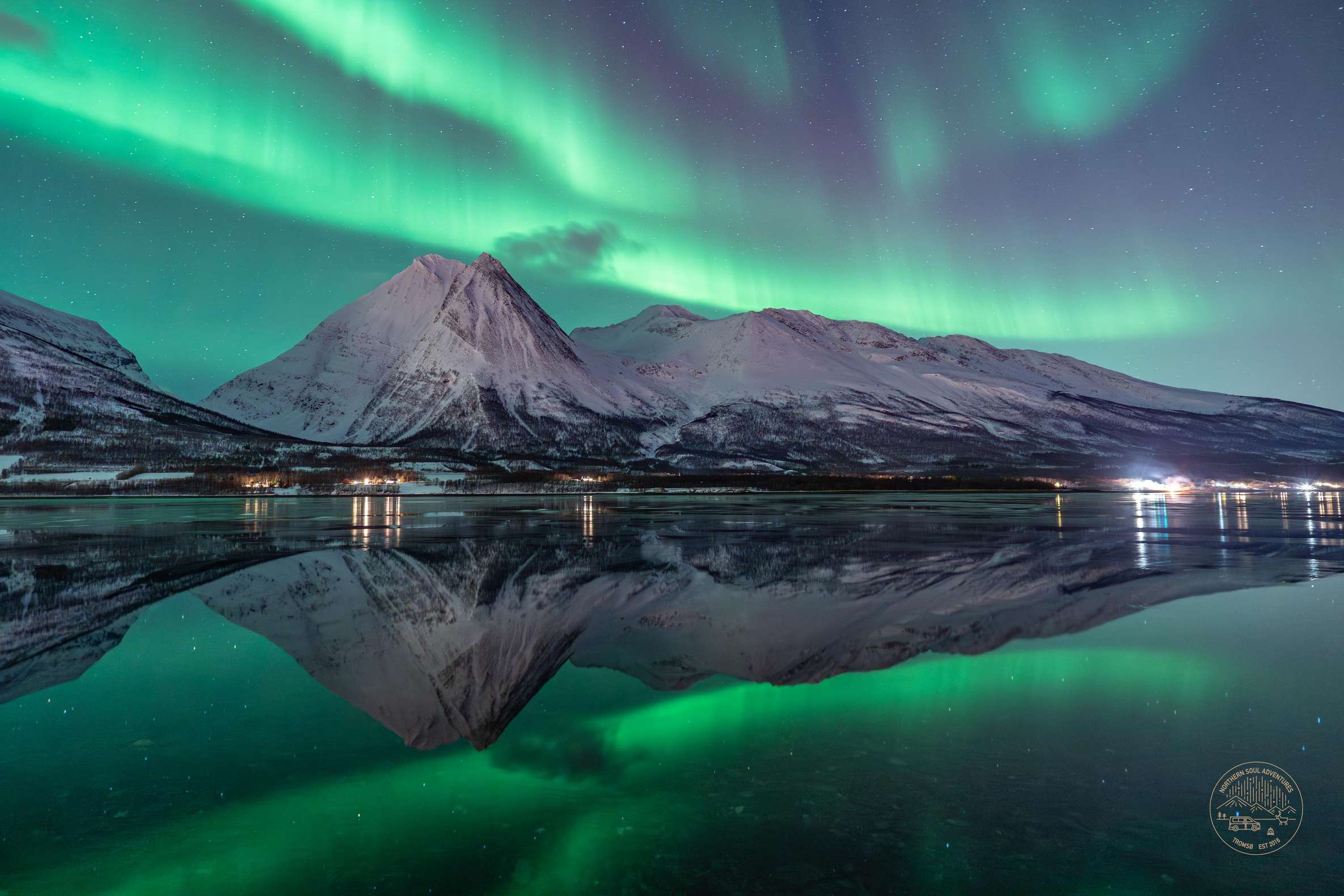
Each direction has its own look through the lens. Kvaløya's sheltered fjords hold still, flat water that mirrors the lights between steep dark mountains. Kilpisjärvi, across the Finnish line, opens into bare tundra and frozen lakes with wide horizons and almost no light pollution.
Cloudy nights mean distance. Coaches on an overcast evening can log 4 to 6 hours of driving and push 210 to 250 kilometres one way, sometimes well into Finland.
A physical passport goes in your bag, because the border is a genuine destination. And a high aurora forecast means nothing under solid cloud: the lights burn above the weather, so the chase is really a cloud hunt.
Tour for this
Tromsø: Northern Lights Safari with Expert Guides and Photos4.6★ (8,954) · 6 hours · Free cancellation
The night can be lost. Severe blizzards and cloud thick enough to cover every route to the Finnish border beat any driver, and no operator can promise the aurora. What matters is knowing the terms before you pay.
If dangerous roads or weather cancel the tour outright, you get a full refund or a new date. If the tour runs and the sky stays dark, the general rule is no automatic refund: you paid for guiding, transport and time outdoors.
Around that rule, policies differ. Some operators hand a 50 percent discount on a second chase, others 30 percent, and a few run a free retry or an unlimited guarantee until you see the lights.
On private chases, guides often read the odds with you before departure and postpone with a full refund if the night looks hopeless.
Mobile chases work in your favour because guides keep driving until they find a break in the cloud, and they swap live updates with other drivers on the road. The Tromsø: Northern Lights Safari with Expert Guides and Photos tour carries an unlimited option, so you keep joining tours until the lights arrive.
If the weather turns
If this happens
What happens then
Tour cancelled for dangerous roads
Full refund or a new date
Tour ran, no lights seen
No automatic refund, but many operators offer 30 to 50 percent off a second chase
Unlimited-retry operator
Join tours free until you see the lights
Private chase, odds look poor before departure
Postpone or cancel with a full refund
Weigh those rows when you compare tours: the retry terms are the cheapest insurance you can buy against one clouded-over evening.
Tour for this
Tromsø: Northern Lights Chase with Photographer in French4.9★ (54) · 7 hours · Free cancellation
Booking Tromsø photography - how far ahead and how to hedge
Demand runs at more than double ordinary volumes from November through March, and tours frequently sell out completely from December to March. Small-group photo departures feel that squeeze first, because a minibus holds a dozen people and not a coachload.
The structure that works is simple. Book your first night in Tromsø, then stack one or two more chases across the following evenings, choosing tours with free cancellation so you can drop the extras once the lights arrive.
Some operators sell multi-night passes at a discount for repeat chases, which suits a stay of three to five nights.
Before paying, work through the checklist: group size and vehicle, guide language, portraits and high-resolution files included rather than a paid extra, and a retry guarantee written into the terms. A look at the operator's own posted photos tells you whether their favourite backdrops match the compositions you have in mind.
How to choose a Tromsø photography tour
Check
Why it matters
Our pick
Group size and vehicle
Small groups mean framing time, quiet spots and faster moves
Small-group minibus format with long, unhurried stops
Guide language and focus
Instruction only helps if you understand it comfortably
English-led photography tour with a guide dedicated to camera coaching
Portraits and photo delivery
High-resolution files included beat per-photo fees
Free professional photos from the tour included
Second-chance terms
The retry policy is the hedge against a cloudy night
Cancel up to 24 hours ahead for a full refund
Score your shortlist against those four rows and the differences between tours stop being guesswork; the one that ticks every row is usually the one worth paying for.
A DIY night costs nothing but shoes and patience, and on a strong night the city itself delivers. Telegrafbukta beach sits on bus lines 33 and 34, with the last regular return just after midnight and later night buses on weekends.
Prestvannet lake sits a 20- to 30-minute uphill walk away, or take bus 28 or 40; the Fjellheisen cable car carries riders up until 10 pm for an elevated view.
Know what you give up. Prestvannet has no shelter or winter toilets, the lake ice stays deceptively thin, and both spots need microspikes on packed snow and ice. Telegrafbukta's facilities close after summer.
A fixed point also cannot outrun local cloud: when the coastal lid sits over Tromsø, the best free spot shows nothing while a van two hours inland shoots green.
The hard line concerns rental cars. Driving Arctic winter roads without experience on dark, narrow, icy routes is dangerous and firmly advised against, never mind reindeer crossing at night. First-timers do better joining a mobile chase, then using a walkable city spot as a no-cost backup between tours.
Driving yourself
Rent a car for the driveCompare cars from the rental companies in one search, then pick yours.
Filling the days around your Tromsø photography nights
Daylight hours deserve a plan of their own. Guided husky visits suit every age, with thermal suits and boots provided and warm indoor shelter plus a meal, so children last the evening.
The reindeer camp dinner keeps to warm indoor spaces and wraps up by 10:30 pm, gentle enough for young kids before the late aurora window.
For the adventurous, self-drive dog sledding demands good stamina and a minimum age of 16 for your own team. Families ride together as passengers with a professional guide on the sled, which keeps everyone warm and moving.
Water adds a second show. From November through January, humpback whales and orcas follow herring into the regional fjords, the same months that combine darkness and snow, before sightings fall off sharply in February.
Whale safaris and husky nights sell out the same way the photo chases do: two to four weeks ahead in deep winter, and six to eight weeks ahead for Christmas and New Year dates. Book the daytime favourites when you book your first aurora night, not after.
A Tromsø photography tour earns its price for anyone who wants real portraits under the lights or help turning manual settings into sharp frames. Book it for your first evening, stack a free-cancellation backup, and bring a passport in case the chase runs for Finland.
Go ifYou want portraits of yourself under the aurora without struggling with night selfiesYou own a camera and want hands-on help with exposure settings in the coldYou travel with a compact or bridge camera that has a manual mode
Skip ifYou only want a warm seat and a show, in which case a heated cruise suits betterYou travel with toddlers who cannot last a late, cold evening outdoorsYou expect a guaranteed sighting with an automatic refund if the sky stays dark
Answers to your tromso photography questions for the northern lights
Short answers to what travelers ask before booking a photo-focused aurora tour in Tromsø.
Tromsø2026
The sky over Skibotn went green for twenty minutes and my tripod held every frame. Bring spare batteries; the cold eats them fast.
Do I need a DSLR camera to join a northern lights photography tour?
No. Modern smartphones capture clear aurora photos in night mode or manual Pro mode. Guides also help you set up whatever camera or phone you bring, and take professional portraits of you under the lights with their own equipment.
What camera settings should I start with for aurora photos?
Switch to manual mode, open your aperture as wide as it goes (f/2.8 or wider), set ISO between 400 and 3200, and use a shutter speed of several seconds. Automatic settings usually give you black frames. A guide on the tour walks you through all of this on the spot.
What lens should I bring to Tromsø?
A wide-angle lens between 14 and 24 mm on a full-frame camera, or the crop-sensor equivalent, with an aperture of f/2.8 or faster. That lets you frame both the mountain landscape and the lights overhead.
Are tripods provided, or do I have to pack my own?
Many photography excursions lend you a tripod as part of the tour, and some offer free rentals if you reserve ahead. Check the small print on the tour you pick, because a few ask guests to bring their own or rent one for an extra fee.
Will the guide take a photo of me if the lights only appear for a few minutes?
Yes. Guide photographers move quickly the moment the aurora shows, so every guest gets at least one portrait before it can fade. The digital files are usually shared after the tour at no extra cost.
How long until I receive my photos after the tour?
It varies. Some operators send them by link the next morning, others within 24 to 48 hours, and a few take three to five days. A delivery window of one to two days is the standard to look for when you book.
Why did the lights look grey to my eyes but green in the photos?
Camera sensors collect light over long exposures, so they record colors your eyes cannot pick up in the dark. Faint auroras often look pale grey or whitish in person. That is also why guides say the camera often shows the lights more clearly than you can see them.
How much time do we spend at each viewing stop?
Photography tours stop for longer than standard chases, often two to four hours in one spot. That gives you time to set up, adjust exposures, compose your shots, and wait for a display instead of being rushed back to the vehicle.
Can I shoot sharp aurora photos from a boat cruise?
It is difficult. The vessel moves constantly and engine vibrations blur long exposures. For steady multi-second shots, land-based vantage points work far better.
Are these tours suitable for children?
Most photography tours set minimum ages, often 8, 12, or 14 years old, because the nights run long in sub-zero cold. Check the age limit on the specific tour before you book.
What about bathroom breaks on a night in the wilderness?
Remote stops usually have no facilities, so plan for nature breaks, and rest stops along the road rely on gas stations. Larger coach buses often carry an onboard toilet, while small vans and minibuses generally do not.
What if clouds cover every route the guide can drive?
On rare nights, widespread cloud means no lights at all, even after hours of driving toward Finland. If a tour runs and the aurora never appears, most operators do not refund, though some offer a discounted or free retry, so look for that guarantee when you book.
More ways to chase than your tromso photography tour
Reserve your spot on a tromso photography night under the northern lights
tripods are for cameras, not phones
Six hours of guided night shooting in a small group, with tripods, a workshop on your own camera and free aurora portraits, and you can cancel up to 24 hours ahead for a full refund.

 Your best match