Tromsø Snowmobile Northern Lights Tour - Night Safari Across Arctic Mountains
Drive your own snowmobile into a mountain valley where the city's glow can't follow. Expert guides lead the way, thermal suits and boots come included, and hot food waits at a wilderness camp. Book your first night to keep spare evenings free for the sky.
4.8★average rating3,840traveler reviews100%free cancellation43countries travelers came from
Tromso snowmobile night - how to pick
guides slow the convoy if you say so
An evening snowmobile safari puts you on the machine, driving snowy mountain trails under a dark sky. The alternatives keep you on foot, on a sled behind dogs, or at a camp watching from a chair. The choice is simple: ride yourself or let something else carry you.
documentTo drive a snowmobile on a Tromsø snowmobile northern lights tour you must be at least 16 and carry a valid driver's license for a car, moped, or motorcycle, which the guide checks before departure.
Bring the physical license in your jacket on the night, and if nobody in your group wants to drive, book a seat as a passenger and switch drivers halfway when possible.
Tromso snowmobile tours for nights under the northern lights
Full Arctic combo night
10 hours·English
4.8(174)
Arctic All-in-One Night: Dog Sledding, Snowmobiling & Aurora
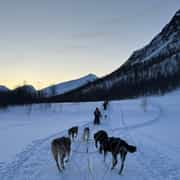
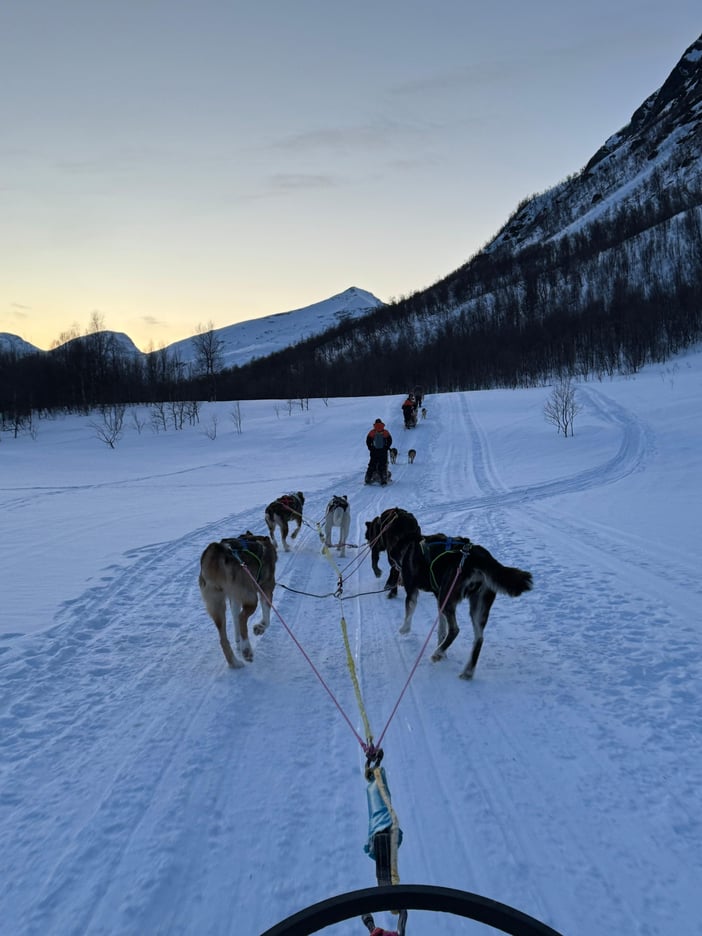
One evening packs dog sledding, snowmobiling and a two-course dinner at Camp Tamok, all within 10 hours from the city
Free cancellationTransfer from and back to Tromsø.Thermal suit
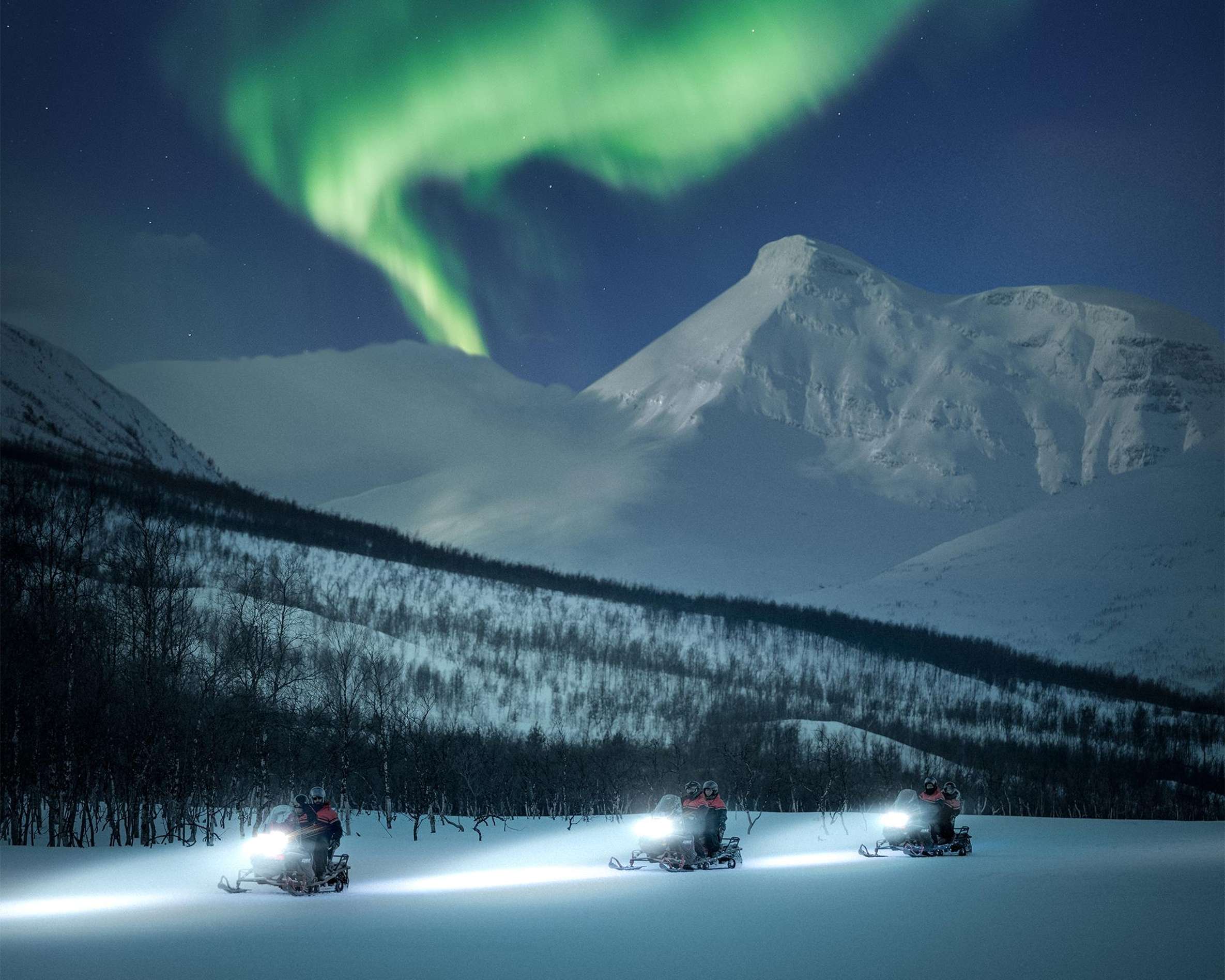
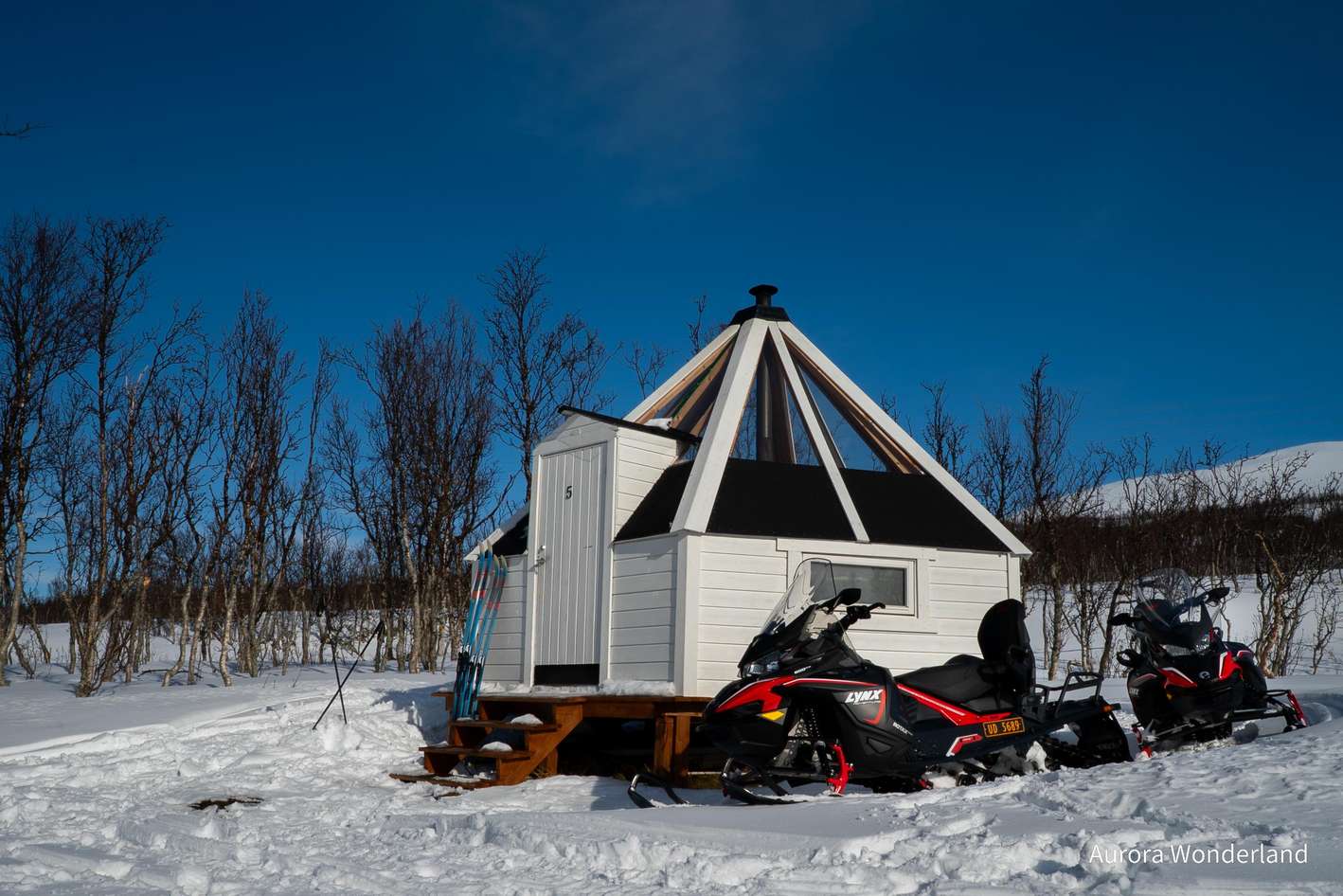
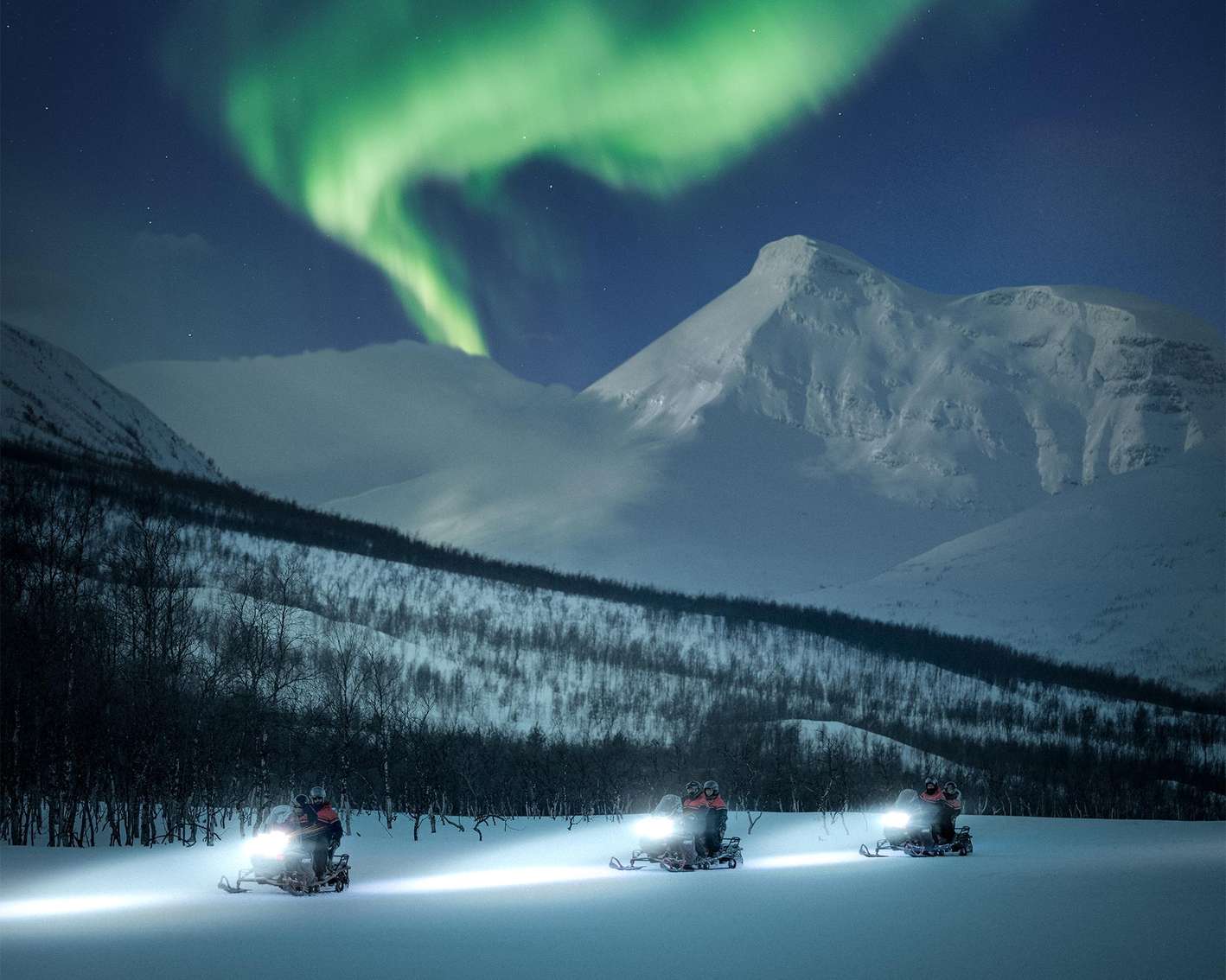
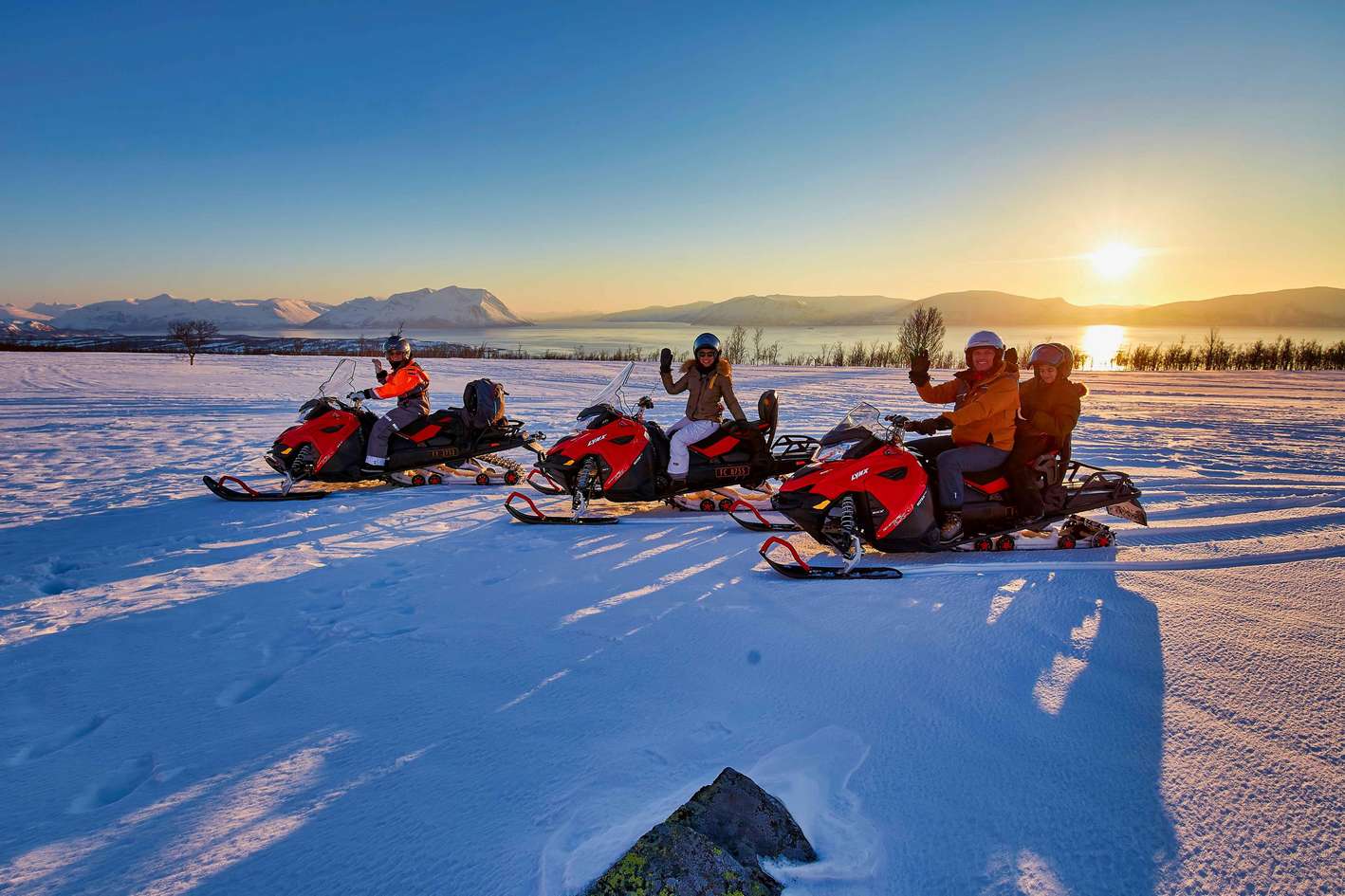
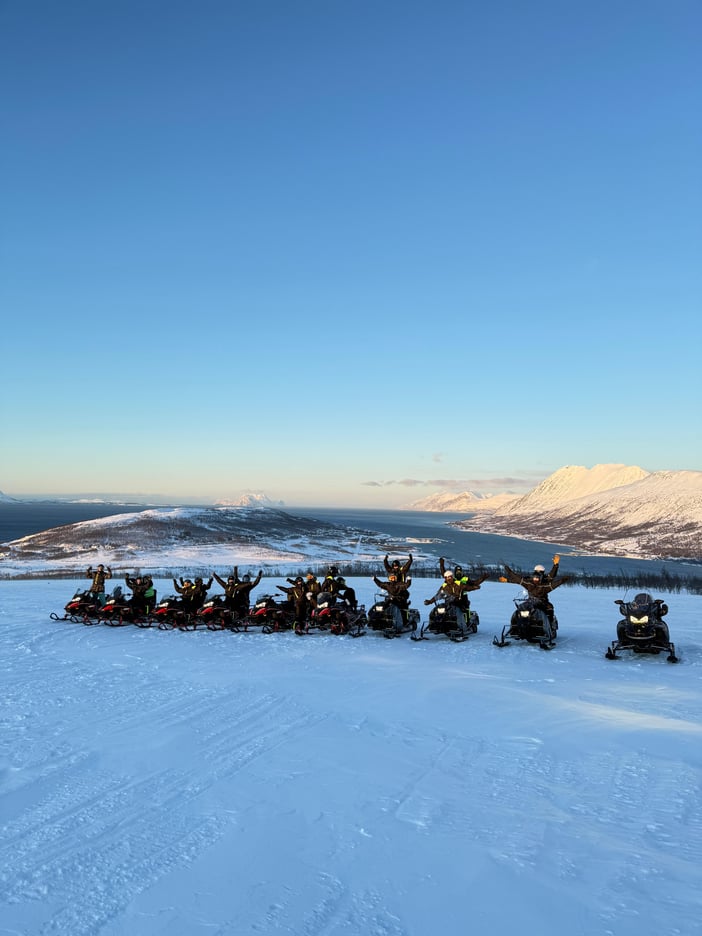
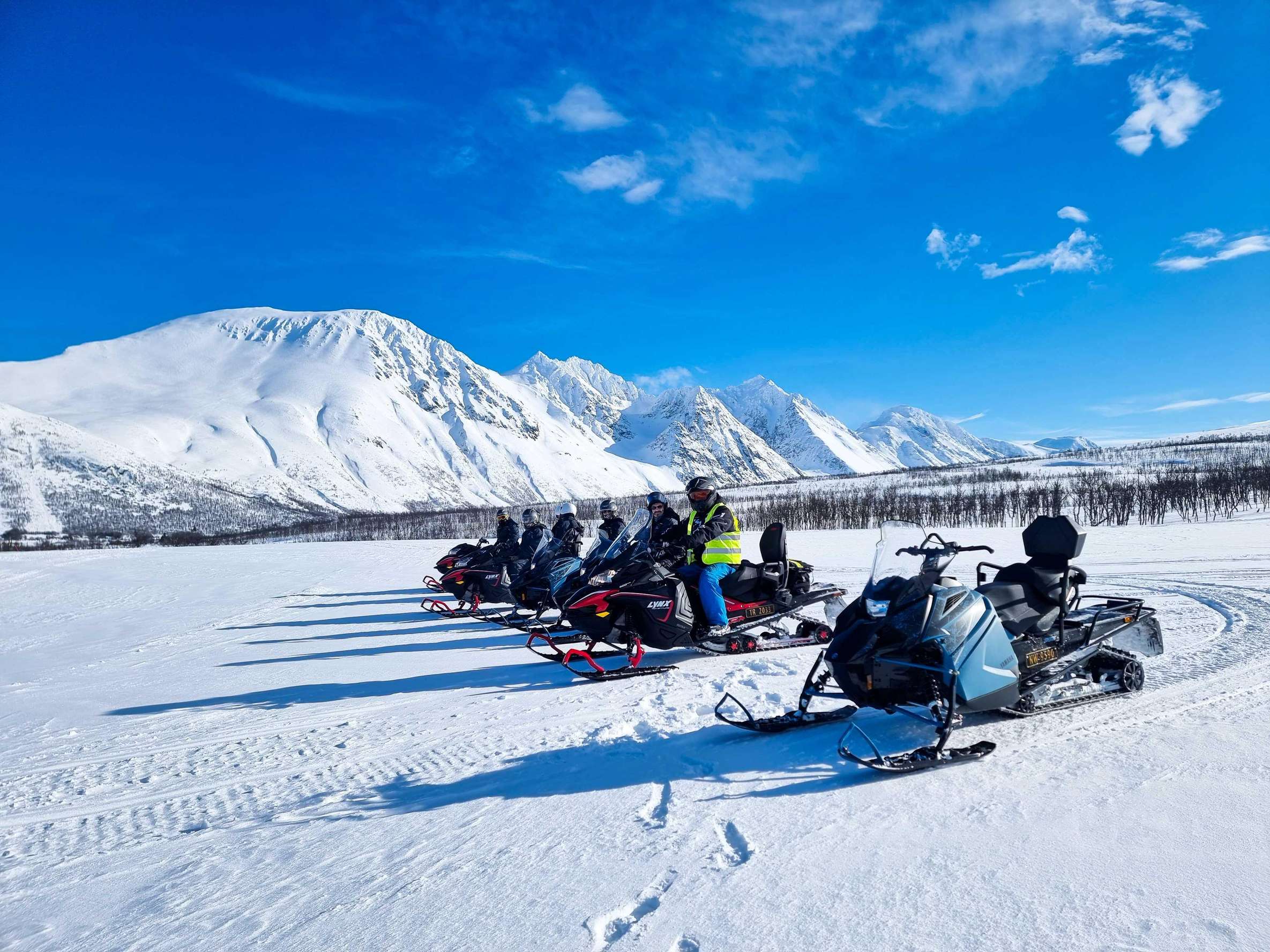
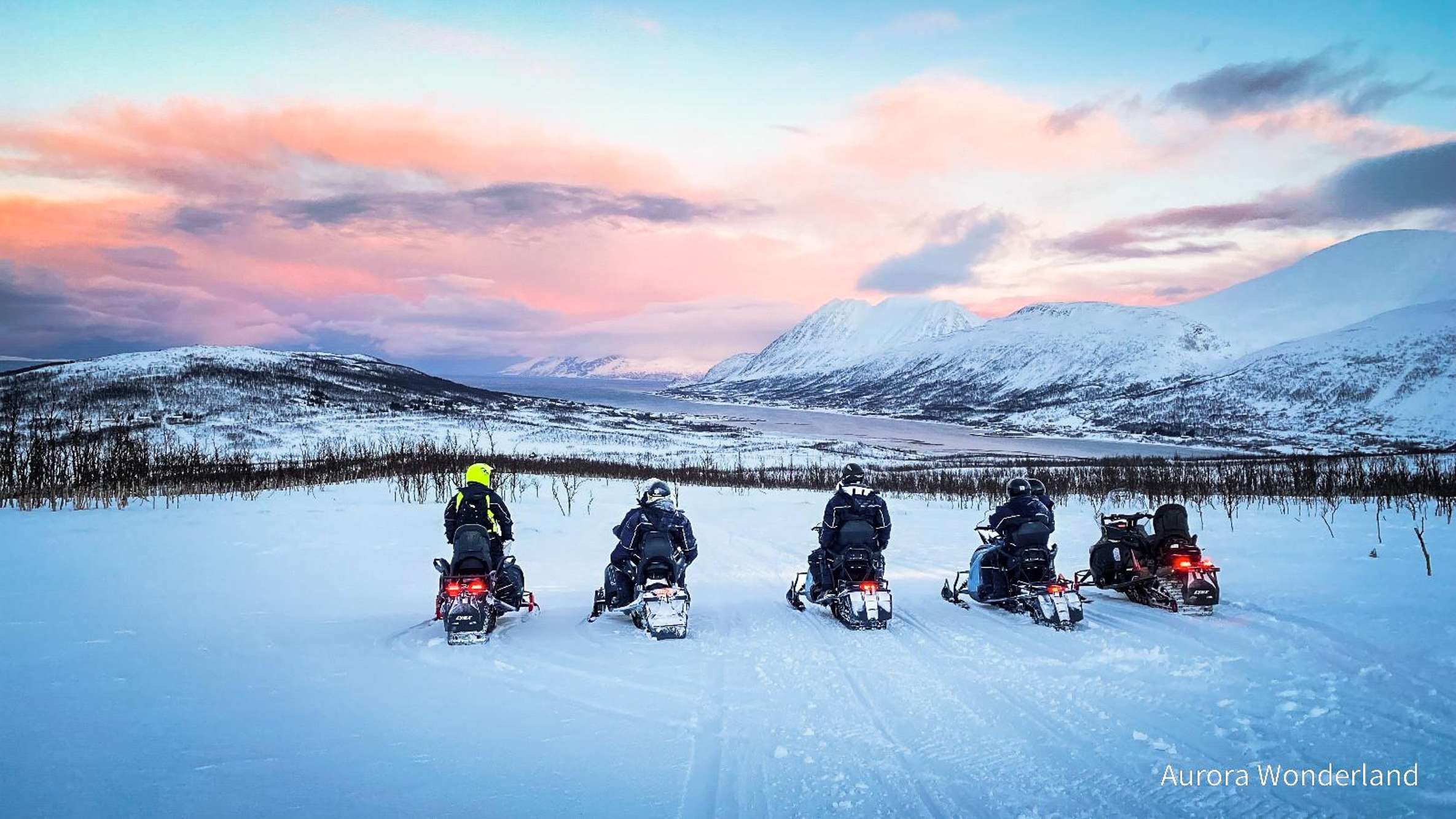
The night starts on the trail. After gear and a safety briefing, you follow a guide along snowy mountain paths far from any streetlight, with stops to kill the engines and scan the sky.
Expect roughly 1.5 to 2 hours of actual riding across about 20 km, one driver and one passenger per machine who swap halfway.
Between the trail and the camp you get thermal suits, boots, mittens and a helmet, plus a hot meal around the fire. If clouds sit over the coast, the ride and the camp evening still carry the night.
Meeting pointTromsø Havn ProstnesetThe tour bus returns you to the same harbor terminal in the city center, with time to reach taxis or late-night buses home.Street ViewStop 2Camp Tamok· 420 minA wilderness camp in the Tamok Valley, about 1.5 hours inland, where dry inland air often clears the sky when Tromsø is overcast. Sled with huskies, ride snowmobiles, then eat a two-course dinner by the fire.Drop-offTromsø Havn ProstnesetThe tour bus returns you to the same harbor terminal in the city center, with time to reach taxis or late-night buses home.Street View
Included
Transfer from and back to Tromsø.Thermal suitBootsMittensEnglish-speaking guide(s)2-course dinner
How Tromso snowmobile nights with the aurora compare with calmer evenings out
Green marks the lowest price. Prices per person.
Tour
Price
Duration
Languages
Best for
Our pick
Arctic All-in-One Night: Dog Sledding, Snowmobiling & Aurora
4.8★ (174)
from $473per person
10 hours
English
active travelers who want dog sledding and snowmobiling in one night
Most reviewers praise the guides who kept them warm, fed and confident on icy trails.
Best surprise
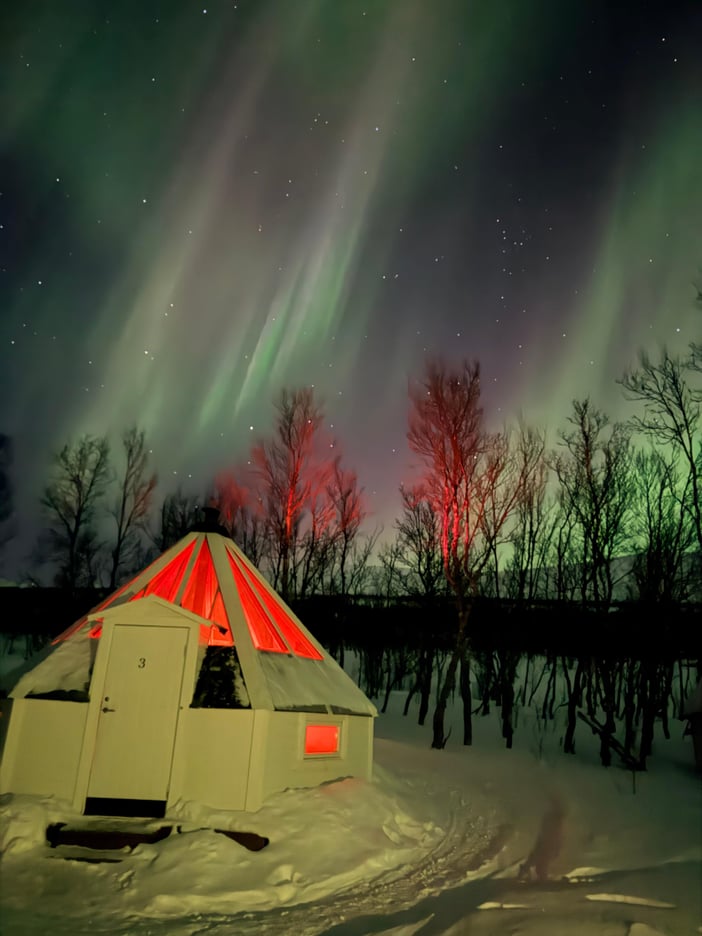
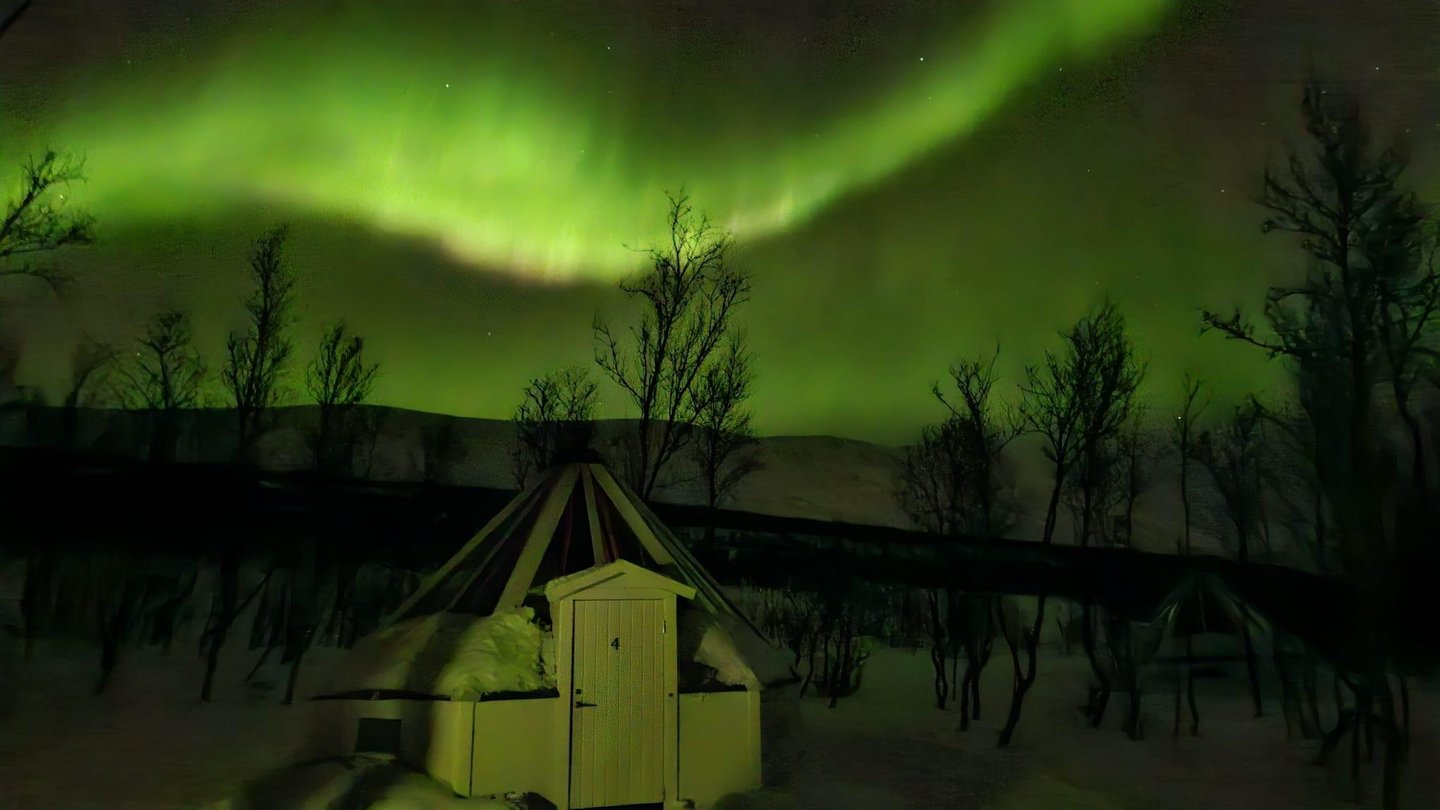
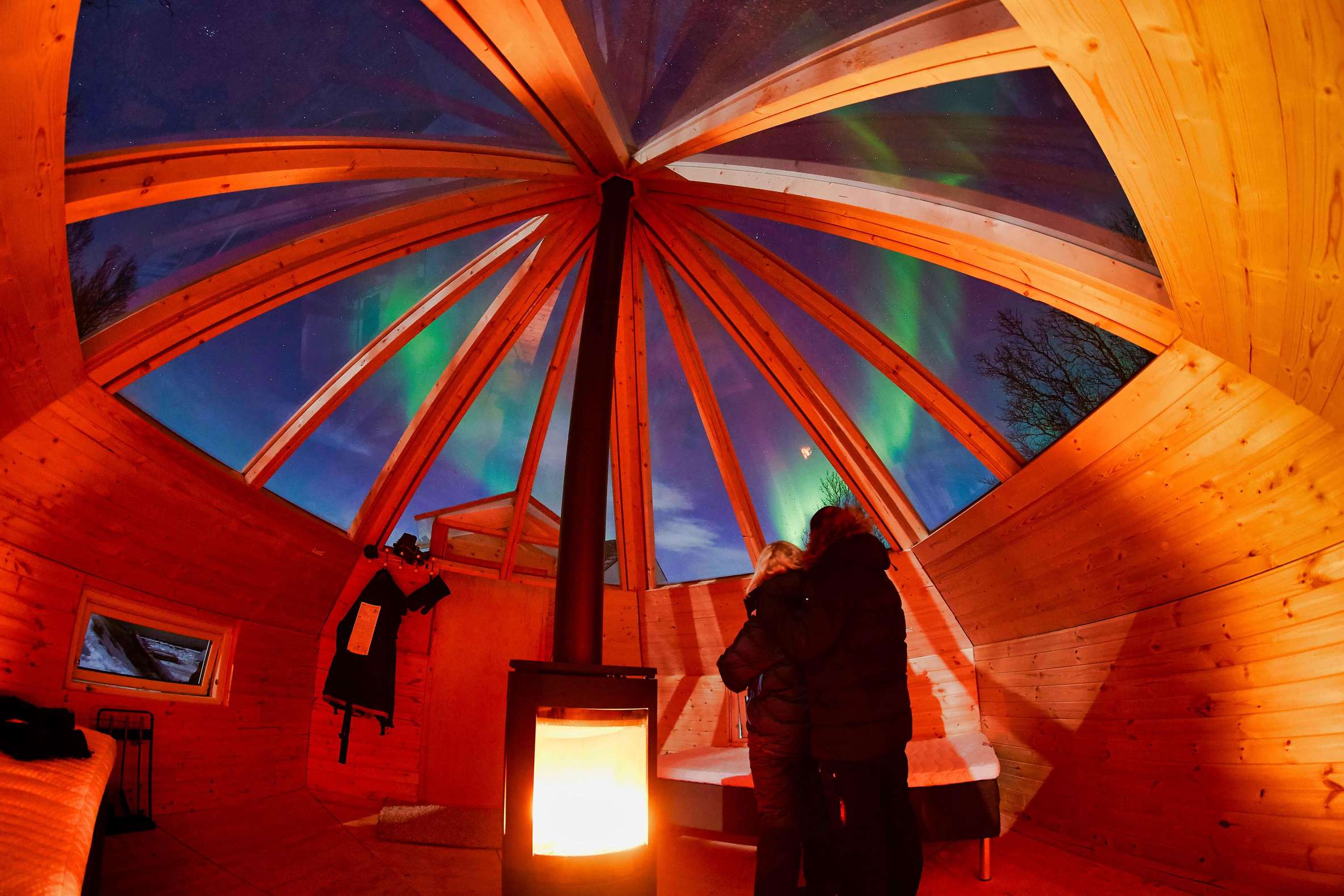
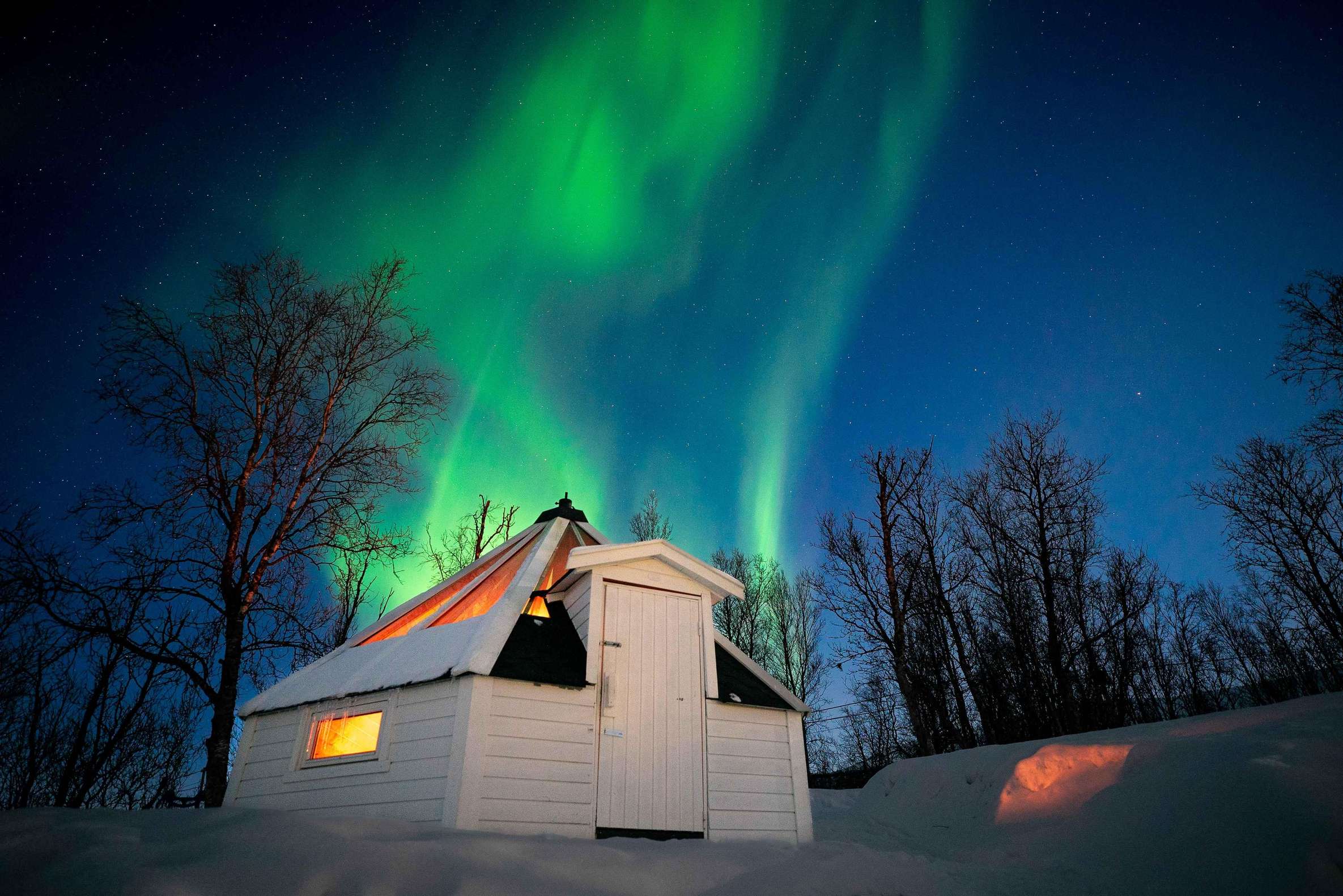
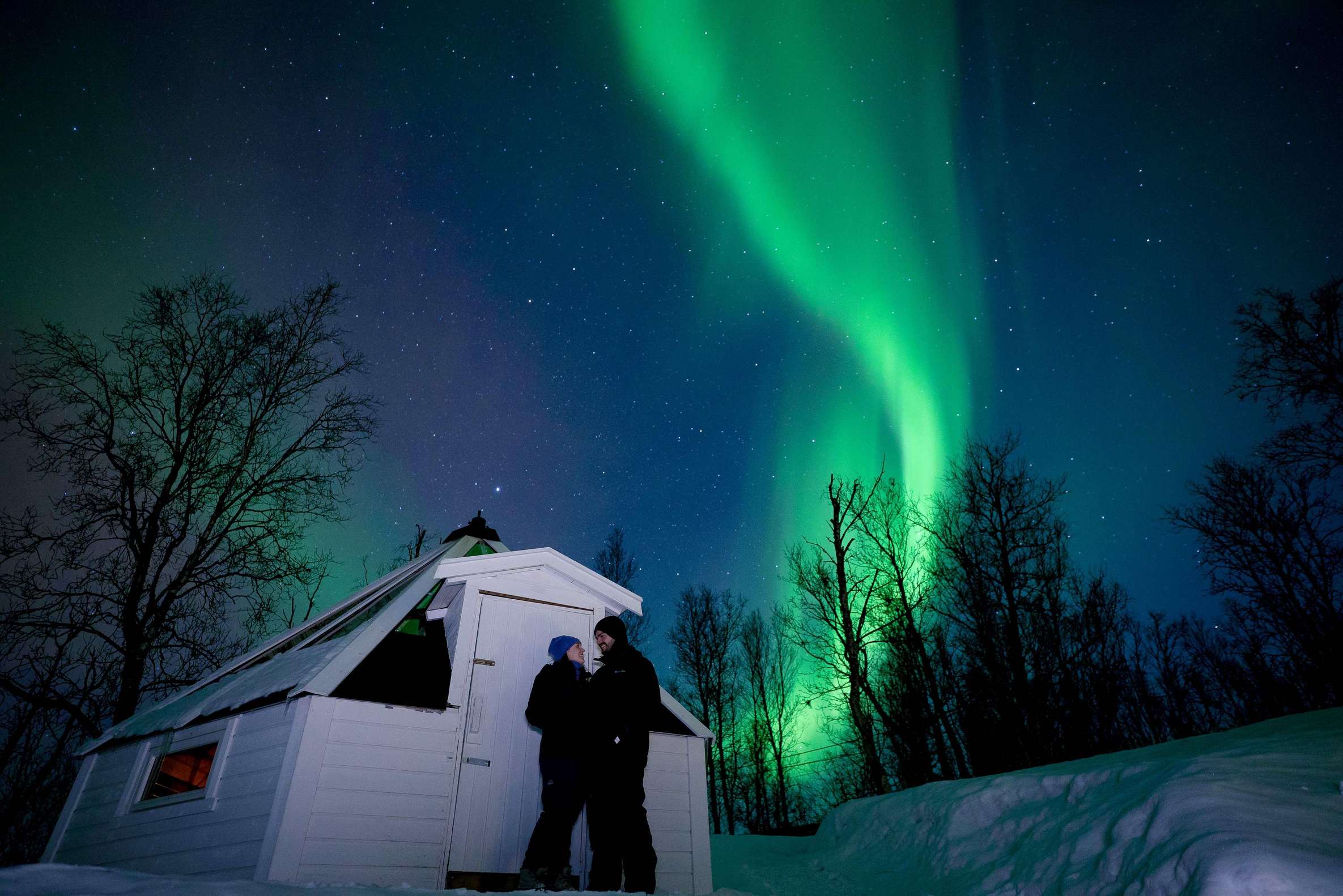
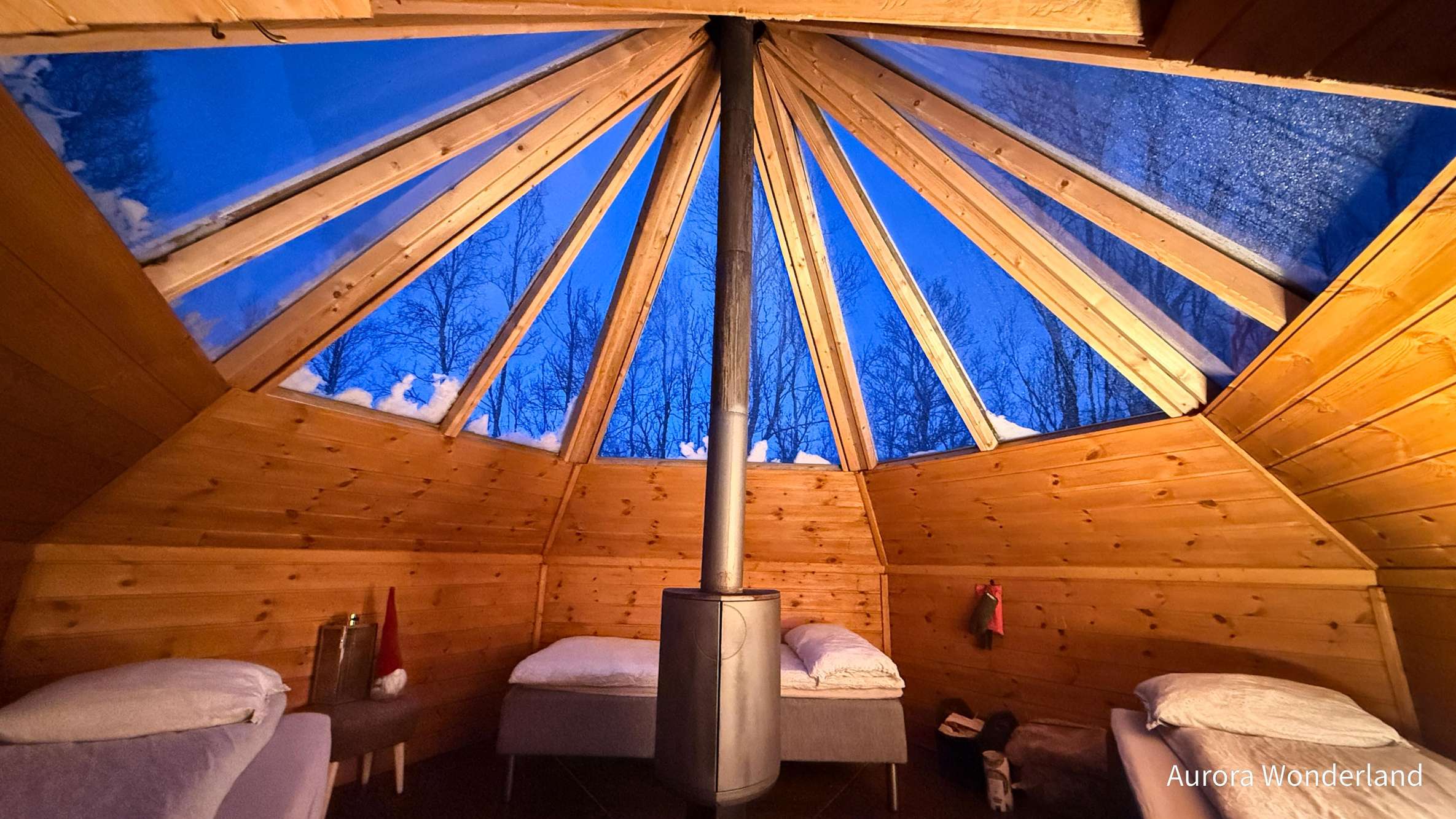
Several guests fell asleep under a glass roof with the aurora moving right overhead.
Most common wish
A few families wished the camp had a cleaner toilet on remote nights.
How to book a Tromso snowmobile northern lights tour
01
Pick your night
Book the safari for the first or second evening of your stay. Tours cancel in unsafe weather with a full refund or a new date, so an early booking leaves room to rebook if the mountain weather turns.
Pro tipCancellation is free up to 24 hours before departure, so you can hold a date early and adjust later
RecommendedCheck the cloud forecast for the inland valleys, not just Tromsø itself
02
Choose your option
Compare what each option includes: some combine snowmobiling with dog sledding and a two-course dinner at Camp Tamok, others add an overnight in a Crystal Lavvo cabin in the Lyngen Alps. Pick the mix that fits your evening and your budget.
Pro tipThe overnight Lavvo option gives you the whole night under a glass ceiling instead of one fixed window
03
Sort out who drives
Every driver must be at least 16 and show a valid physical driving licence for a car, moped or motorcycle. No snowmobile experience is needed, and two people share each machine, switching places halfway through the ride.
ImportantThe guide checks the licence in person, so a photo on your phone will not do
Common mistakeLeaving the licence at the hotel, which turns a driver into a passenger for the whole night
04
Plan the meeting point
After booking you get a confirmation with the departure details. Most evening tours meet at the harbourfront in central Tromsø, near Prostneset terminal or the quayside hotels, all within a few minutes' walk of each other.
Pro tipThe Prostneset terminal building stays open until 1:30 am, a warm place to wait
RecommendedWear slip-on ice grips over your boots, downtown pavements freeze into sheet ice from autumn to April
05
Know what happens on the day
Arrive early and you get a thermal suit, boots, mittens and a helmet plus a safety briefing before the convoy sets off. If a blizzard or unsafe trails force a cancellation, you get rescheduling, an alternative activity or a full refund.
ImportantDrivers may owe an insurance excess if they damage a snowmobile, so follow the guide's rules
RecommendedBring your own gloves and balaclava, some tours list them as the only gear you provide yourself
What to know before booking a Tromso snowmobile northern lights safari
lyngen alps block the coastal cloud
Can stop the dayGood to knowGood news
01
ChoosingWhat it is, who it suits, when to go
6
Experience
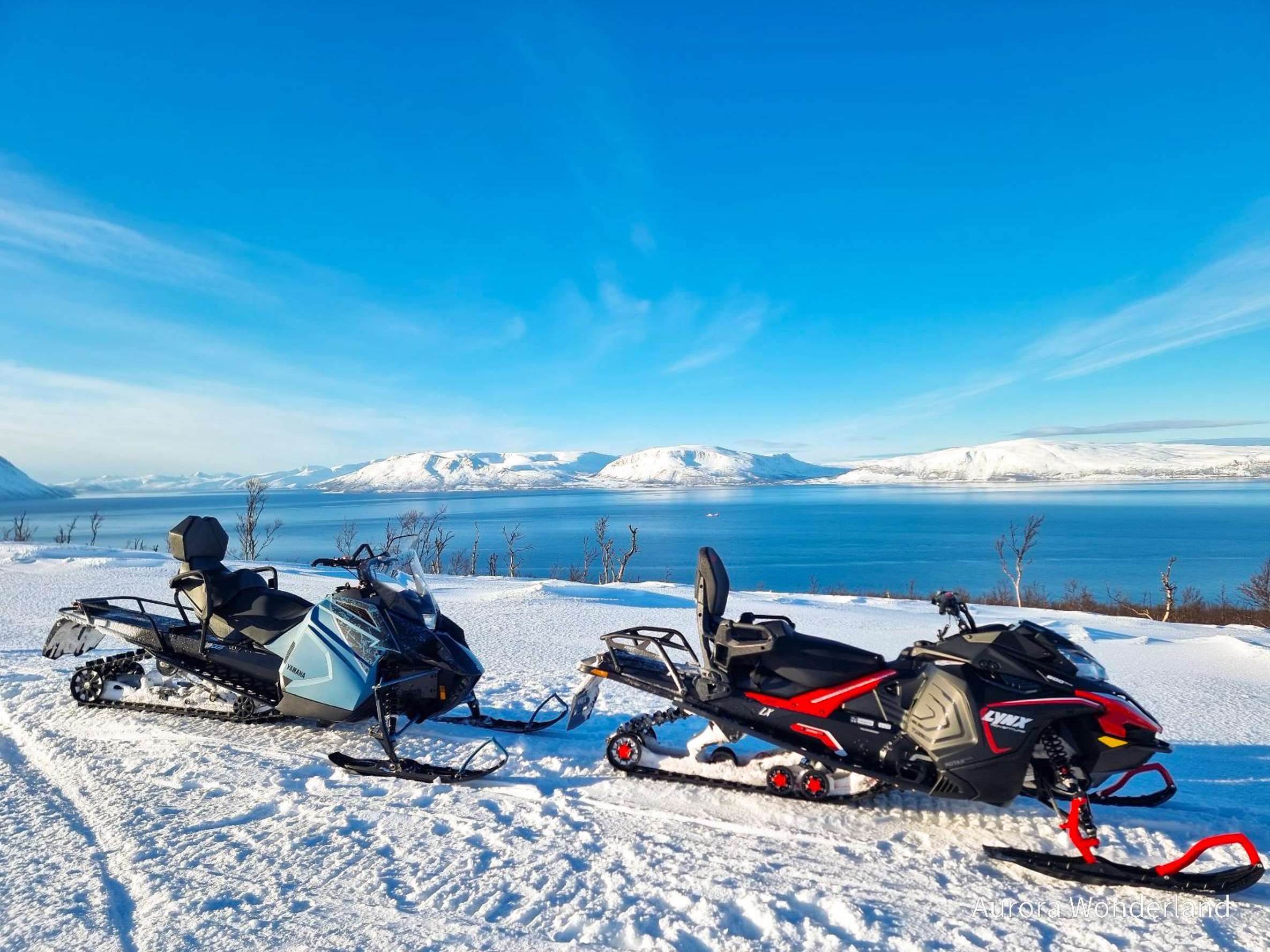
No previous snowmobile experience is needed. Every tour starts with guidance and clear instructions, and beginners ride these trails regularly. Steering depends more on posture and shifting your weight than on raw strength.
Sharing a sled
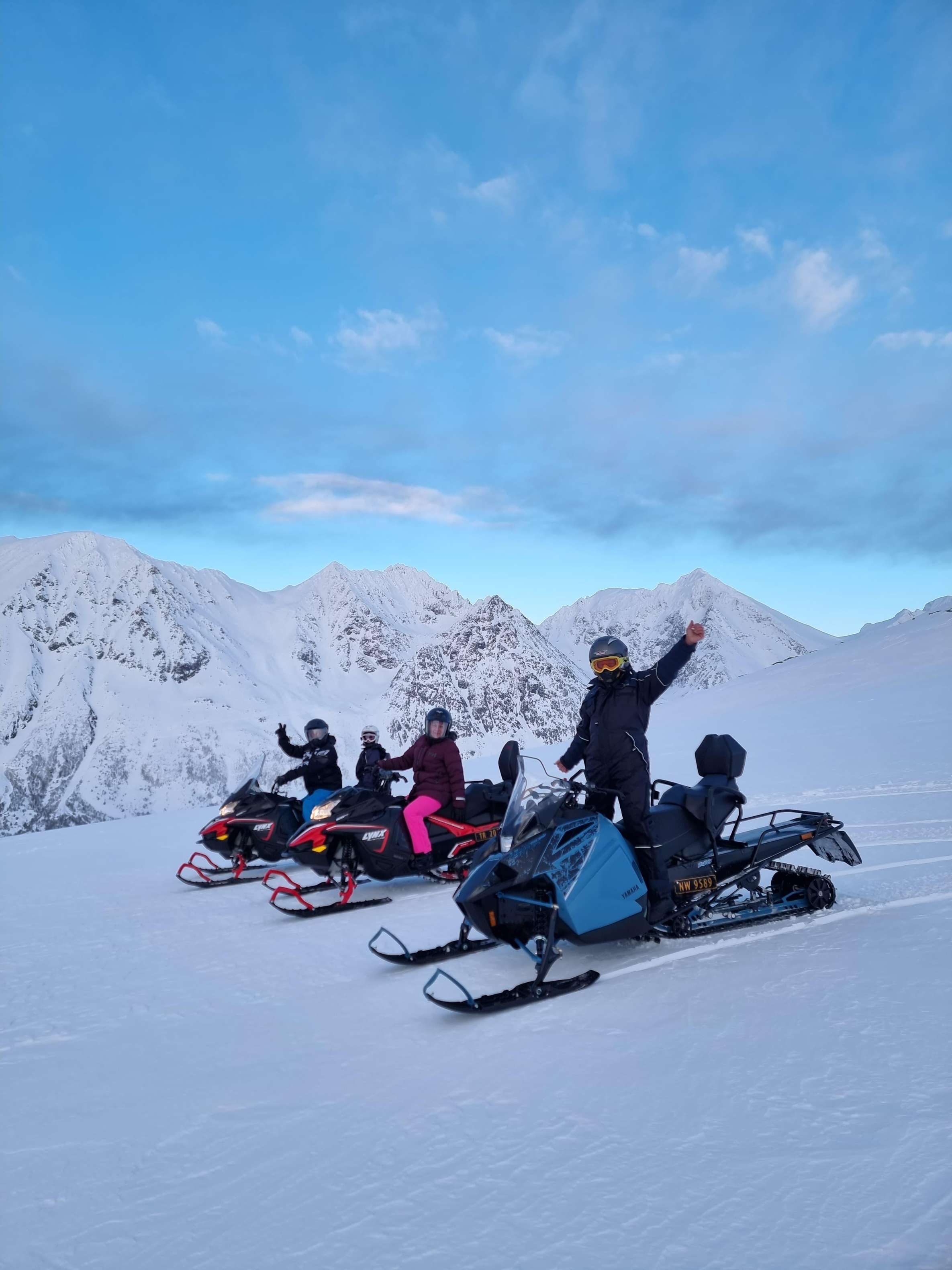
Snowmobiles are driven in pairs, one driver and one passenger, with a stop halfway through to switch places. Riding tandem makes the machine slower and slightly less agile, which many first-timers prefer. Solo driving can be booked for an extra charge.
Trail time
Expect 1.5 to 2 hours on the trail over roughly 20 km of mountain terrain, with scenic and aurora stops along the way. The rest of the evening goes to the transfer, a hot meal, and waiting under the sky at camp.
Transfers
The wilderness camps sit 1.5 hours from downtown Tromsø in the Tamok Valley, a distance of about 106 km by tour bus. Round-trip transport is included in the tour, so plan a full evening from pickup to return.
If you struggle
If the pace feels too fast or you lose confidence on the trail, tell your guide. The convoy slows down for you. Mountain riding asks real effort, and guides expect riders to be honest about it.
Clear skies
Camp Tamok sits inland behind the mountains, in a cold, dry zone that stays clear on many nights when coastal Tromsø is under cloud. The camp is also far from city light, so the sky overhead runs dark.
02
BookingHow far ahead, and what happens if plans change
1
Cancellation
Tours are cancelled only when weather, road, or trail conditions make riding unsafe, and you then get a full refund, a new date, or a comparable activity. Both featured tours also let you cancel up to 24 hours ahead for a full refund.
03
Before you goPapers, health, what to bring
4
License and ageCan stop the day
Drivers must be at least 16 years old and show a valid driver's license for a car, moped, or motorcycle to the guide before riding. Passengers have no license requirement. The license must be shown on site, so bring the physical card.
Clothing
The provided thermal suits work as an outer shell only. Wear wool base layers against your skin, avoiding cotton, add a fleece or wool mid-layer, and bring your own gloves, hat, and thick socks. Temperatures can drop to -30°C during long stops.
Health limits
Pregnant women, wheelchair users, and people with heart problems, recent surgeries, or mobility impairments are not permitted on these safaris. Children under 16 cannot ride, and one tour sets weight and height limits of 120 kg and 130 cm. Tell the operator about any medical condition in advance.
Batteries
Cold cuts lithium-ion battery capacity by up to half at -15°C, and phones can shut down in minutes on the trail. Keep spares and your phone in an inner pocket close to your body, and let cold batteries reach room temperature before recharging them.
04
During the tourWhat is expected of you
1
LiabilityCan stop the day
Snowmobiles are insured, but damage caused by the driver falls under a deductible you may have to pay on the spot. One tour offers a waiver that reduces the excess to a fixed lower amount. Following the guide's rules keeps this risk small.
Your complete guide to a Tromso snowmobile northern lights night
expect 1.5-2 hrs on the trail
A night safari by snowmobile puts you in the saddle under a dark Arctic sky, roughly 20 km of mountain trail between you and the city lights. Licence rules, the cold, the skies and the money all get settled here, so the evening holds no surprises.
Øverbygd· 69.65° N, 18.96° E
If you only remember three things
1
Bring a valid car, moped or motorcycle licence: driving is legal from age 16, and the guide must see it.
2
Expect 1.5 to 2 hours on the trail, about 20 km, with each of you driving 45 minutes to an hour.
3
Aim for February to Easter, when the snowpack is deep and the nights still dark.
Is a Tromso snowmobile northern lights safari worth it?
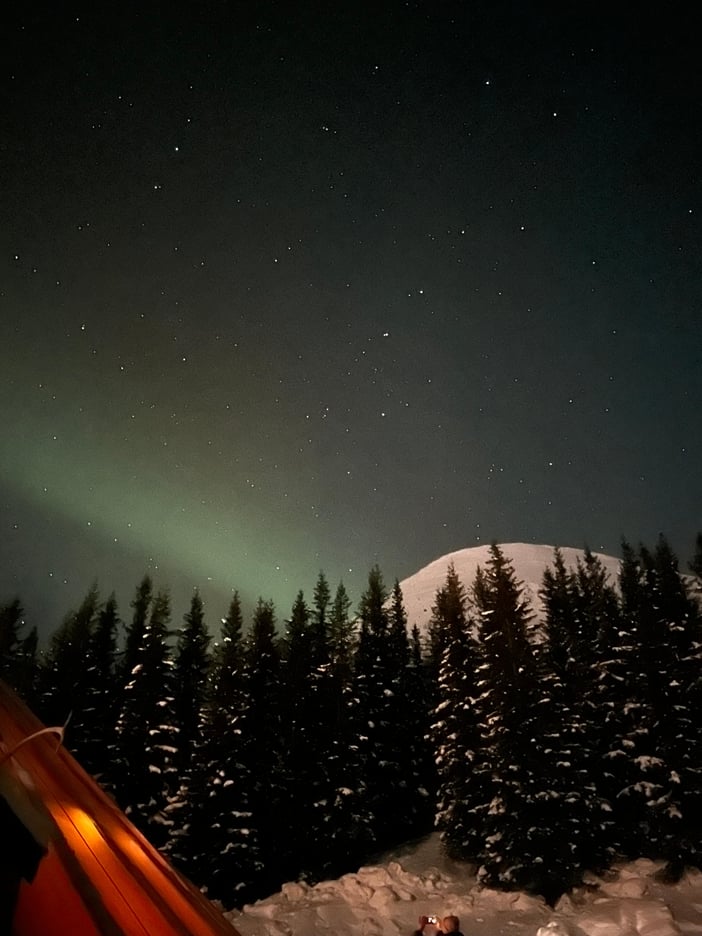
The engine idles under a sky full of stars, somewhere in the Tamok Valley, and the only light on the snow comes from the moon. This is the part of the night that is certain. The trail ride, the campfire and the quiet wilderness happen whatever the clouds decide.
That matters, because no operator can promise the aurora. Coastal Tromsø sits under humid maritime air, and on plenty of evenings the cloud stays put.
What you have paid for, honestly, is the ride itself: handling the machine through snowy forest, the cold air on your face, and a hot meal in a lavvu at the end. When the sky opens, the lights are the bonus on top.
People who have done it say the same: even a clouded-out night sends you home with a story. Book it for the ride, and treat any aurora as a gift.
Three assumptions debunked
MythA cloudy forecast means a wasted trip
Reality
The guided trail ride through mountain valleys runs regardless of sky, and it is the reason most riders come back grinning
MythYou need aurora for the evening to be an adventure
Reality
Driving a snowmachine through dark forest and eating by a bonfire carries the night on its own
MythA night without lights means nothing happened
Reality
The ride, the food and the stillness still give you a full Arctic evening
So if your travel companion refuses to spend an evening chasing light that may not appear, this is your answer. The safari is an Arctic adventure first and an aurora hunt second.
The licence is the first gate. Norwegian rules require every driver to be at least 16 years old with a valid car, moped or motorcycle licence, and the guide checks it at base camp before you touch the throttle. No prior snowmobile experience is needed; the briefing and instructions cover what first-timers require.
The physical side is real but manageable. Mountain trails ask you to stand and shift your weight through corners, and riders spend most of the outing at a moderate to vigorous effort.
Steering rewards technique over raw strength: posture and weight shifting do the work, though your arms will know about it by the end. Expect wind chill on the move that no static evening matches.
Not sure about driving? The passenger seat asks nothing of you. Tandem machines run slower and steadier, and you can still take a turn later. What you cannot do is rent a machine independently; wilderness access runs through guided convoys only.
Driving a sled versus riding one
DrivingNeeds a valid car, moped or motorcycle licence from age 16; no prior experience, but you stand and shift weight on mountain trails
Moderate
Riding as a passengerNo licence and little effort, though you give up half the thrill; tandem machines are slower and less agile but safer
Easy
Free-roaming rentalWilderness law keeps snowmobiling inside guided group excursions of roughly an hour on the trail
No access
Pick your seat with this in mind: driving is the reason most people come, and the passenger option exists for anyone who wants to ease in.
Tour for this
Tromsø: Northern Lights Husky Visit with Traditional Dinner4.7★ (1,769) · 4 hours · Free cancellation
What happens on a Tromso snowmobile safari evening
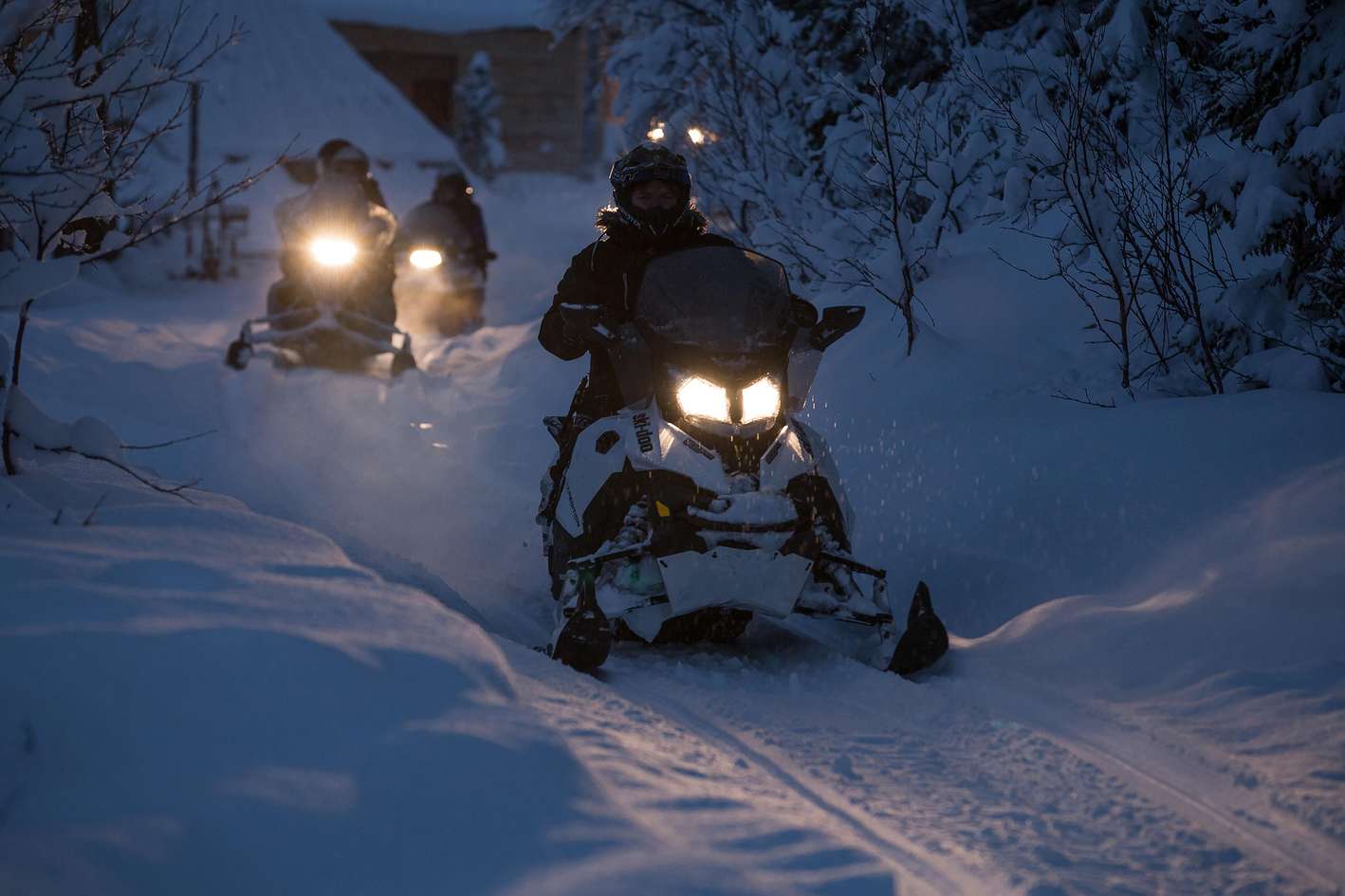
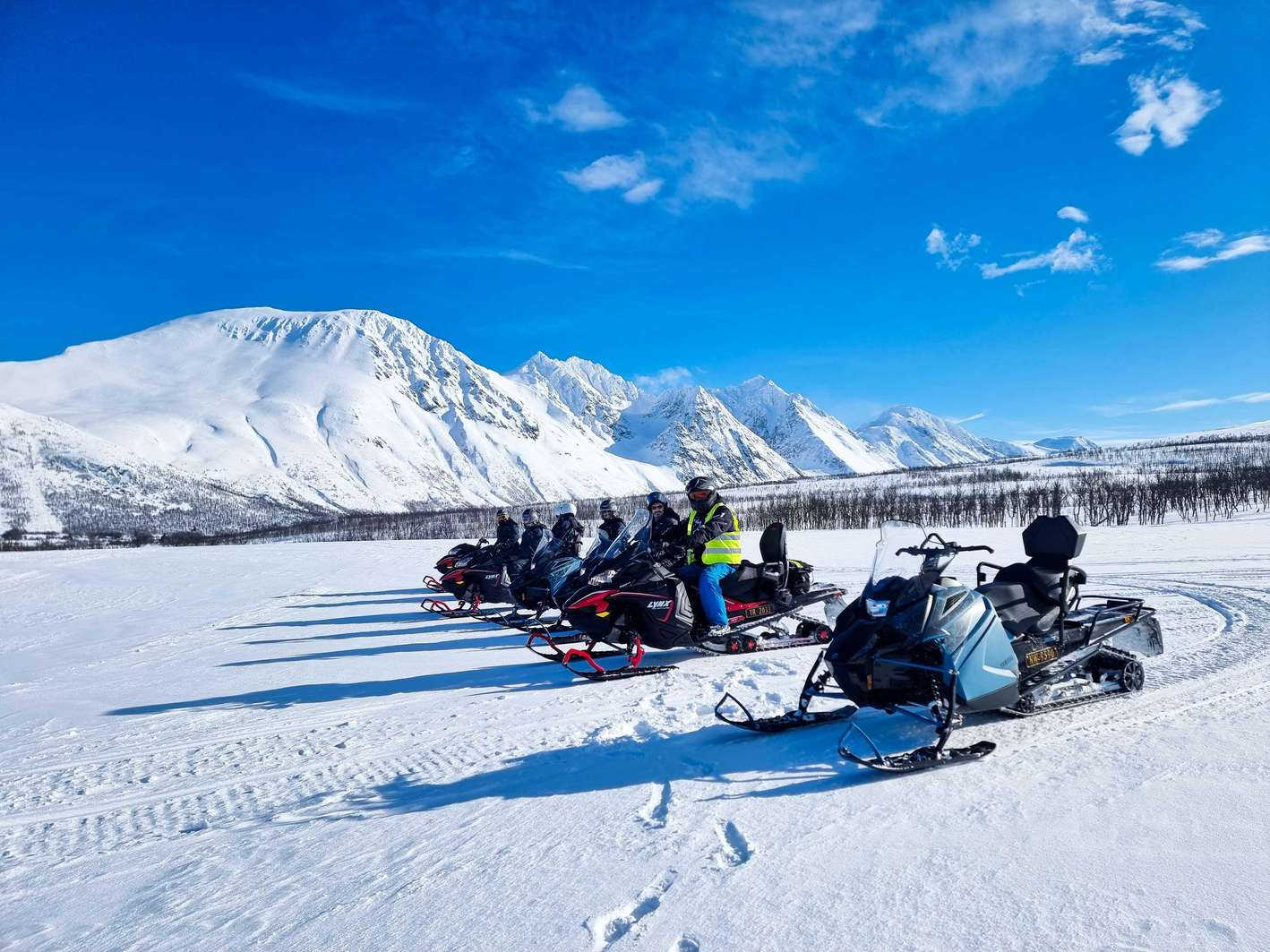
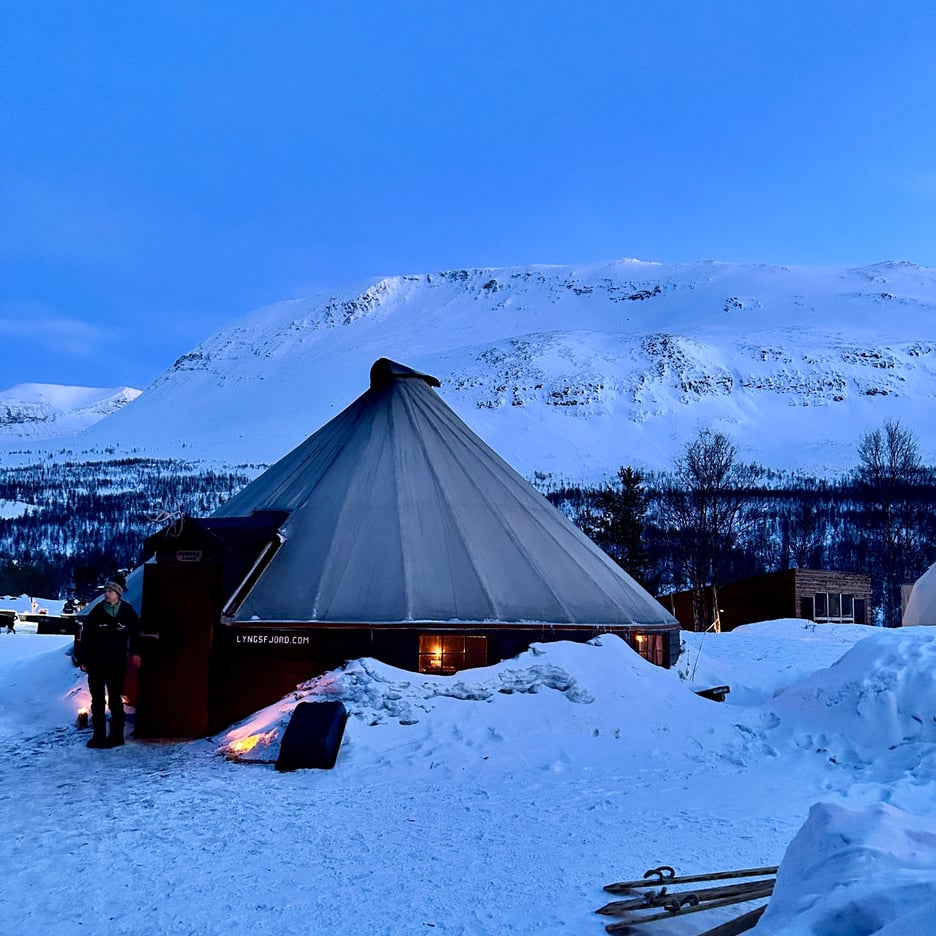
The evening runs on rails, in the good sense. A bus collects you downtown and carries you inland to the camp, where thermal suits, boots and a helmet come off the rack. The guide runs a safety briefing, matches riders to machines, and the convoy moves out onto the trail in single file.
Out on the mountain you cover about 20 km in 1.5 to 2 hours, with stops built in to scan the sky and let the engine noise fall away. Halfway through, the convoy halts and drivers swap with their passengers, so each of you gets roughly 45 minutes to an hour at the handlebars.
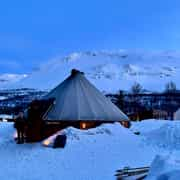
If the pace feels too quick or your confidence dips, say so. Guides slow the convoy for anyone who asks. At Camp Tamok the night closes with a hot meal and coffee around a bonfire inside a dining lavvu, warm at minus thirty outside.
Trail time on an evening snowmobile safari
1.5-2 hrtime out on the trail
20 kmtypical trail distance
7.5 hrtotal tour duration from Tromsø
The trail time is the part that decides the evening. Everything before it is transfer and kit-up; everything after it is food and sky-watching.
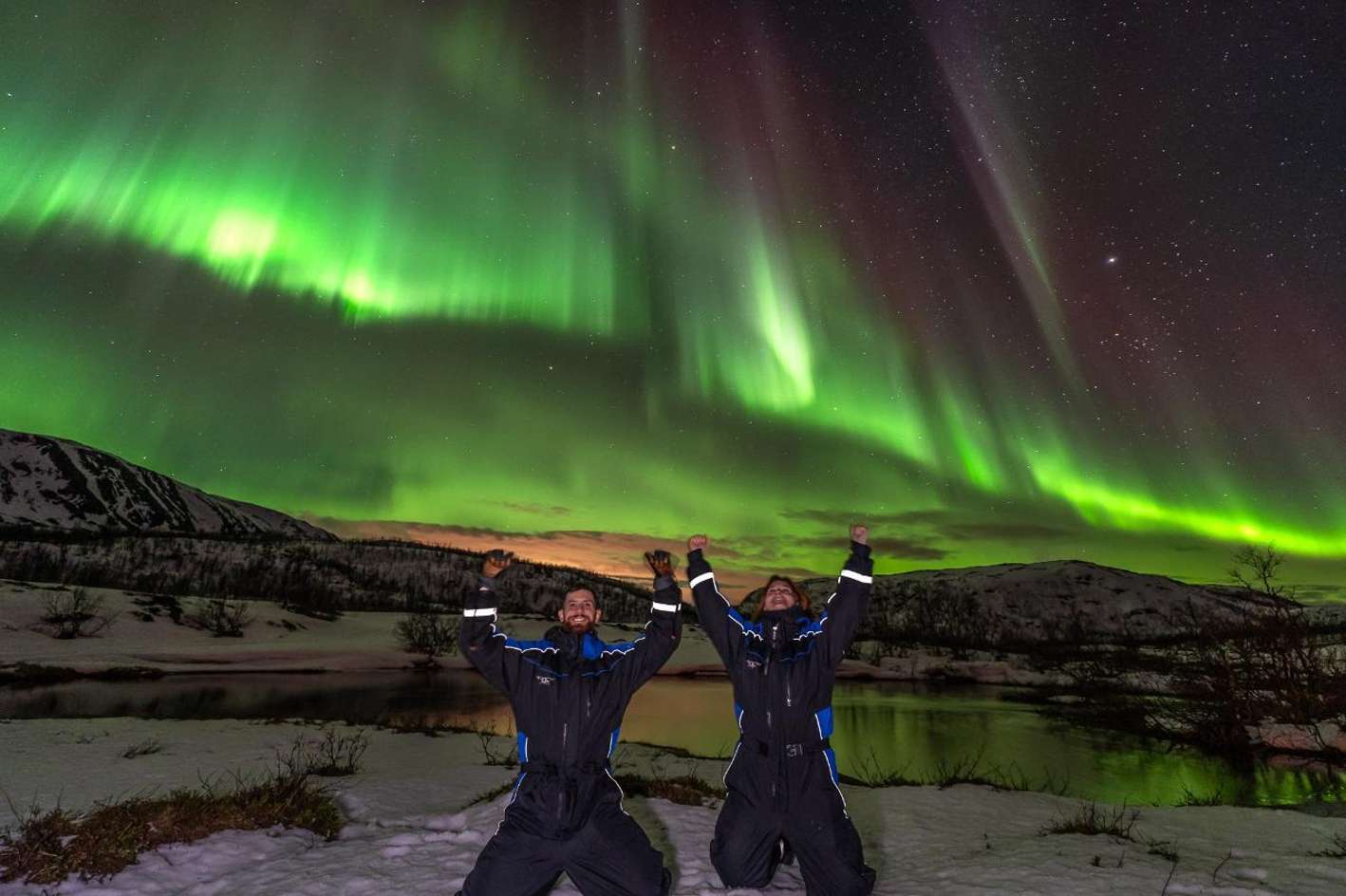
One tour on this page stretches the format into a full combo: the Arctic All-in-One Night pairs self-driven husky sledding with the snowmobile trail, a two-course dinner and aurora portraits, across ten hours built around Camp Tamok.
Snow decides whether a Tromso snowmobile safari runs at all, and depth varies more than darkness does. January and February bring the peak combination: 40 to 41 cm of snow on average alongside 12 to 15 hours of full darkness. That is when the trails are banked and the nights are long.
March stays reliable, with 26 cm of average snow depth and the bonus of returning daylight for daytime activities. December delivers the deepest dark, 16 hours of it, but the snowpack is still establishing at around 33 cm and early in the month it can be inconsistent.
Early November is thinner still; most trail bases near Tromsø lack rideable snow until December or January. When local snow lags, operators across the border in Kilpisjärvi, Finland, start running earlier.
The sweet spot regulars aim for runs from February through Easter: heavy, dependable snow plus enough daylight to fill the day before the ride.
Best months for snow and dark skies in Tromsø
January: 5 out of 5 for how busy it gets. Peak visitor numbers coincide with deep snow cover, over 13 snowy days, and 15 hours of darkness daily.
HighestOct to Mar
LowestApr to Sep
Darker: a higher how busy it gets score, out of 5
Tap a month to read it.
January: snow on 13.6 days. Peak visitor numbers coincide with deep snow cover, over 13 snowy days, and 15 hours of darkness daily.
HighestNov to Apr9.4 to 13.6 days
LowestMay to Oct0 to 2.8 days
Darker months: higher, from 0 to 13.6 days
Tap a month to read it.
December: 16 hours of darkness. The busiest month provides 16 hours of pitch-black sky daily, though deep snowpack is still building.
HighestNov to Feb12 to 16 h
In betweenMar, Sep to Oct5.5 to 10.6 h
LowestApr to Aug0 to 1.1 h
Darker months: higher, from 0 to 16 h
Tap a month to read it.
September: 6.7 clear dark nights. Tours do not run on snow as autumn begins without snow cover, though dark skies return.
HighestSep to Oct5.3 to 6.7 nights
In betweenDec to Mar3 to 4.3 nights
LowestApr to Aug, Nov0 to 1.7 nights
Darker months: higher, from 0 to 6.7 nights
Tap a month to read it.
Read the two dark-sky numbers against each other before you book. December has 16 hours of darkness but only about 3.7 clear dark nights in the region, so the long night is no promise of a visible sky. The snowmobile trail guarantees terrain; only February to Easter guarantees the snow under it.
Tour for this
Tromsø: Snowmobile Tour & Aurora Crystal Lavvo Stay4.8★ (71) · 1 day · Free cancellation
Why inland skies beat coastal cloud on a Tromso snowmobile night
One geographic fact shapes the whole safari. Tromsø sits on a coastal island where maritime air stacks up low cloud, while the Tamok Valley lies inland, sheltered behind mountain massifs that block the ocean moisture.
The result is a cold, dry continental microclimate that holds crisp, cloud-free night skies even when a coastal storm buries Tromsø.
The Lyngen Alps do the blocking. Their steep alpine peaks trap moisture off the sea, wringing it out on the western side and leaving a rain shadow over the interior valleys to the east. Camp Tamok sits in that drier zone, under clearer inland mountain weather.
The trade-off is honesty about mobility. A snowmobile cannot outrun regional cloud the way a road vehicle can; a fixed-trail safari depends entirely on local conditions. What it buys instead is certainty of terrain, a high mountain vantage and a camp already deep in the darkness.
Snowmobile safari, mobile chase or fixed camp
Snowmobile safari
Mobile minibus chase
Fixed husky or reindeer camp
How it handles cloud
Stays on its local trails, so sightings depend on the valley's own skies
Drives inland toward the Finnish border to find clear sky
Stays put and waits for the sky to clear
Cold exposure
Wind chill hits hard while riding, with a heated dining lavvu at the end
Heated bus between stops, short steps outside
Most of the evening outdoors around a fire
Activity level
High: standing, weight shifts and gripping through corners
Low: sitting and short walks
Low to moderate
Suits
Riders who want the drive itself as the adventure
Chasers who put sighting odds above everything else
Families and anyone easing into the cold
Snowmobile safari
How it handles cloud
Stays on its local trails, so sightings depend on the valley's own skies
Cold exposure
Wind chill hits hard while riding, with a heated dining lavvu at the end
Activity level
High: standing, weight shifts and gripping through corners
Suits
Riders who want the drive itself as the adventure
Mobile minibus chase
How it handles cloud
Drives inland toward the Finnish border to find clear sky
Cold exposure
Heated bus between stops, short steps outside
Activity level
Low: sitting and short walks
Suits
Chasers who put sighting odds above everything else
Fixed husky or reindeer camp
How it handles cloud
Stays put and waits for the sky to clear
Cold exposure
Most of the evening outdoors around a fire
Activity level
Low to moderate
Suits
Families and anyone easing into the cold
For this reader, the safari wins on terrain and sky in one package. If a cloud wall sits over the whole region for days, a road-based chase is the tool that moves.
Tour for this
Tromsø: Aurora Crystal Lavvo Overnight with Guided Activity4.8★ (240) · 1 day · Free cancellation
Every guided safari pairs riders up by default: one driver, one passenger, with a halfway stop to switch. On a typical evening that hands each of you 45 minutes to an hour behind the bars.
Sharing also suits the machine; tandem sleds run slower and slightly less agile, but less risky, which first-timers usually come to appreciate around the first icy corner.
Solo driving exists. Guests can book a single-rider machine for an extra charge, and for confident drivers who want the whole trail to themselves it is money well spent. Decide before checkout, not at base camp, because solo slots are limited and the pairing is sorted when you arrive.
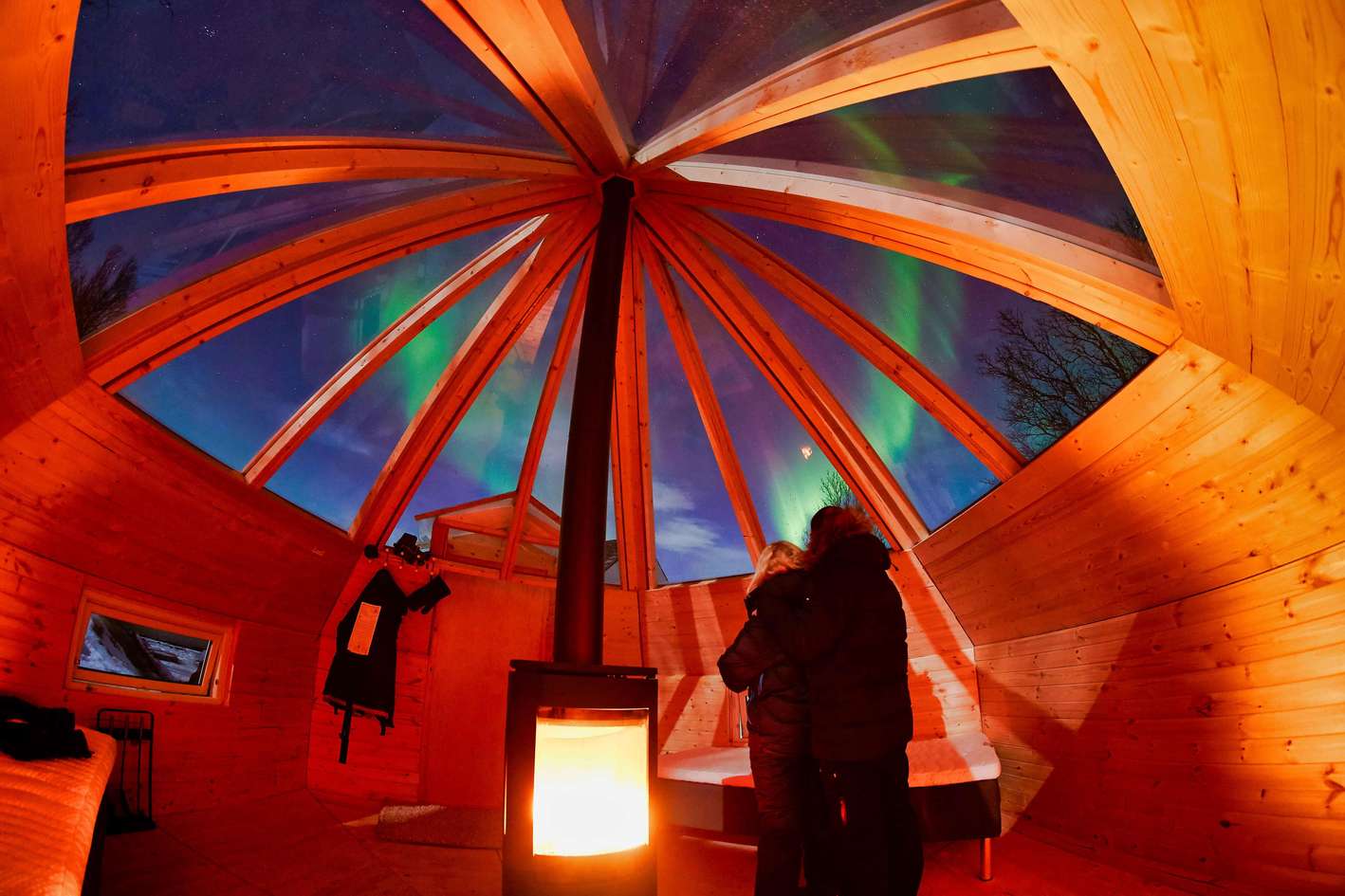
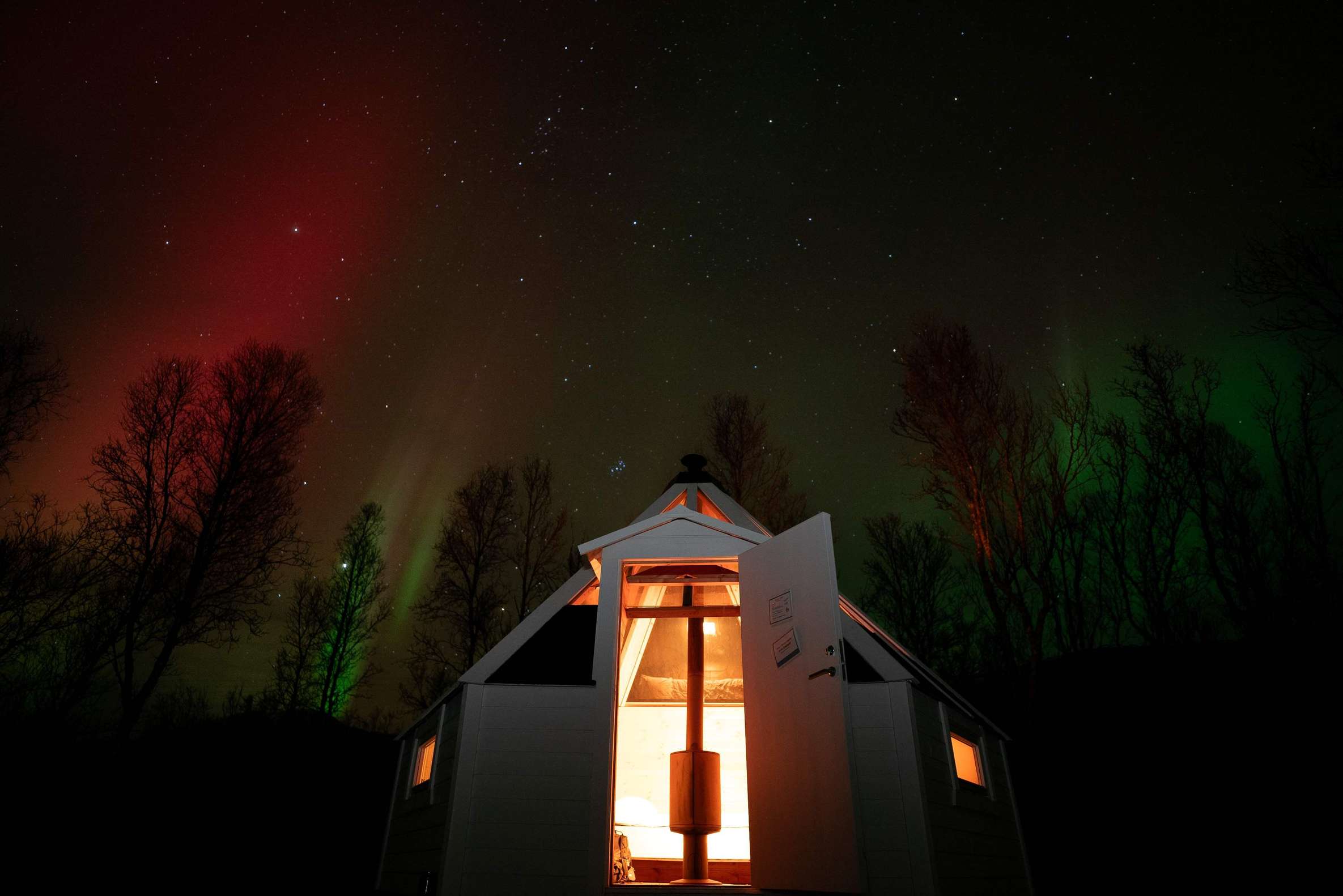
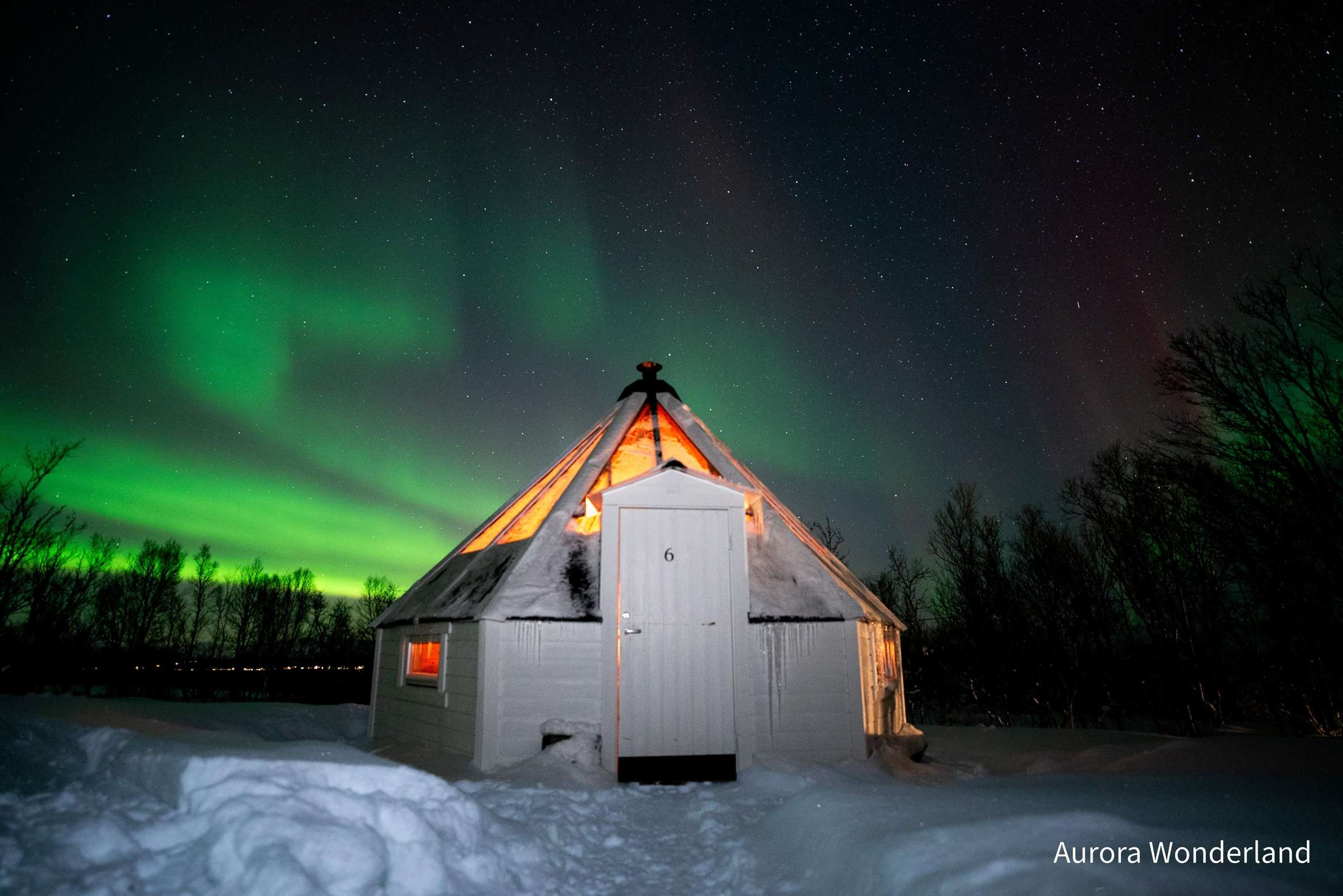
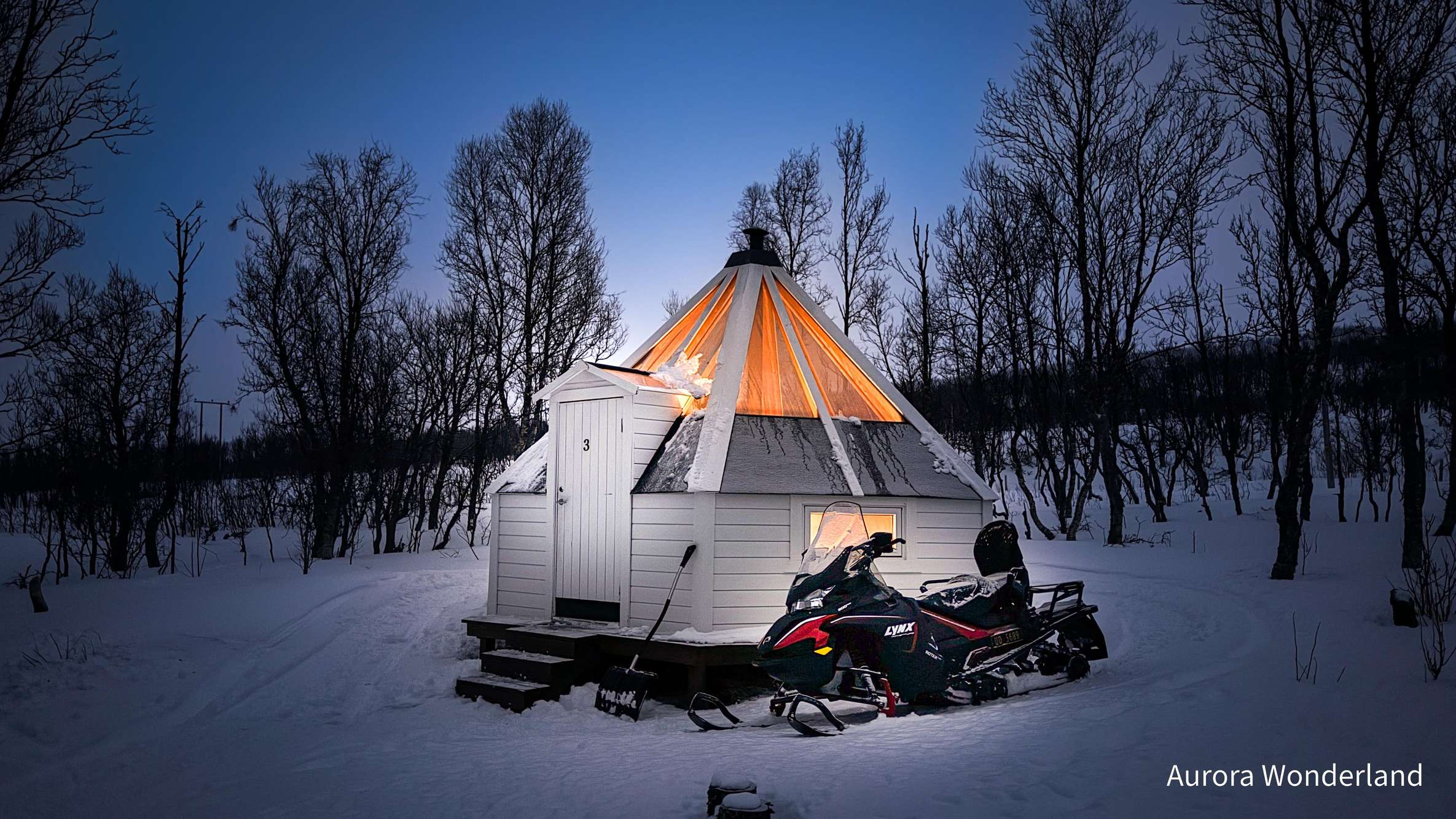
One safari on this page takes the format further: the Tromsø Snowmobile Tour and Aurora Crystal Lavvo Stay rides the Lyngen Alps by day and ends in a private glass-roofed cabin, where you can watch the sky from a wood-fired bed instead of standing in it.
How to choose your Tromso snowmobile safari
Check
Why it matters
Our pick
Solo driving option
Sharing means only half the trail in your hands, unless you pay extra for your own machine
Machines run two-up with driver switches; solo driving can be arranged for an extra charge
Licence and age rules
Driving needs a valid car, moped or motorcycle licence from age 16, shown to the guide
The guide checks every licence before departure
What the night adds beyond the ride
A ride alone ends when the trail does; a camp or overnight stretches it
You finish in a private Crystal Lavvo with a glass ceiling, wood stove, dinner and breakfast included
Weather terms
Cancellations and reroutes change what you actually get
The tour cancels only in extreme weather, with a full refund or a new date
Work down those rows before you pay. The licence row is the one that can stop the trip, so sort it first and the rest is preference.
Tour for this
Reindeer Feeding & a Chance of Northern Lights with Dinner4.5★ (1,569) · 4.5 hours · Free cancellation
The transfer earns its keep: fjords out the window, roads climbing inland, and the sky starting to behave differently with every kilometre.
Buses leave from the harbourfront cluster downtown, where most excursion pickups sit within a couple of minutes of each other: the terminal inside Tromsø Havn Prostneset, the Radisson Blu entrance, and the quayside outside Scandic Ishavshotel.
Downtown pavements ice over from autumn through April, so slip-on ice grips over winter boots make the walk to the meeting point safer than racing across sheet ice.
Then the city lights fall behind. Camp Tamok lies 106 km inland, about 1.5 hours by tour bus, and the drive marks the shift from street glow to genuine darkness.
Camp Nikka at Malangen runs shorter, 64 km and 60 to 75 minutes by road, followed by a short walk from the resort to the camp.
Transfer times and distances to mainland wilderness camps
1 hr 30 minbus transfer to Camp Tamok
106 kmdistance to Camp Tamok
1 hr 15 mindrive to Camp Nikka base
64 kmdistance to Camp Nikka base
Plan the rest of the evening around that drive. With a 90-minute transfer each way and trail time on top, these safaris take the whole evening, which is exactly why locals schedule nothing else for the same night.
Dressing happens in two stages. Stage one is yours: the operator's Arctic overalls are an insulated shell, nothing more, and at temperatures that can reach minus 30 during long stationary waits they need proper layers underneath.
A wool base layer against the skin, a fleece or heavy wool sweater over it, and thick wool socks come first. Cotton is the classic beginner mistake; it holds sweat and chills you fast.
Stage two happens at the camp. Thermal suits, winter boots, helmets and on some safaris mittens come off the rack and go over everything you brought. The suit blocks the wind at speed; your own layers keep you warm when the convoy stops and you stand still under the sky.
Clothing to wear under Arctic overalls
Thermal wool top and long johnsWorn directly against the skin to trap body heat and wick moisture; avoid cotton, which absorbs sweat and causes rapid cooling.
Wool sweater or heavy fleece jacketCreates an insulating dead-air space over your thermal top before stepping into the thick thermal suit.
Fleece or outdoor trousersWorn over long johns to provide essential leg insulation when standing on snow for several hours.
Thick wool socks and wool insolesHeavy wool retains heat even when damp; boots must leave enough room around your toes so tight fits do not restrict circulation.
Insulated mittens and thin liner glovesMittens keep fingers bundled together for heat, while thin liner gloves let you adjust camera settings without bare skin exposure.
Wool beanie and fleece neck gaiterPrevents vital heat loss from the head and seals cold drafts out of the overall collar.
Chemical hand and foot warmersUseful extra heat packs to slip into mittens and boots during prolonged stationary viewing in sub-zero Arctic conditions.
Small details decide the rest. Keep phones and spare batteries in an inner pocket close to your body, because lithium cells lose up to half their capacity at minus 15, and most of it comes back once they warm up.
Pack a compact tripod; full-size ones are awkward on a sled, and cameras must be secured while moving.
Two lines of small print are worth reading before you pay. The first is liability. If a sled gets dinged, the damage falls under the insurance excess in the rental contract, and on some tours that means a fixed deductible payable on the spot, running into hundreds or thousands of euros.
One operator offers a waiver supplement of 300 NOK per driver that cuts the self-liability sharply; for a first-time rider on a dark trail, that is cheap peace of mind.
The second is alcohol. Snowmobile drivers sit under the same limits as road drivers in Norway, a blood alcohol ceiling of 0.2 per mille, and staff can refuse anyone whose condition poses a risk. A celebratory drink waits until the engine is off for good.
Beyond that, check what the base price actually covers. Thermal clothing, tripods and high-resolution photos cost extra on some tours and come included on others. The card in front of you tells you which, before the guide does.
Weather writes the rules up here, and the operators' terms reflect that. When blizzards, gale winds or severe ice make trails unsafe, tours are cancelled and guests get a full refund, another departure or a comparable activity. Routes and durations can also be shortened to fit a difficult night.
The opposite case is the one to understand before booking. If the safari runs as scheduled and the aurora never shows, operators generally do not refund.
What varies is what some offer instead: a free second chance on the next chase, an unlimited retry guarantee, or a discount on a future tour. Read the terms on your own booking card, because they differ tour by tour.
Timing protects the rest. Popular winter excursions sell out across the peak season, and walk-up rates are no cheaper than booking ahead. Reserve early, keep the cancellation window in mind, and leave a spare evening free to rebook if the first one goes grey.
What the terms say happens
If this happens
What happens then
Unsafe weather, road closure or unsafe trail conditions
The tour is cancelled and you choose between a full refund, rescheduling or an alternative activity
Difficult weather or snow on the night
Routes and durations get shortened to fit the conditions
The tour runs but the lights never appear
No refund in general; some operators add a free retry, an unlimited guarantee or a discount on a future tour
You cancel in advance
Most tours allow cancellation up to 24 hours ahead for a full refund
A guest is intoxicated or unfit at base camp
Staff may refuse participation on safety grounds
That 24-hour cancellation window is the quiet hero here. Book your first nights early, cancel what you no longer need, and the weather costs you nothing but a reschedule.
Building an Arctic night around your Tromso snowmobile ride
The mainland camps make the safari the anchor of a longer wilderness evening. At Camp Tamok, a snowmobile search can be paired with self-driven dog sledding and a two-course dinner in one evening, and a combo tour on this page packages exactly that.
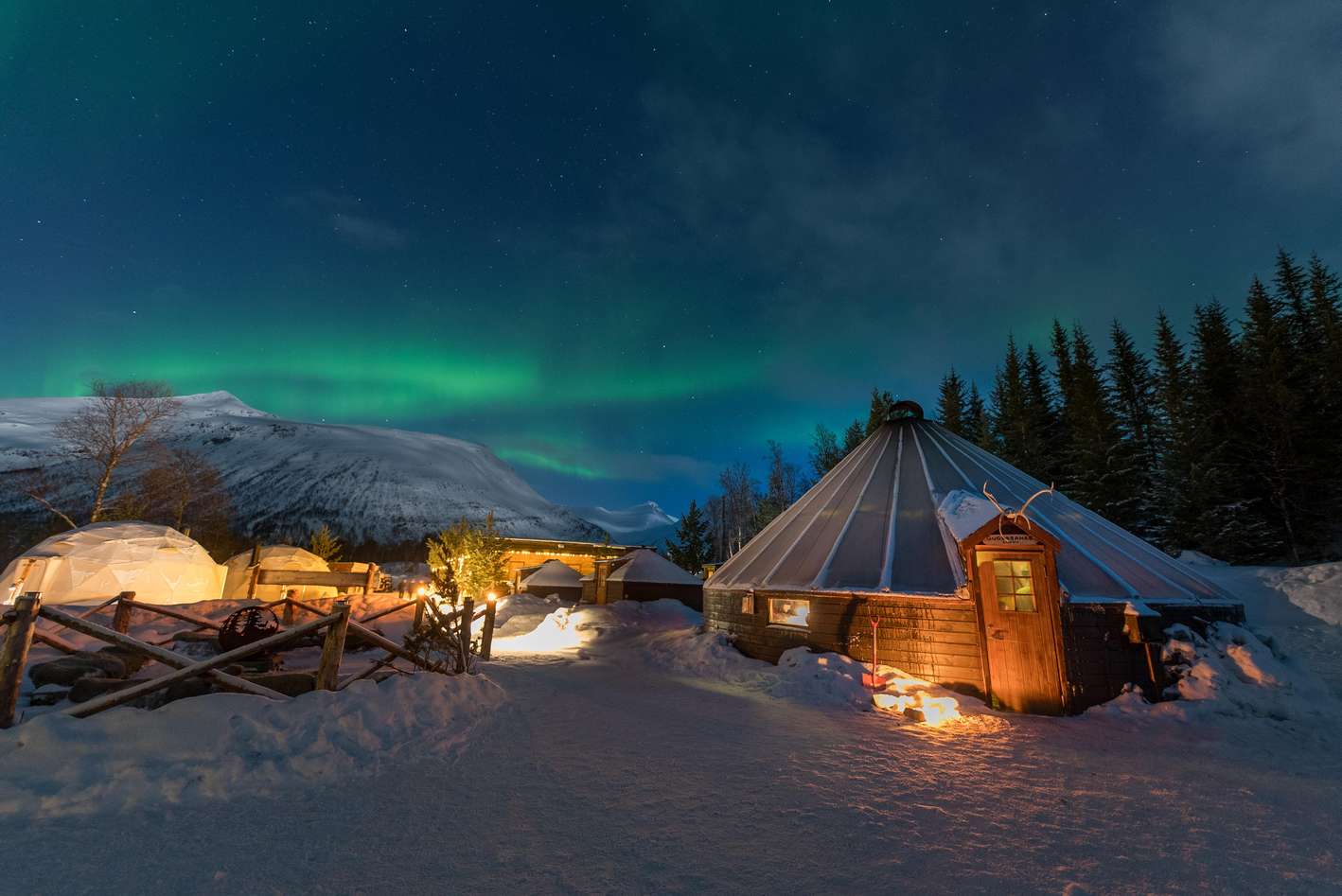
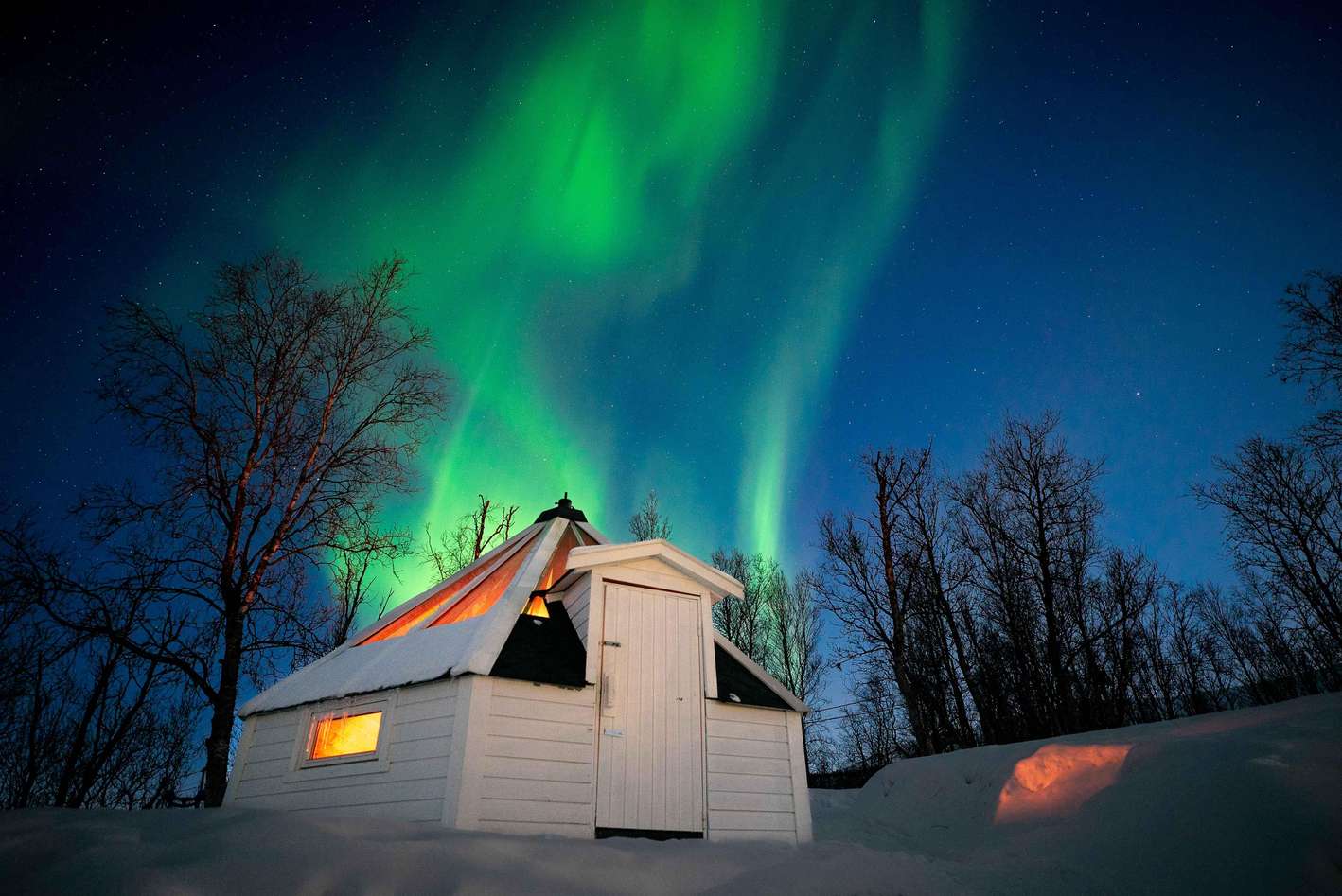
The Crystal Lavvo basecamp under the Lyngen Alps adds overnight options: a snowmobile tour plus a night in a glass-roofed cabin, or a lavvo stay with a guided snowshoe walk for travelers who would rather hike than ride.
Glass igloos at Aurora Basecamp in Hatteng pair with an evening safari too, so you can ride the trail and fall asleep watching the sky.
In town, cheaper second nights exist. Prestvannet lake lies a short uphill walk from the centre, above the worst of the streetlights, and the Fjellheisen cable car lifts you to a mountain view over the city.
One warning from people who stack these nights: back-to-back wilderness evenings run late and exhaust, often keeping you out until 2 to 4 am. Stay four to five nights to spread the odds, and book the safari early in the trip so bad weather has a second chance to be beaten.
Seeing the lights from your Tromso snowmobile stops
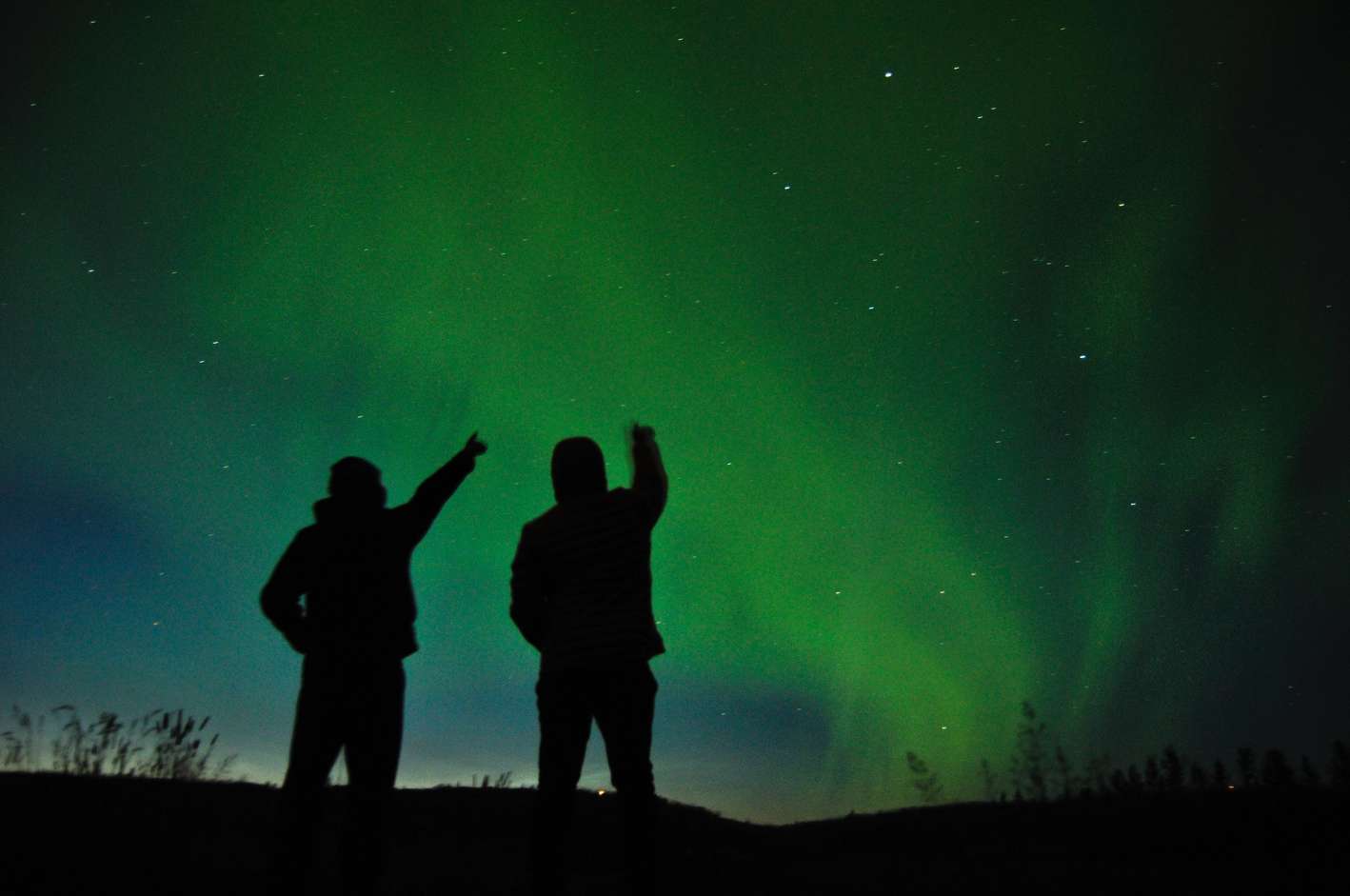
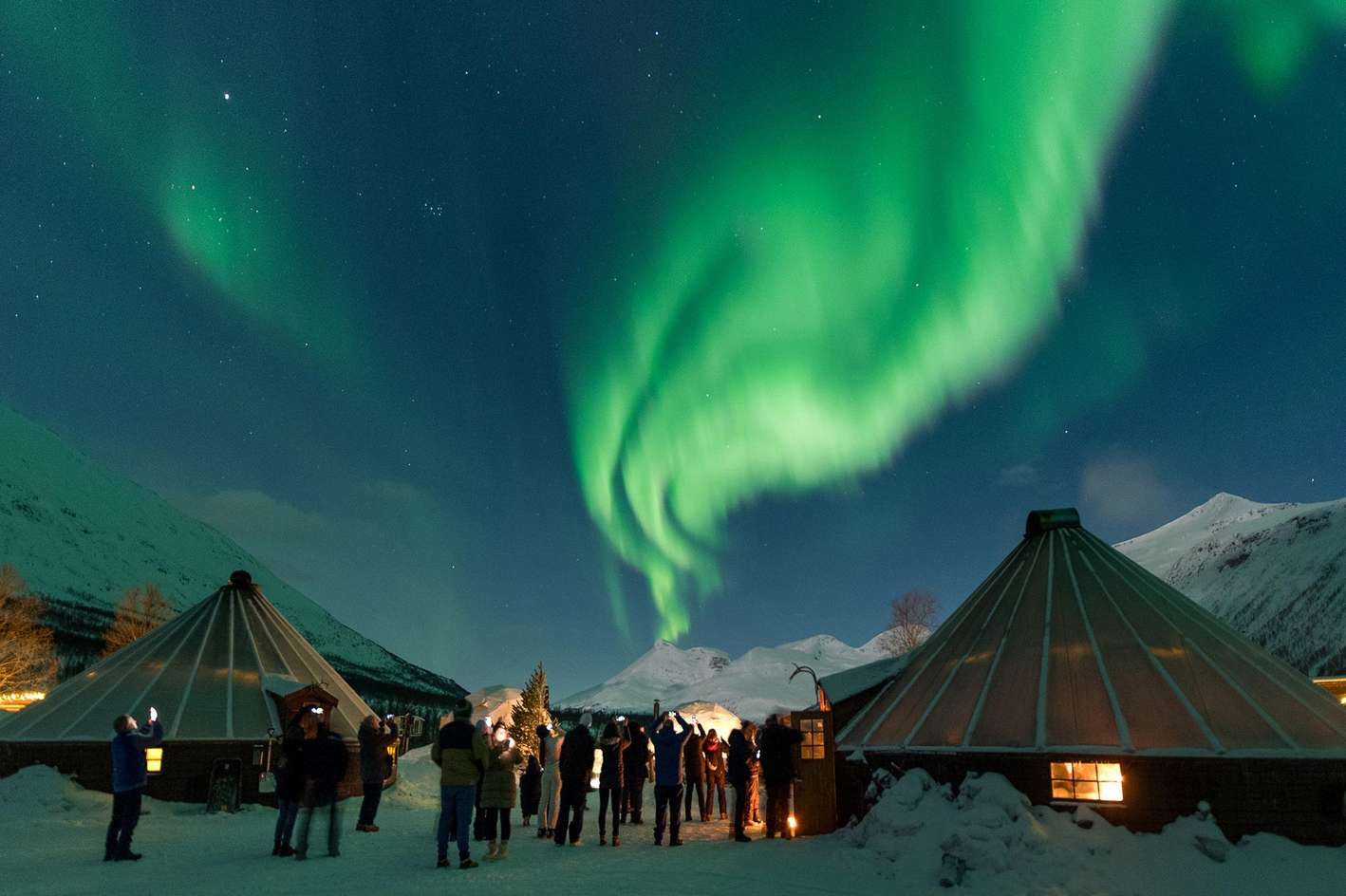
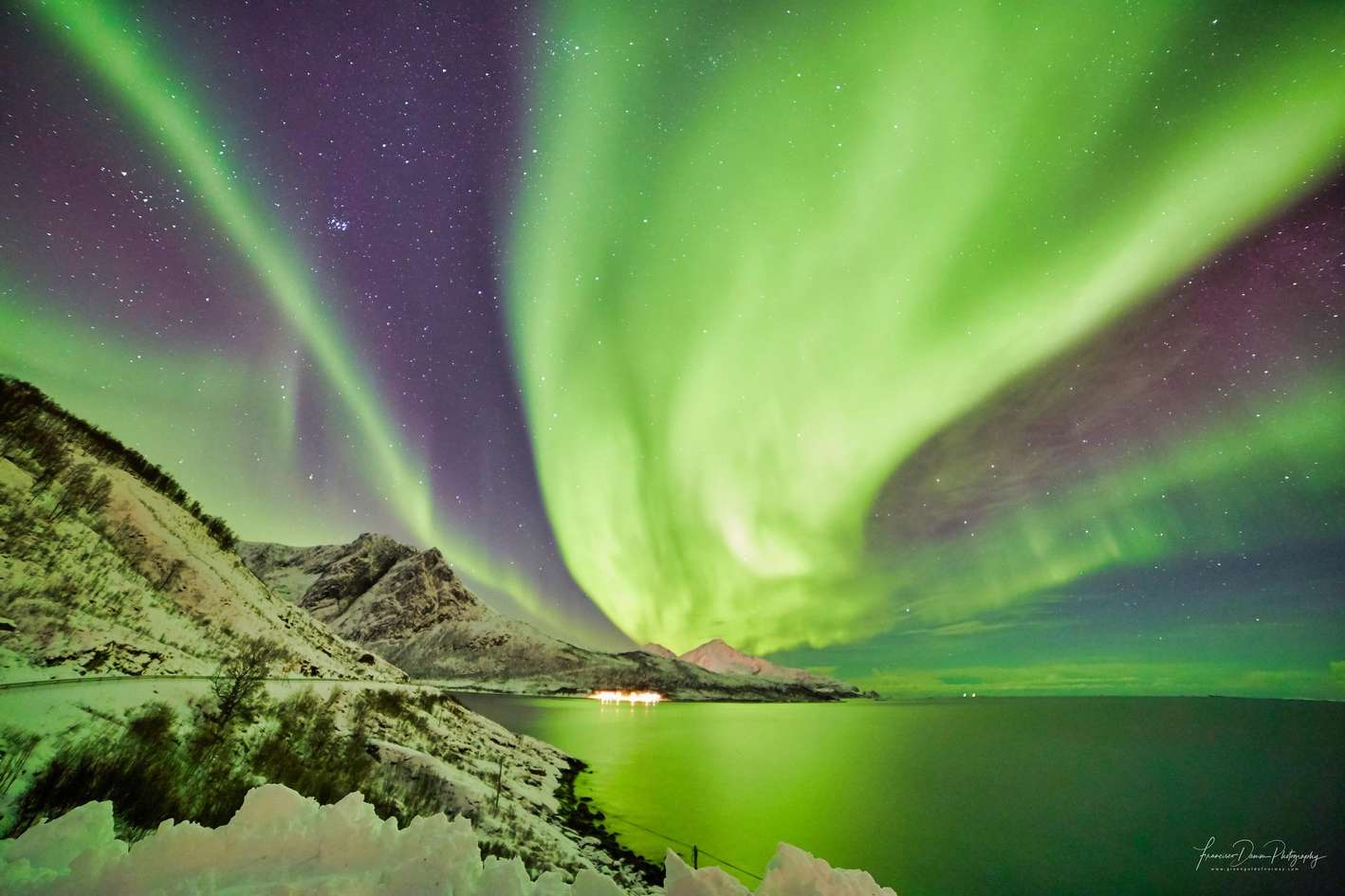
Manage the expectation before the sky delivers the surprise. To the naked eye, a faint aurora often reads as a pale grey or whitish streak, maybe a soft green band. Your eyes' rod cells work in the dark but cannot see colour.
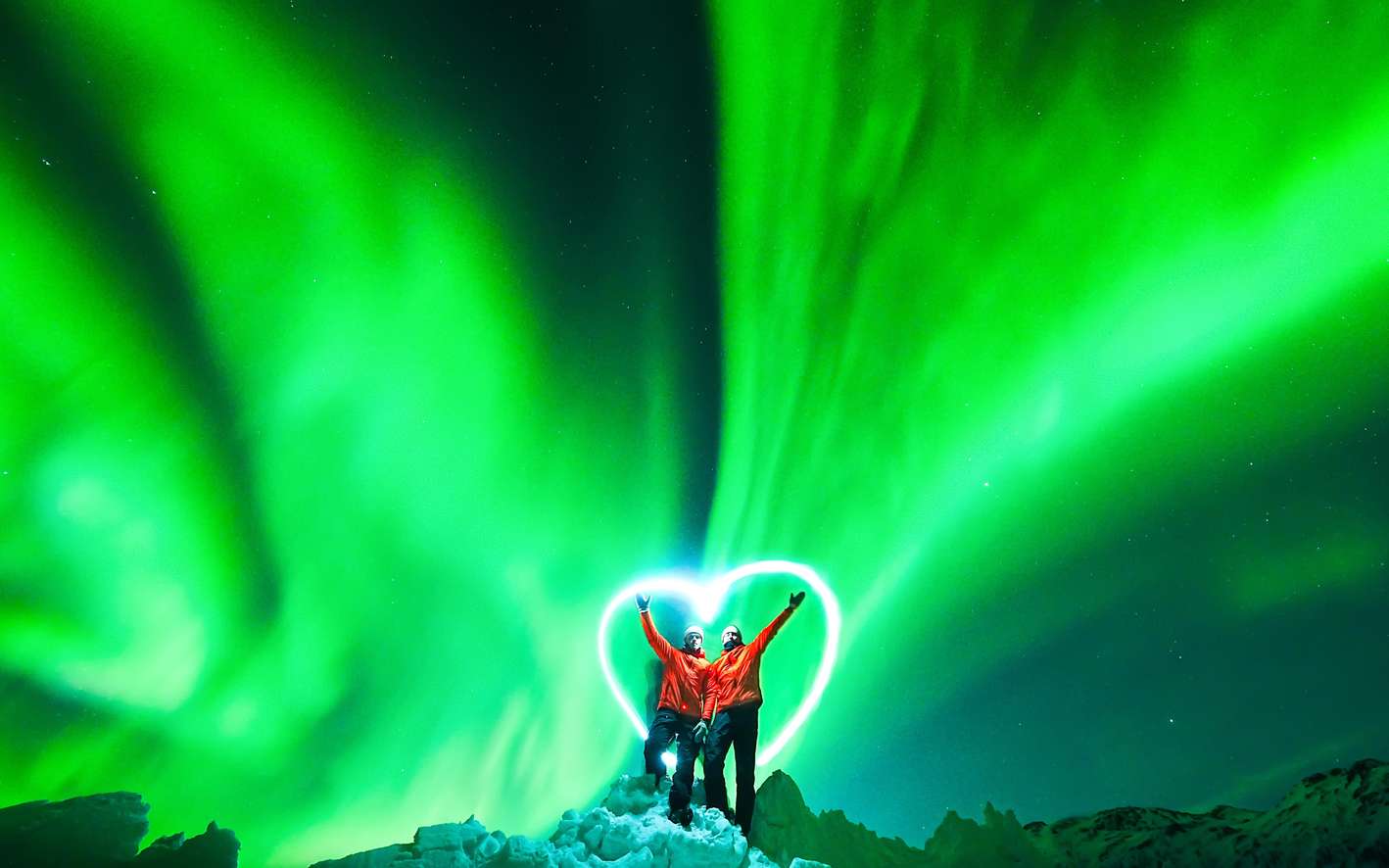
The camera accumulates light over a long exposure and returns the saturated green and purple you have seen in photos, which is why the guide's screen looks better than the view.
Timing helps. Displays can appear any time the sky is fully dark, from about 6 pm to 2 am, but activity clusters around magnetic midnight near 11 pm. Tromsø sits directly beneath the auroral oval, so even a quiet evening needs no strong solar storm for lights to appear overhead.
For pictures, switch the camera to manual: ISO 1600 to 3200, a 5 to 15 second shutter, aperture wide open, focus set on a bright star. On a phone, use Pro mode with a 2-second timer, flash off, no zoom.
Kill your white lights at the stops; they blind everyone else's night vision and spoil long exposures. A full moon is no reason to cancel, since moonlight lights the snowy peaks and seldom washes out an active display.
A traveler's note
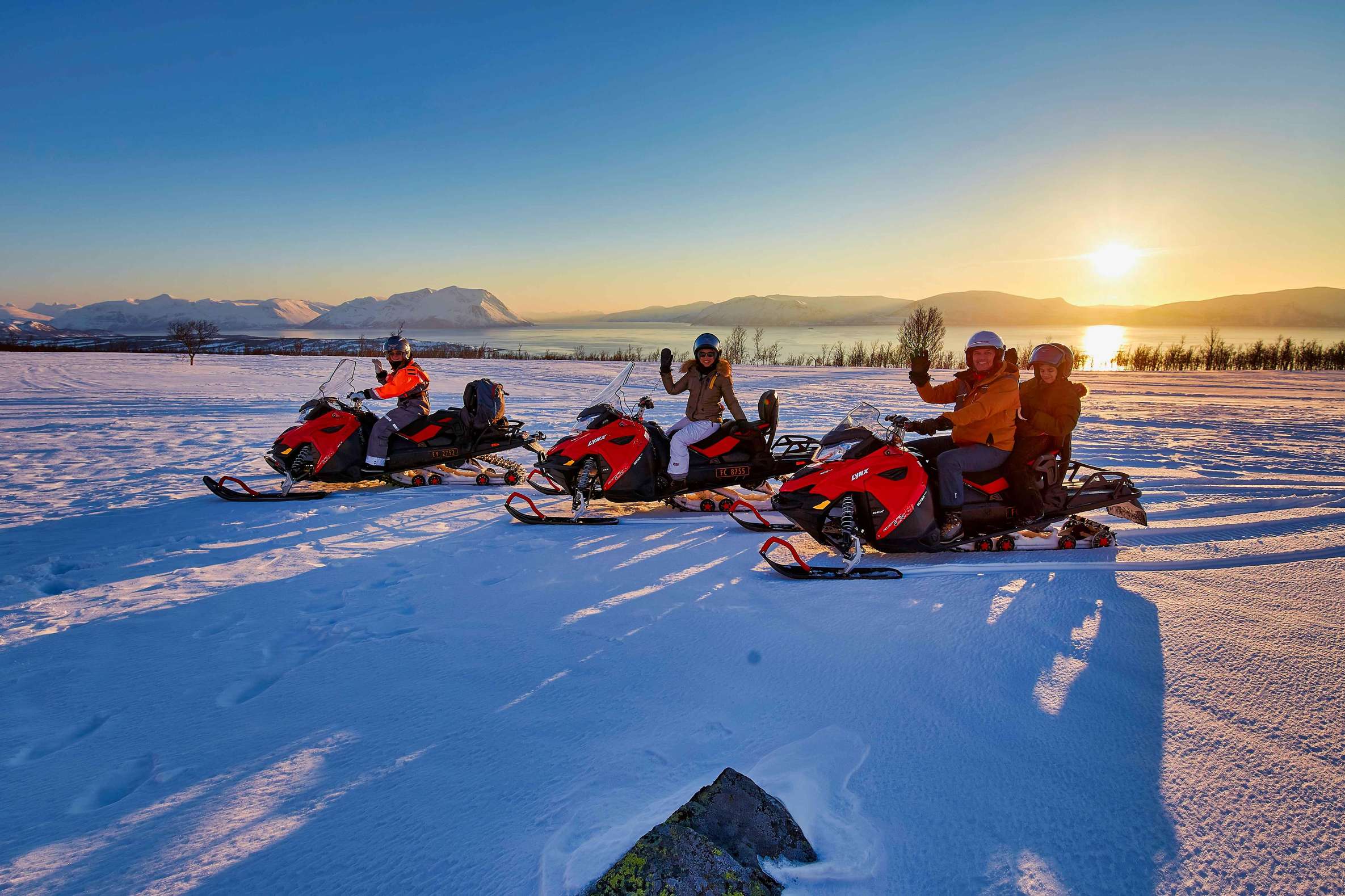
Amazing! Exceeded our already high expectations. Punctual, good food, sensational snowmobile ride at sunset over Lyngen's mountains by the sea. Sleeping in a glass-roof lavvo under an unforgettable aurora. Recommend!
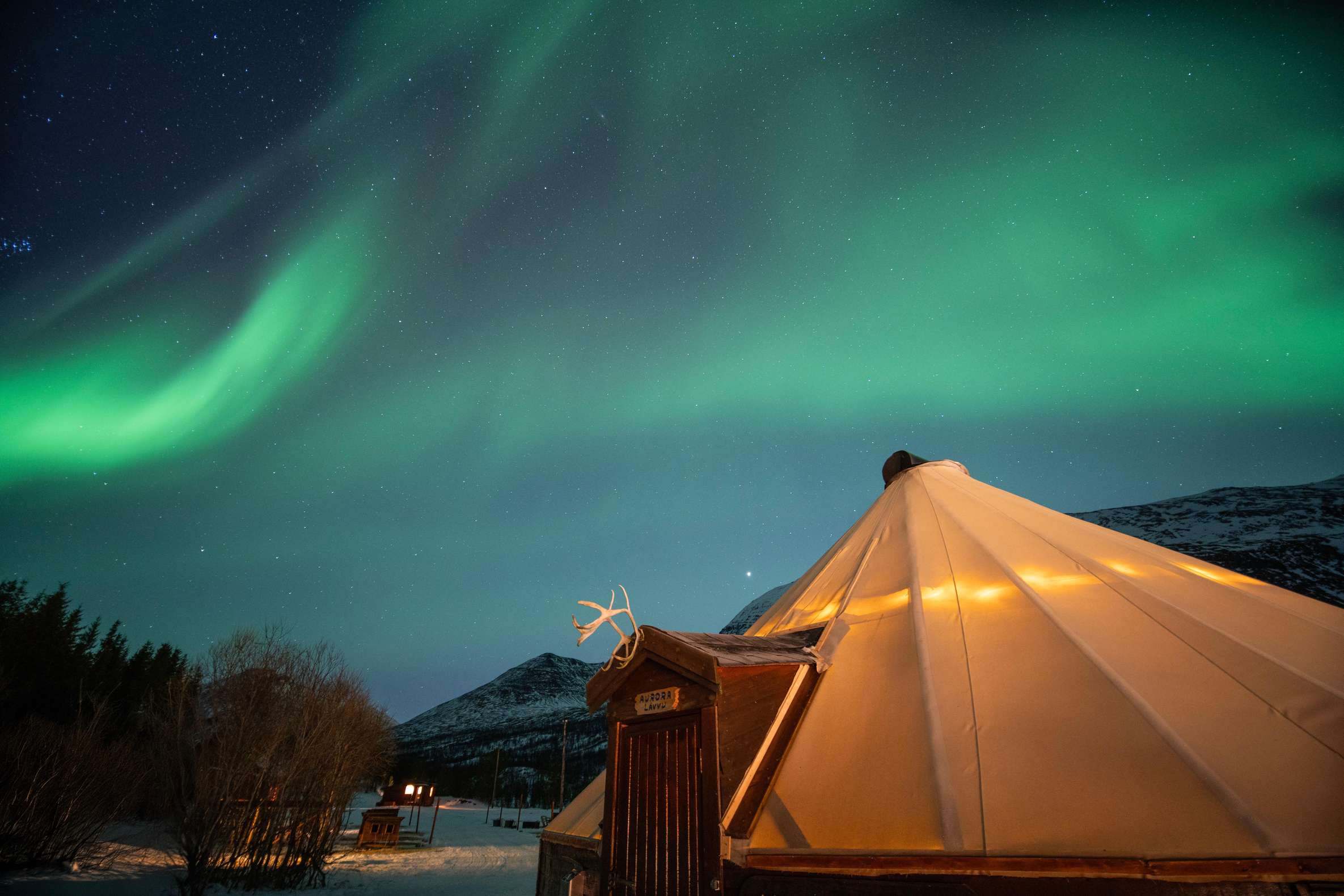
The first time the green climbs over the ridge, most riders stop mid-sentence. If it looks fainter than the photos promised, that is normal. Your camera will remember it better than you do, and it will hand the colours back the next morning.
A Tromso snowmobile northern lights safari pays for itself on the trail alone: roughly two hours of your own driving through dark mountain valleys, a hot meal and a camp that sits deep beyond the city's glow.
The aurora is the part you cannot order. Go in February or March for the deepest snow, bring a licence and wool layers, and book the first clear window of your trip.
Go ifYou want the handlebars through Arctic mountain terrain on your own tripYou can show a valid car, moped or motorcycle licence and are 16 or olderYou are travelling between February and Easter, when the snowpack is reliable
Skip ifYou cannot manage standing and shifting your weight on a trail for over an hourYou are pregnant, under 16, or travelling with young childrenMaximising sighting odds matters more to you than the ride itself
Straight answers on licenses, cold, trail time and what happens when the sky stays cloudy.
Øverbygd2026
The trail climbs out of the valley into total darkness, engine humming under the stars. Bring your license and wool socks; both matter more than you think.
Do I need a license to drive a snowmobile in Tromsø?
Yes. Norwegian law requires drivers to be at least 16 and to show a valid license for a car, moped or motorcycle at the trailhead. No snowmobile experience is needed; the guide gives instructions before you set off.
Can I join a Tromso snowmobile northern lights tour as a passenger?
Yes. Snowmobiles run two per machine, one driver and one passenger, and you switch places at a halfway stop. Riding tandem makes the sled a bit slower but easier to handle. Solo driving costs extra on most tours.
How much time do I actually spend driving?
A typical evening safari puts you on the trail for about 1.5 to 2 hours, covering roughly 20 km of mountain terrain with stops for the view and the sky. With the shared driving, each person holds the handlebars for 45 minutes to an hour.
How hard is it to steer a snowmobile at night?
It depends more on posture and shifting your weight than on strength, though mountain riding works your arms and you spend much of the ride standing. If the pace feels too fast or you lose confidence, tell your guide and the convoy slows down.
How far from Tromsø are the snowmobile camps?
The bus to the Tamok Valley takes about 1.5 hours and 106 km. Camp Nikka at Malangen sits 64 km out, 60 to 75 minutes by road. Both sit far from city lights, under dark inland skies.
Is a snowmobile safari worth it if the aurora never shows?
Yes. You still get the guided ride through mountain valleys, the campfire, a hot meal and the quiet of the wilderness. On clear nights the high viewpoints open wide horizons over the dark landscape.
Are snowmobile trails better than a bus chase for seeing the lights?
Snowmobiles stay on fixed trails, so sightings depend on the local sky. Road vehicles can drive across weather systems, sometimes all the way to Finland, hunting clear breaks. A snowmobile night trades some sighting odds for the ride itself.
What should I wear under the thermal suit?
The overalls are an outer shell, so dress for the cold underneath. Wear a wool base layer, add a fleece or heavy wool sweater, and keep cotton out of the mix because it holds moisture and chills you.
Can I bring a tripod on a snowmobile tour?
Yes, but a compact or lightweight travel tripod makes the ride easier. Cameras and gear must be secured while the snowmobile is moving, so pack it in a bag that straps down.
What happens if the weather turns dangerous?
Tours stop when wind, ice or trail conditions make riding unsafe. You get a full refund, a rescheduled date, or a comparable activity instead.
Can I combine a snowmobile safari with an overnight stay?
Yes. Snowmobiling pairs with a night in a private Crystal Lavvo cabin with a glass ceiling, or with dog sledding and a two-course dinner in a single evening at Camp Tamok. Both run from a base in the Tamok Valley.
Is there a warm place to eat and thaw out during or after the ride?
At the end of a Camp Tamok safari, a hot meal and coffee are served around a bonfire inside a dining lavvu. Heated shelters with wood stoves also stand along parts of the trail network, so you warm up between stops.
After your Tromso snowmobile night, plan the next chase
Drive a snowmobile to camp Tamok and chase the lights
Ride snowy mountain trails, mush a dog team, and sit down to a hot two-course dinner at the camp, with free cancellation up to 24 hours before you go. Pick your date and book ahead.