Tromsø Dog Sledding with Northern Lights - Evening Husky Mushing and Camp Visit
Two Arctic dreams, one night - mush a husky team through the dark and watch for the aurora from a warm wilderness camp. Guides hand you thermal suits, boots and a hot dinner, then teach you to drive the sled yourself. Book your evening at Camp Tamok now, because the dogs are waiting.
4.8★average rating5,435traveler reviews100%free cancellation42countries travelers came from
Dog sledding northern lights in Tromsø - pick your evening
An evening with dogs in the dark comes in two shapes. One puts you behind a sled, working with the team; the other keeps you at a camp, meeting the huskies and waiting for the sky. Mushers need fitness, camp visitors need only warm clothes.
importantSelf-drive dog sledding at the wilderness camp has a minimum age of 16, is not permitted during any stage of pregnancy, and excludes guests over 120 kg.
Check whether the tour you want runs self-drive or passenger sleds before booking, and tell the operator about any medical conditions in advance so they can match you to the right option.
Which dog sledding with northern lights evening fits you
Most popular
4 hours·English
4.7(1,769)
Tromsø: Northern Lights Husky Visit with Traditional Dinner
Nearly 1,800 reviews and a 4.8 rating make this husky camp visit the favorite: meet the dogs, eat bacalao, watch the sky.
Free cancellationTransportation from/to TromsoThermal suits and boots
What you'll see on a dog sledding northern lights night
kids under 16 can't drive the sled
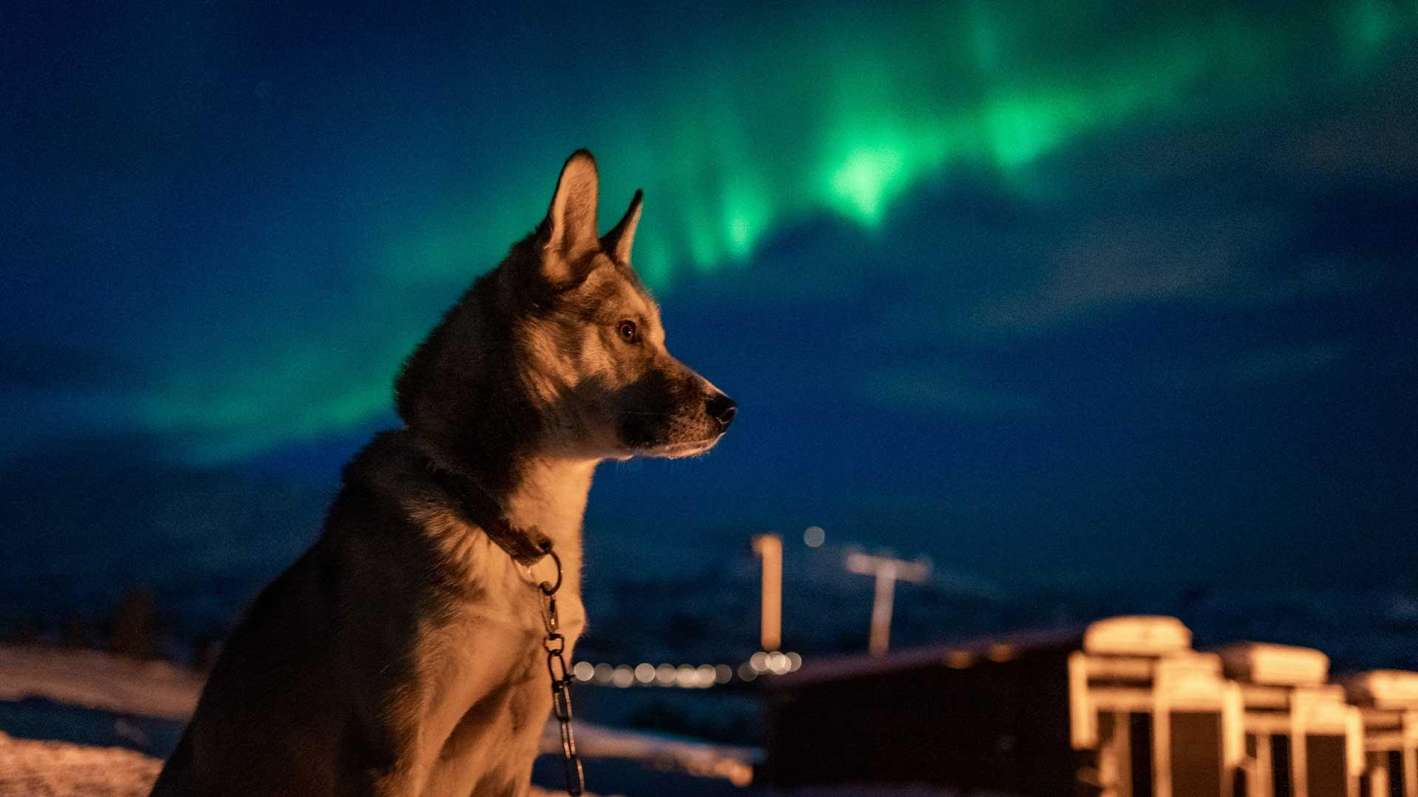
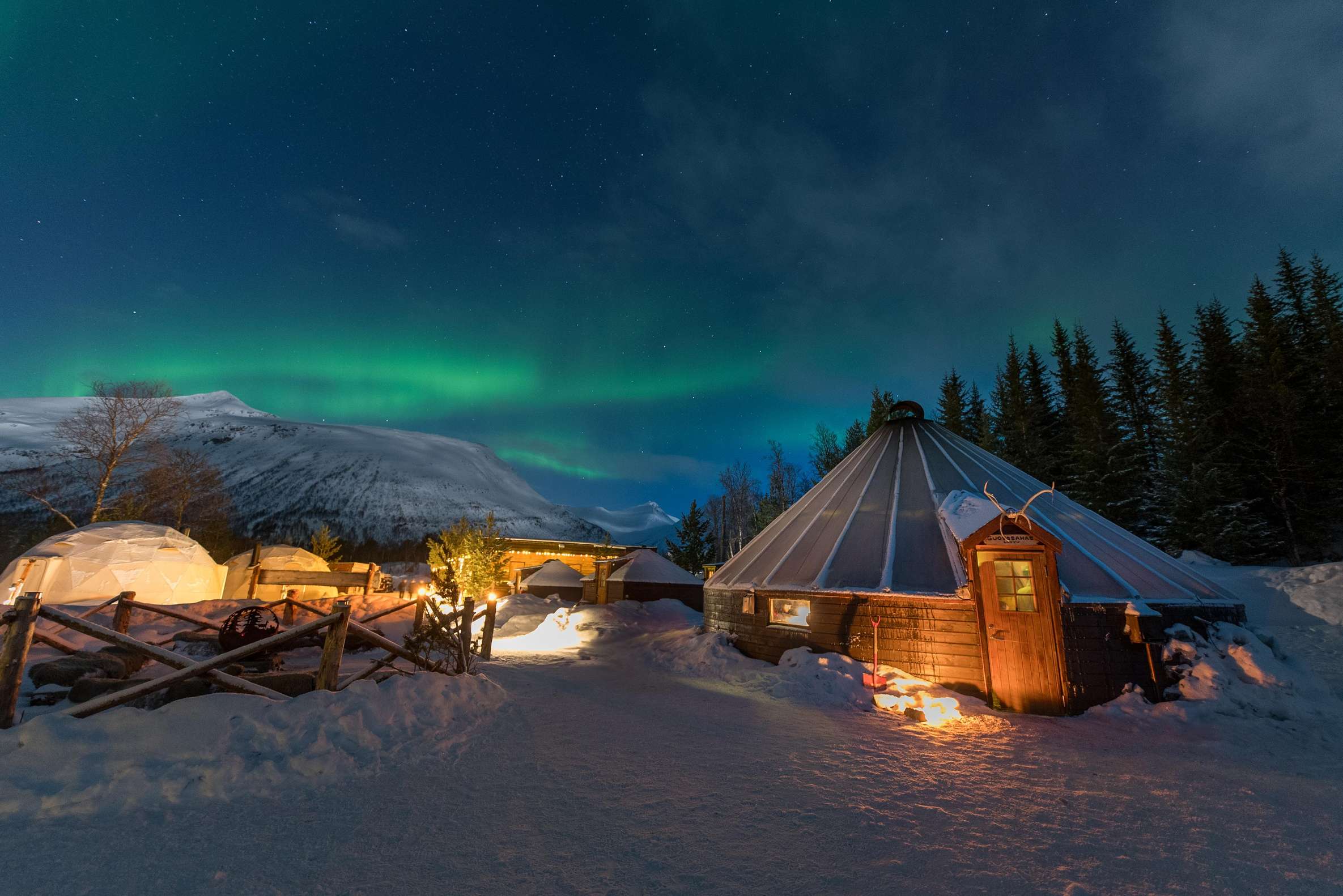
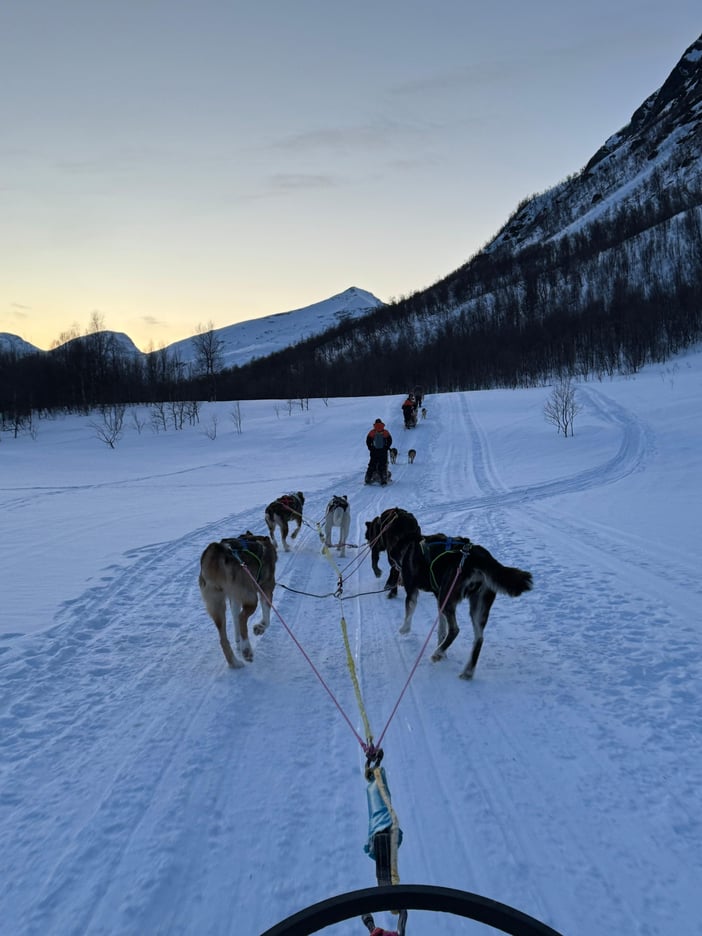
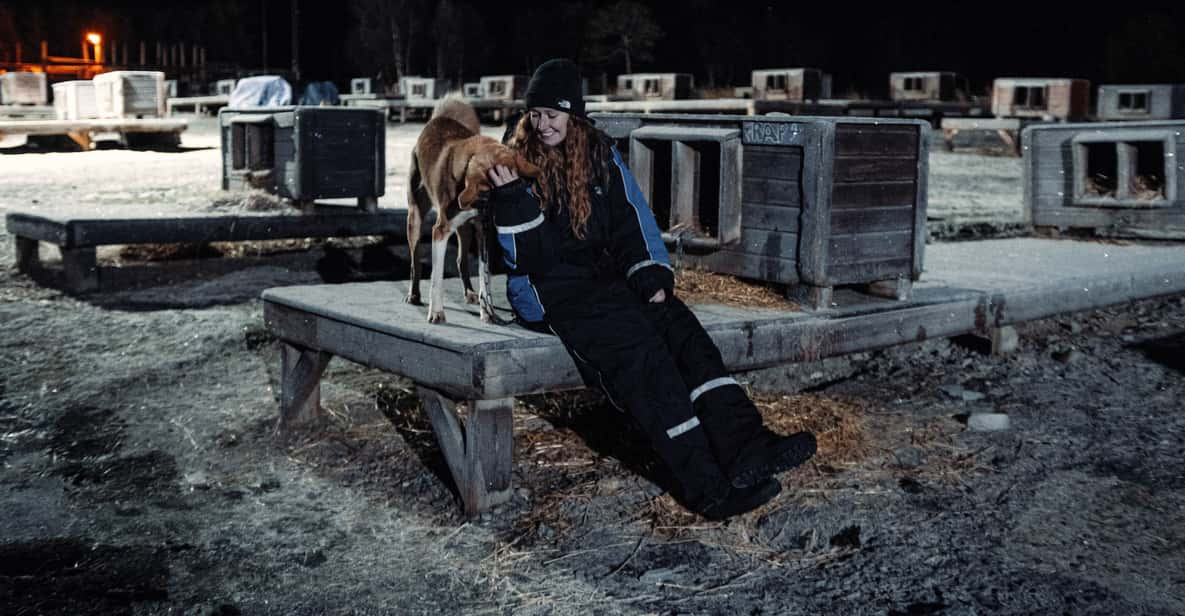
The evening starts at the huskies. At Camp Tamok, 90 minutes inland from the city, the dog yard is full of Alaskan huskies, the breed guides choose because their deep chests and large hearts keep them running and warm in sub-zero cold.
On the all-in-one night tour you harness a team and drive your own sled through the snowy valley, with a partner switching halfway.
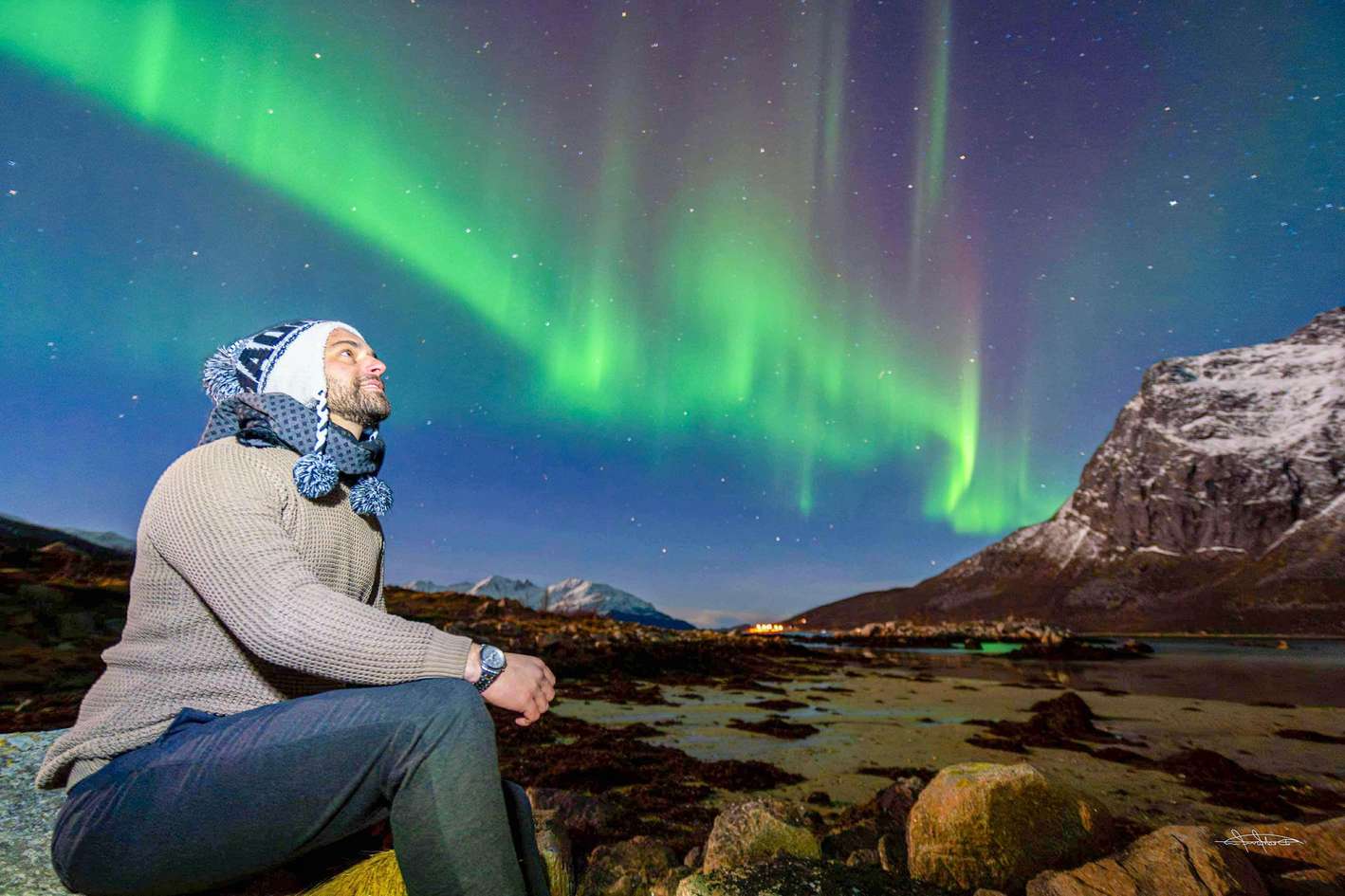
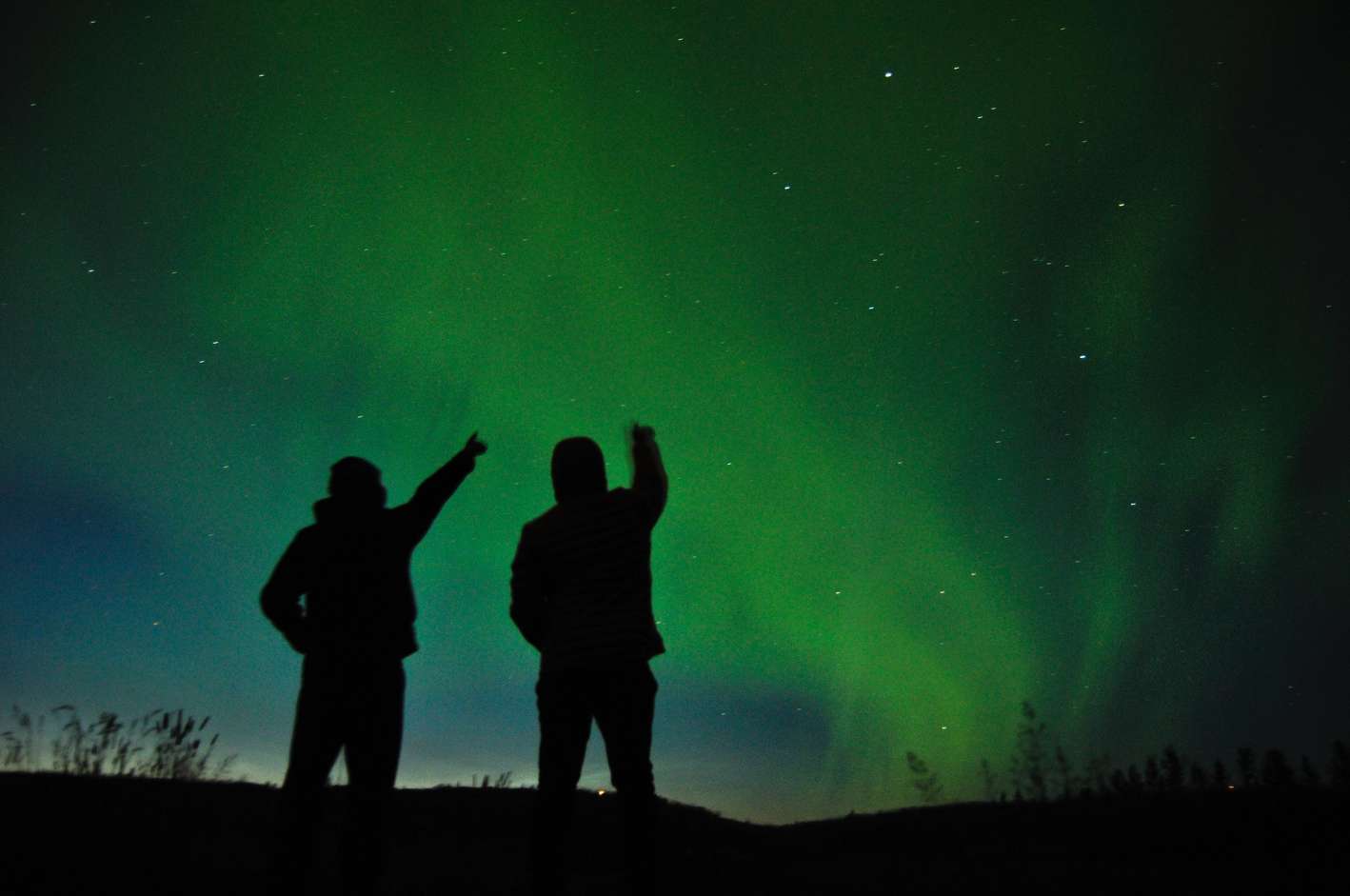
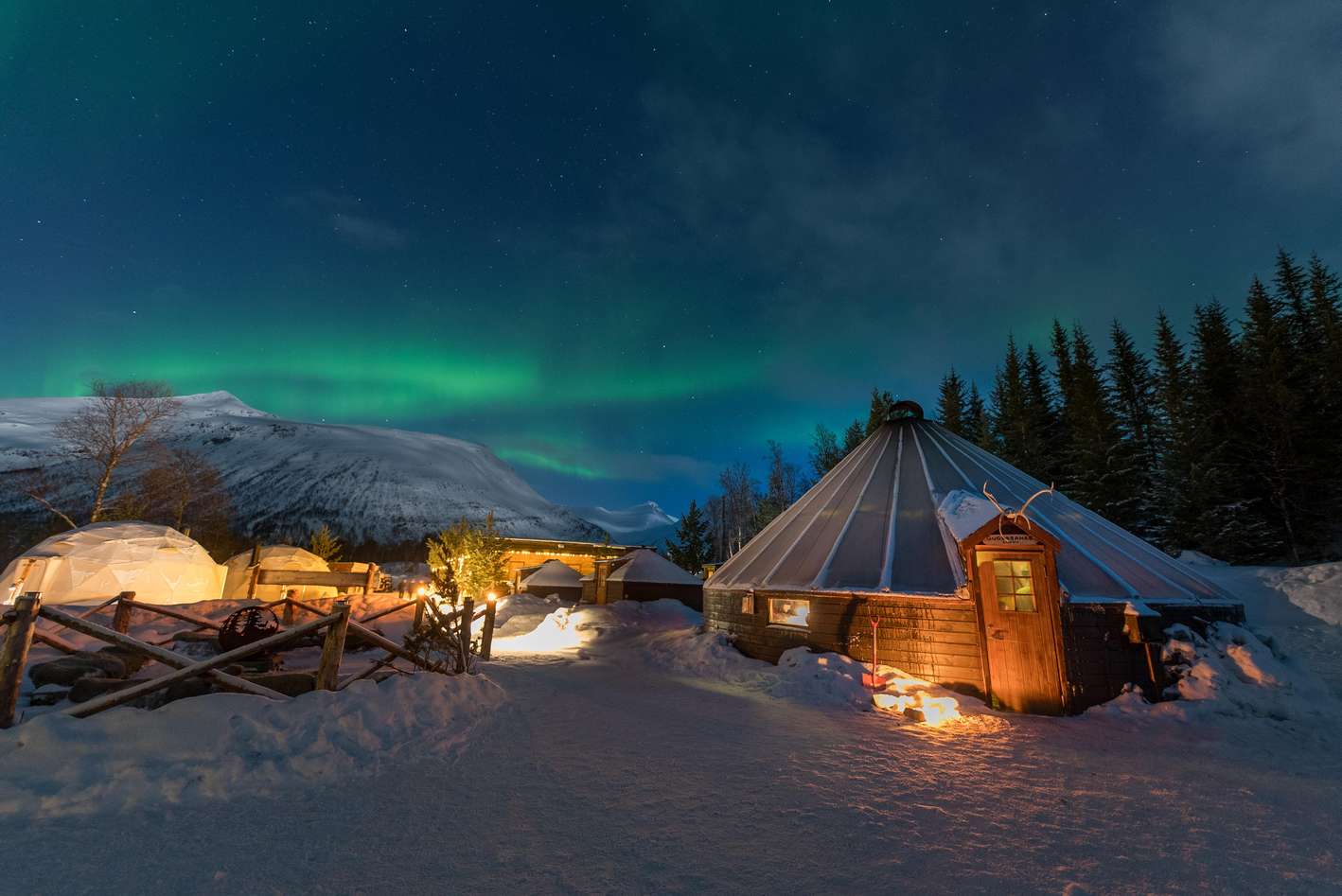
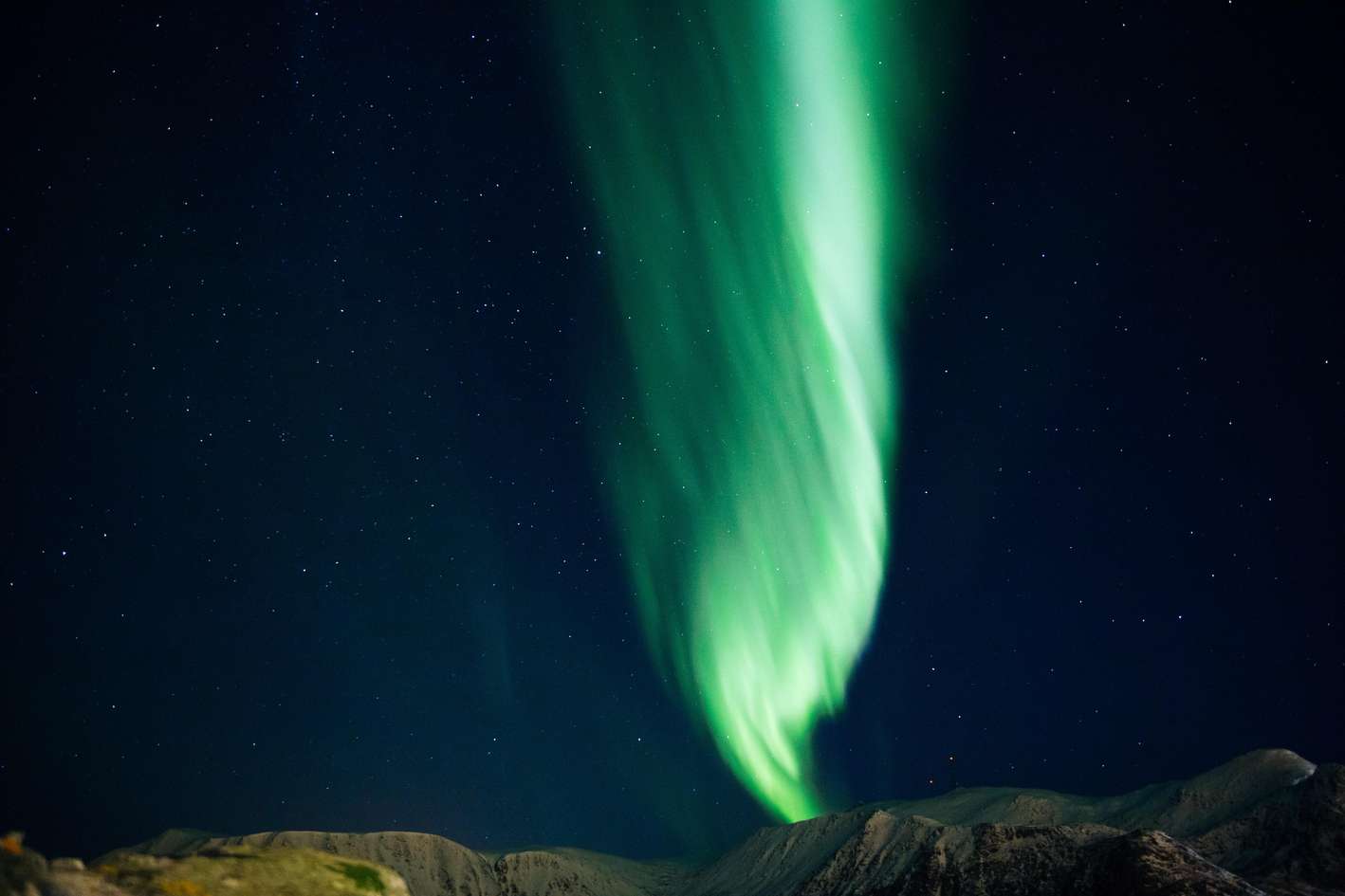
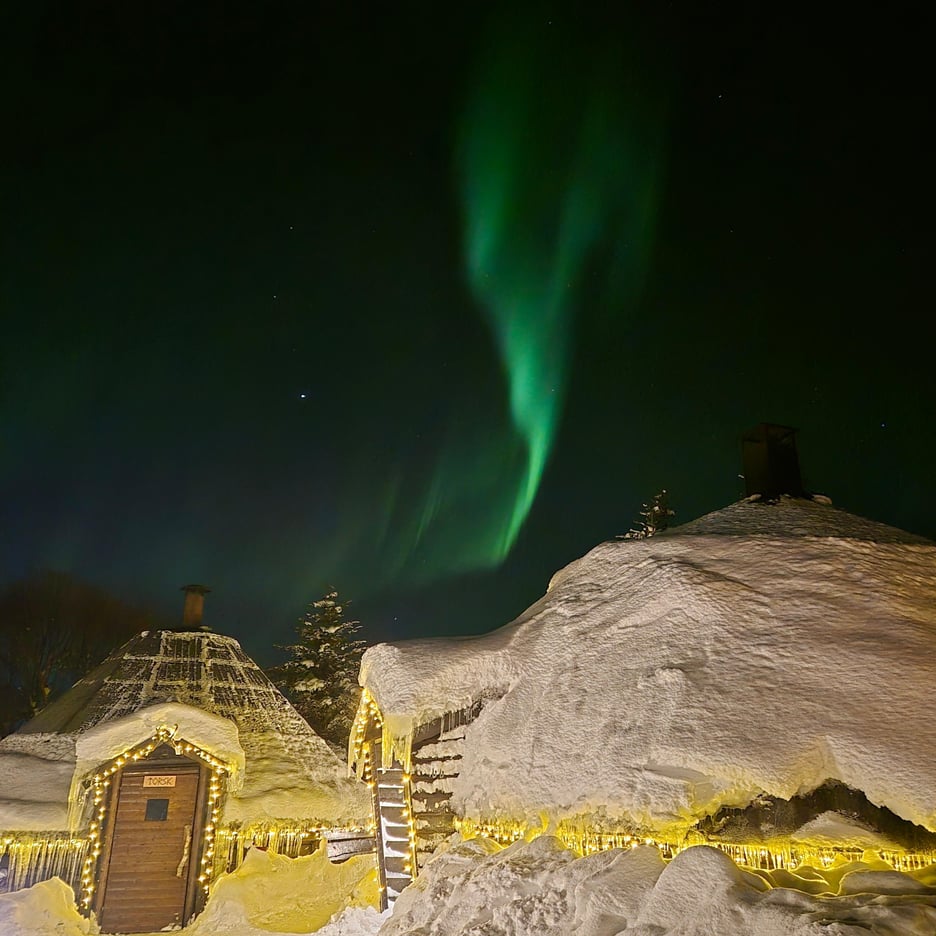
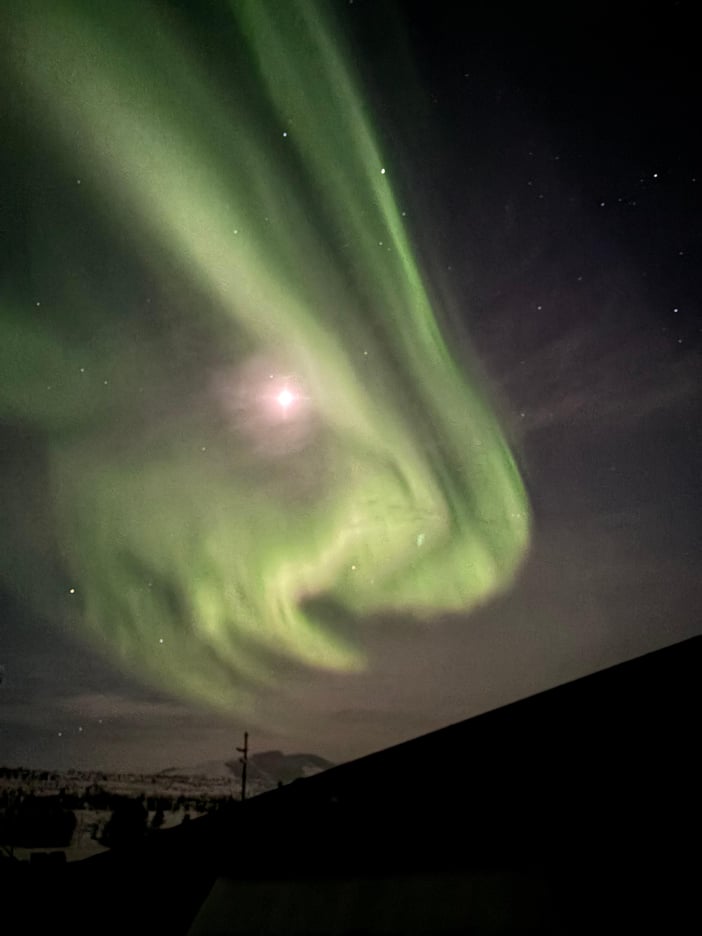
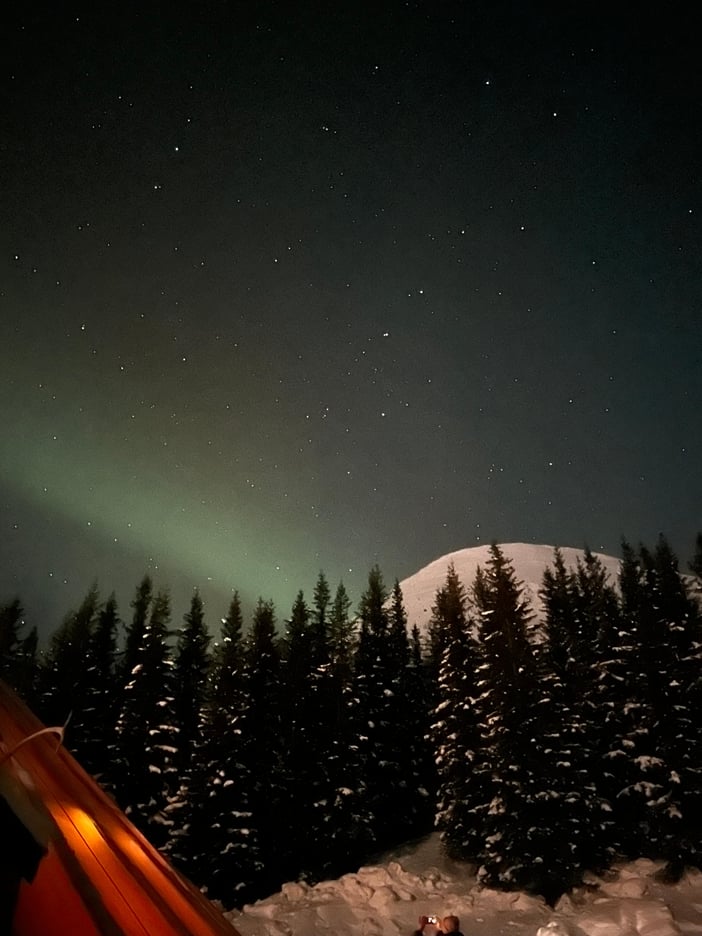
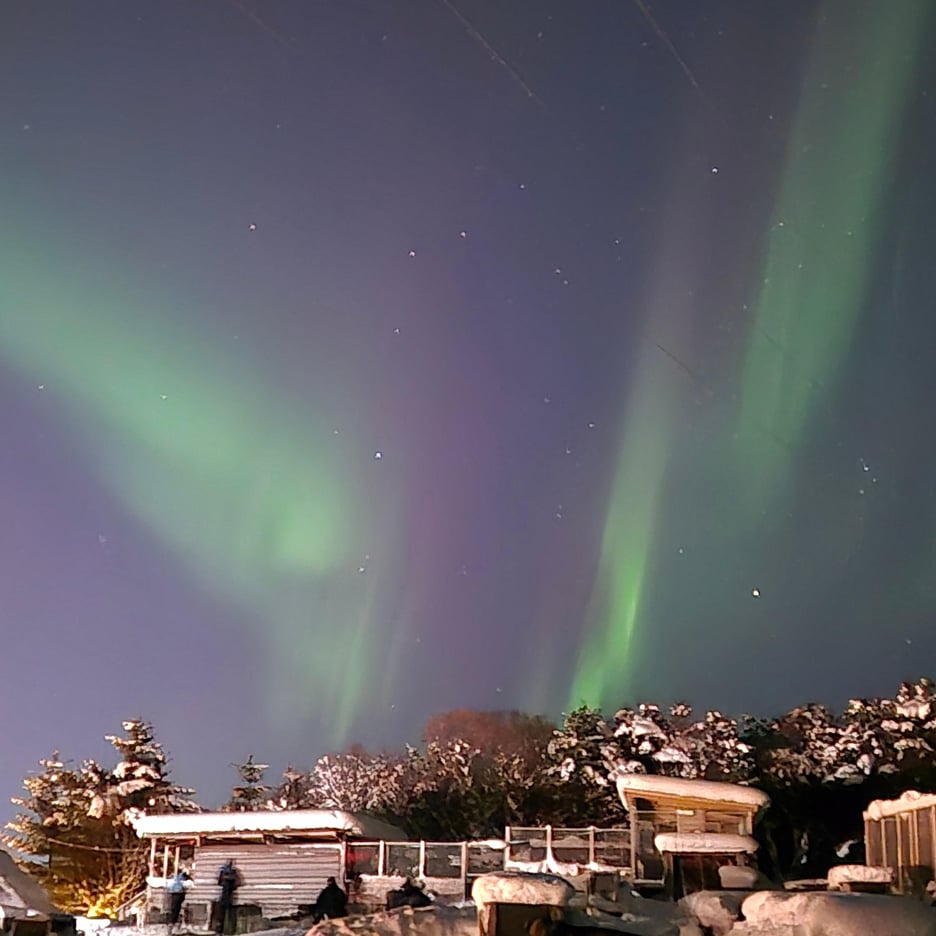
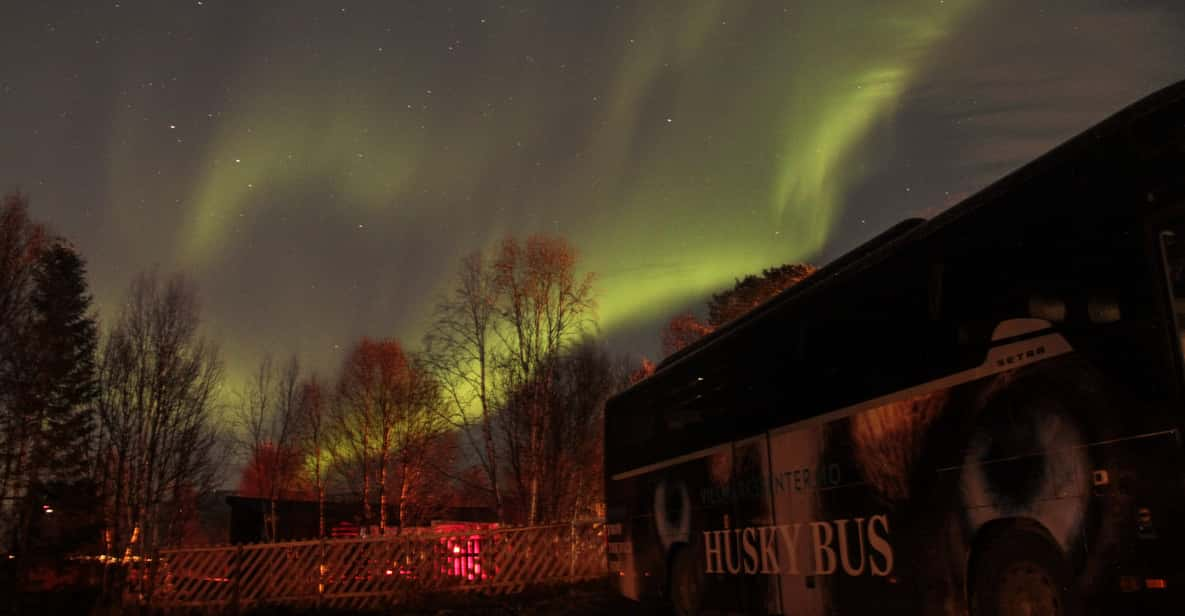
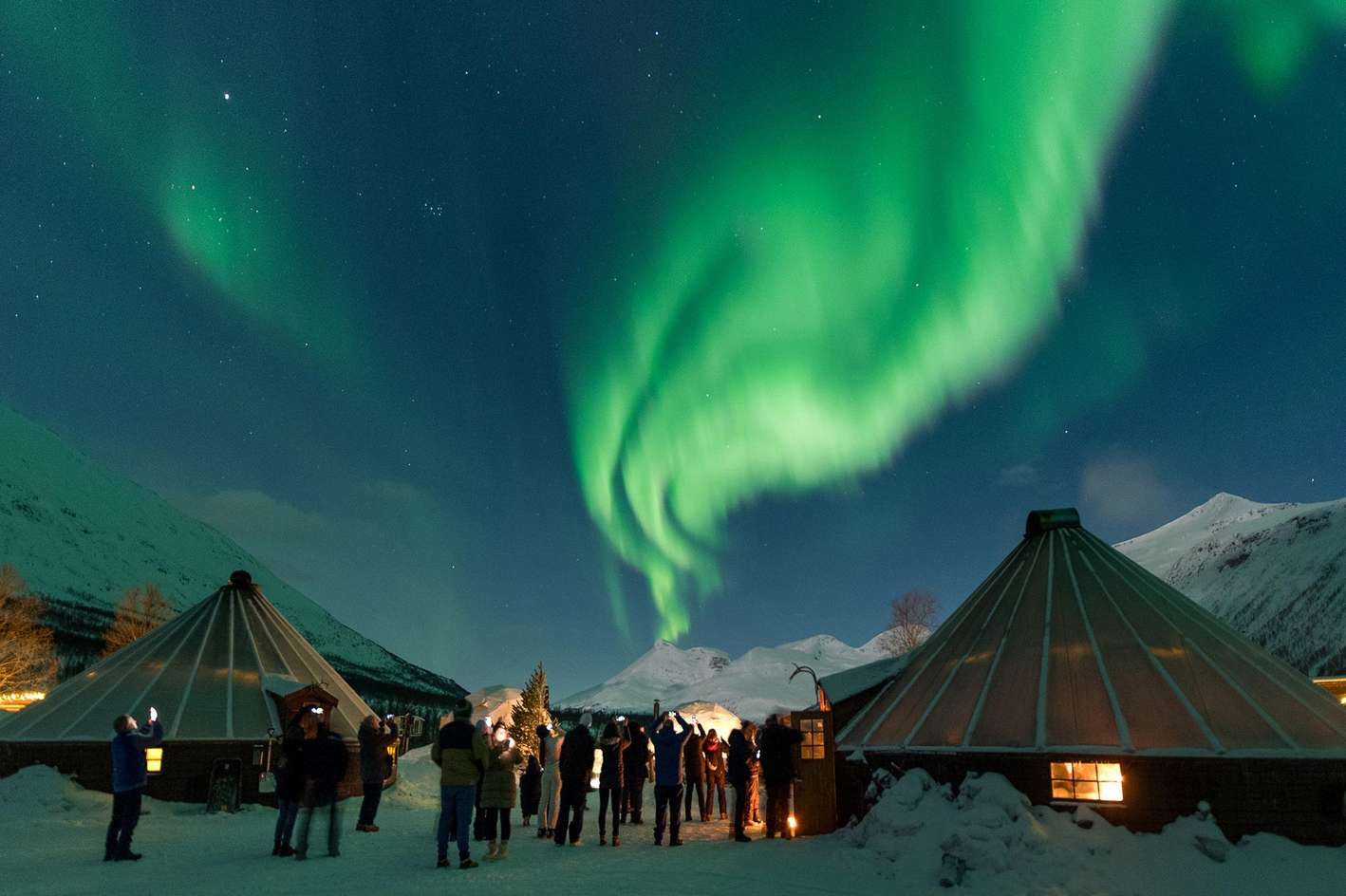
After the trail comes the warm part: a two-course dinner in the wilderness lounge, a short talk on how the aurora works, and then the sky. The camp sits in a dark valley far from the glow of Tromsø, where the lights show well when the sky is clear.
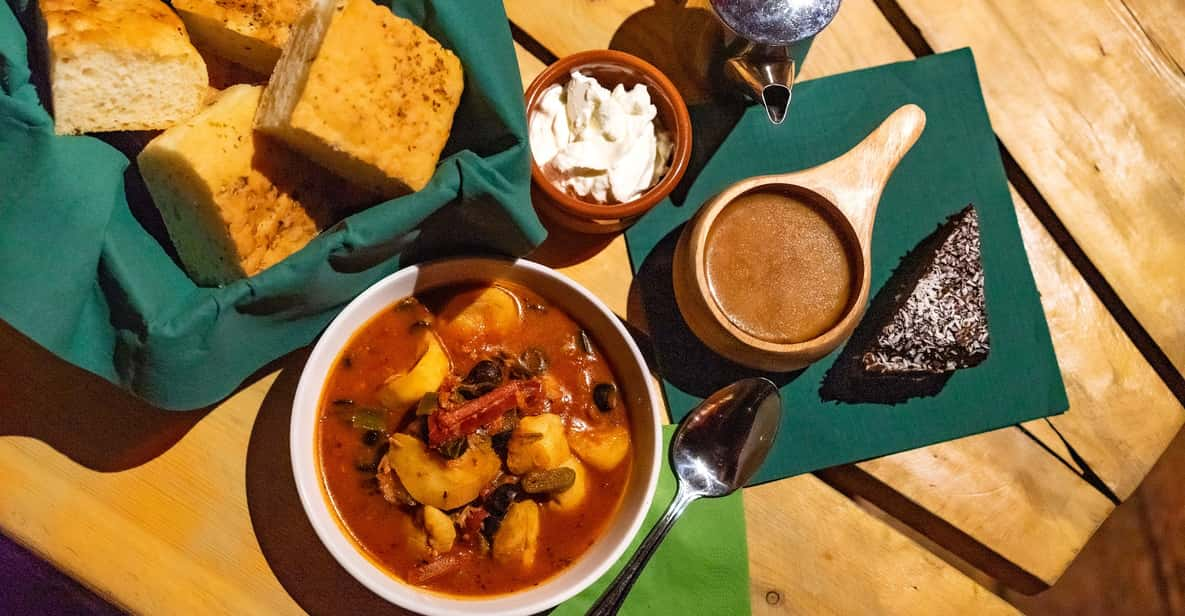
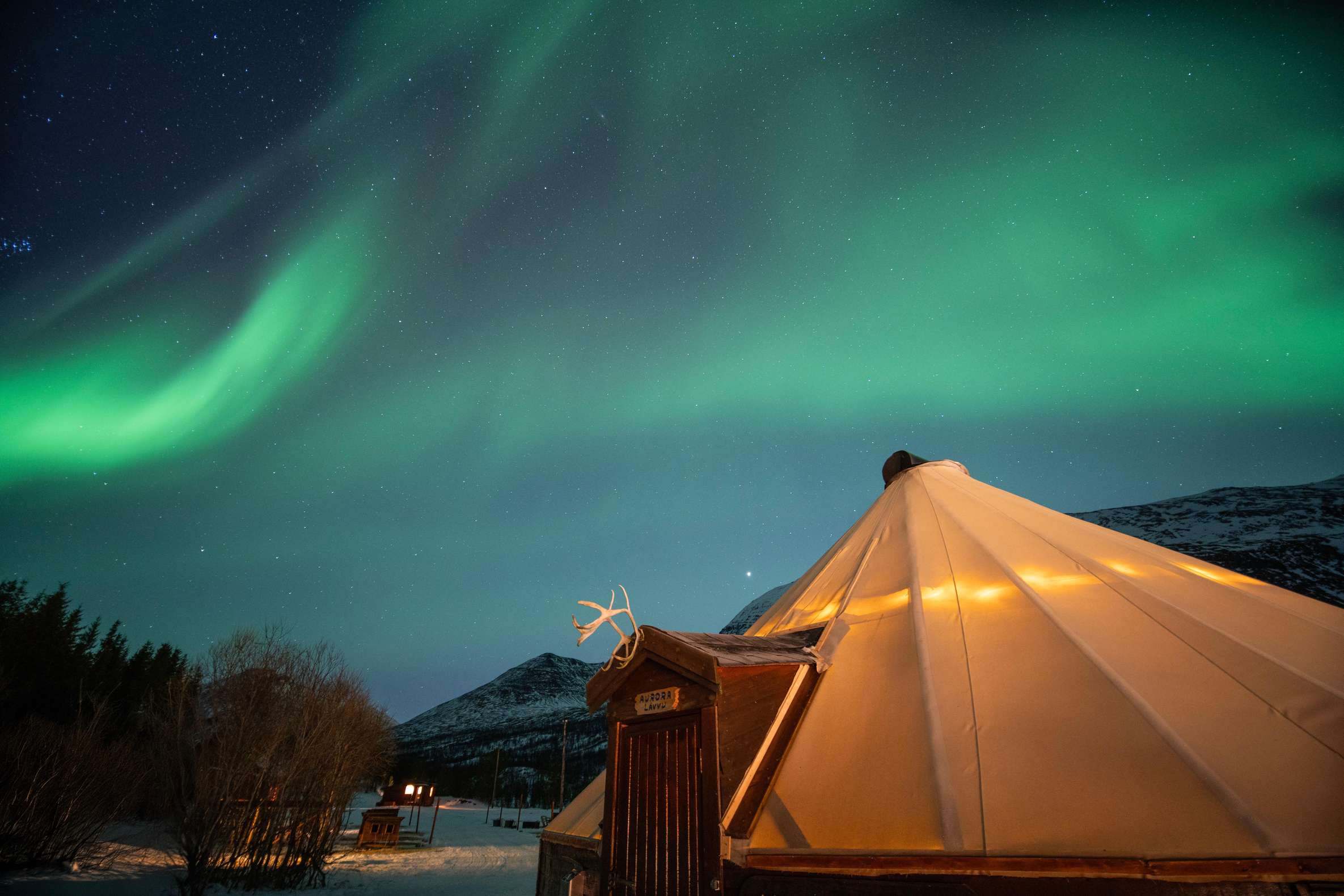
The gentler husky visit, about half an hour from downtown, skips the driving. You tour the yard of 200 dogs, cuddle puppies, eat bacalao by the fire and watch the sky from the lavvu.
Meeting pointTromsø Havn ProstnesetThe same terminal downtown, where the tour bus returns you at the end of the night. Taxi ranks nearby run 24 hours if your hotel sits further out.Street ViewStop 2Camp Tamok· 420 minA wilderness camp in the Tamok Valley, about 90 minutes from the city. You meet the huskies and mushers, drive the sled, eat a two-course dinner and look for the lights in the dark valley sky.Drop-offTromsø Havn ProstnesetThe same terminal downtown, where the tour bus returns you at the end of the night. Taxi ranks nearby run 24 hours if your hotel sits further out.Street View
Included
Transfer from and back to Tromsø.Thermal suitBootsMittensEnglish-speaking guide(s)2-course dinner
Dog sledding and northern lights tours side by side
Green marks the lowest price. Prices per person.
Tour
Price
Duration
Languages
Best for
Our pick
Arctic All-in-One Night: Dog Sledding, Snowmobiling & Aurora
4.8★ (174)
from $473per person
10 hours
English
fit travelers who want to mush a sled and snowmobile in one long night
The friendly huskies made the evening, lights or no lights, worth the trip.
Best surprise
Several couples who expected clouds got a break in the sky and watched the northern lights appear.
Most common wish
Several reviewers wished the evening had lasted longer once the fire and dogs won them over.
How to book your Tromsø dog sledding Northern Lights night
christmas dates go 6-8 weeks early
01
Pick your date first
Book the earliest evening of your trip that works, so a cloudy night leaves room to rebook. In December through February, husky tours sell out two to four weeks ahead, and Christmas and New Year dates go six to eight weeks early.
Pro tipFree cancellation up to 24 hours before lets you hold two evenings and drop one later
Common mistakeLeaving the booking until you arrive in Tromsø, when the good dates are already gone
02
Choose mushing or camp visit
Decide how active you want the evening. The all-in-one night at Camp Tamok pairs self-drive dog sledding with snowmobiling and lasts ten hours. The husky visit with traditional dinner skips the sled entirely and runs about four hours.
Pro tipOn self-drive sleds two people share and switch halfway, so each of you drives and rides
ImportantThe all-in-one tour takes no one under 16, no pregnant guests, and a 120 kg weight limit
03
Check the fine print
Read what each option includes before you pay. The husky visit brings thermal suits, boots, a bacalao dinner of Norwegian stockfish, coffee and cake. The Camp Tamok night adds a thermal suit, boots, mittens and a two-course dinner.
ImportantThe husky visit needs a minimum of two people to run, so book together or pair up
Pro tipThe camp visit suits all ages, and families bring a child safety seat for the transfer
04
Sort the meeting point
Most departures leave from the harbourfront in central Tromsø, where the Prostneset terminal, the Radisson Blu entrance and the Scandic Ishavshotel quayside sit within a few minutes' walk of each other. Confirm your exact spot in the confirmation message after booking.
Pro tipSlip ice grips over your boots, since the quay walkways stay packed with ice from autumn to April
RecommendedTake a city bus or taxi to the harbour instead of a rental car on icy downtown streets
05
Prepare for the evening
Pack warm layers, gloves and a hat to go under the thermal suit you will be given. Tell the operator about dietary needs when you book, since vegetarian alternatives for the stew meals must be requested in advance.
Common mistakeExpecting to see the aurora on demand, since a camp stay depends on the local sky that night
Pro tipHeavy coats come provided, so your own layers only need to cover what goes underneath
What to know before you book a dog sledding evening
keep your foot on the brake, always
Can stop the dayGood to knowGood news
01
ChoosingWhat it is, who it suits, when to go
6
Drive time
A standard trail lasts 30 to 45 minutes, so each person gets roughly 10 to 22 minutes at the handles and an equal stretch riding as a passenger. Longer routes of up to 90 minutes raise that to about 45 minutes in each role.
Brake disciplineCan stop the day
Keep your foot on the sled brake whenever you stop. A team of eager huskies will bolt the instant the pressure lifts, so guides teach this first and expect you to hold it.
Clothing
Camps hand out heavy thermal suits, winter boots, and mittens on arrival, so your job is the layers underneath. Wear wool or synthetic thermals, never cotton, plus a fleece or wool mid-layer, thick wool socks, a hat that covers your ears, and a scarf or neck gaiter.
Aurora odds
A kennel stays put, so on cloudy coastal evenings the lights may not show. The valley camps sit well away from downtown glow in genuinely dark skies, and the husky visit pairs the wait with a warm lavvu, a fire, and around 200 dogs and puppies to meet.
Headlamps
In December and early January, when sledding happens in full darkness, camps provide a headlamp. White light resets your eyes for 20 to 30 minutes, so once the lights may be out, a red filter or dim mode keeps your night vision intact.
Documents
Bring photo identification only if your tour crosses into Finland or Sweden in search of clear skies, which some chases from this region do. The husky camps themselves sit in Norwegian valleys, so an evening at the kennel needs nothing beyond your booking.
02
BookingHow far ahead, and what happens if plans change
2
Dinner
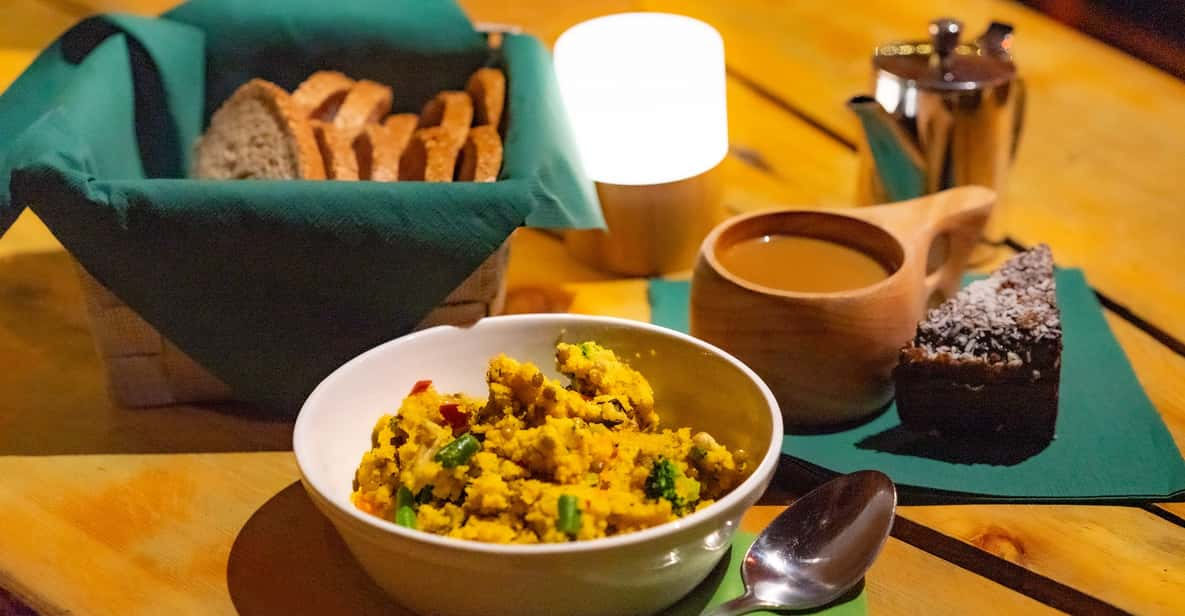
The husky visit serves bacalao, a warm Norwegian stockfish stew in tomato sauce, with coffee and cake. The Camp Tamok combo ends with a two-course dinner, and some camps offer bidos, a Sámi reindeer stew. Vegetarian and vegan alternatives exist on all programmes when you request them in advance.
Cancellation
Every tour on this page takes free cancellation up to 24 hours ahead. If storms or unsafe trails force a cancellation for the safety of guests and dogs, you get rescheduling, an alternative activity, or a full refund.
03
Before you goPapers, health, what to bring
3
FitnessCan stop the day
Self-mushing is real work. You brake, kick-scoot, and push the sled uphill in deep snow, and both people sharing a sled need the same fitness. Ask for a guide-driven sled or a kennel visit instead if uphill jogging in snow is beyond you. Anyone over 120 kg cannot join the advanced drive.
Age limits
Self-drive sledding starts at 16 years old, and the snowmobile part of the combo carries the same age rule. The evening husky visit with dinner welcomes every age, which makes it the choice for families with young children.
Phone batteries
Cold drains phone and camera batteries fast, and devices can shut down even with charge left. Keep spares in an inner pocket against your body, and let a cold battery warm to room temperature before recharging it.
04
During the tourWhat is expected of you
1
Who drives
On the Camp Tamok combo you take the reins yourself, with one partner sharing the sled and switching places halfway. Guide-driven sleds exist too, and those let you sit back, stay warmer, and take photos while a professional musher handles the team.
Dog sledding northern lights in Tromsø - two dreams, one evening
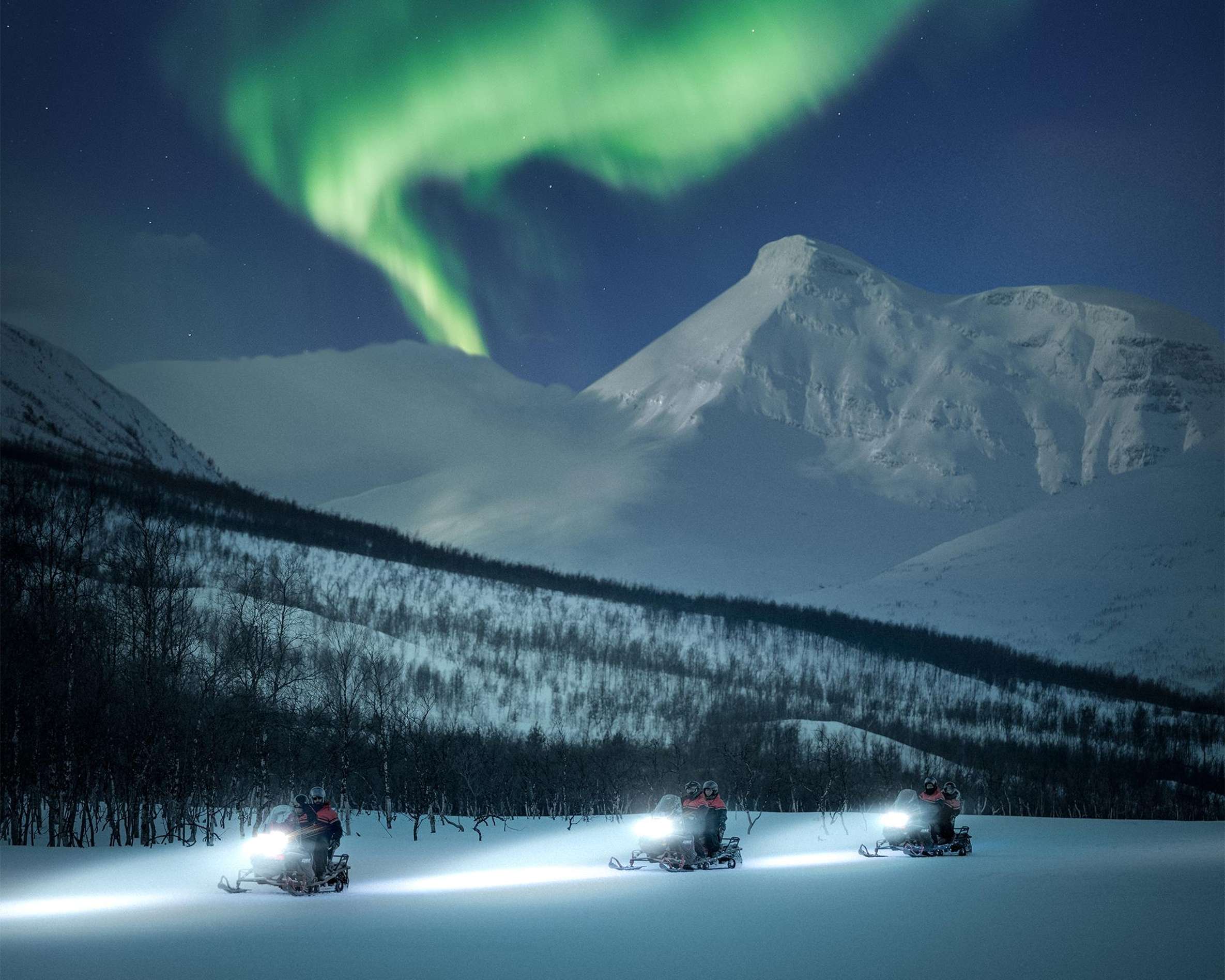
Driving a husky team and standing under the aurora in the same night is the promise every kennel outside Tromsø sells. Whether one evening can honestly deliver both depends on the month, your legs and the sky.
Øverbygd· 69.65° N, 18.96° E
If you only remember three things
1
Book 2 to 4 weeks ahead in December through February; Christmas and New Year dates go 6 to 8 weeks early.
2
Driving your own sled requires age 16 and real fitness; the kennel visit with dinner suits every age.
3
A husky camp stays put when clouds roll in, so dogs and dinner are guaranteed, the aurora never is.
Dog sledding and northern lights - is one evening enough?
The huskies start howling the moment the guides unzip the first sled bag, fifty voices at once, and the noise stops the second the team moves. That sound is half the reason people book this combination.
Here is the honest trade-off. A dedicated aurora chase runs 5 to 10 hours in a van or minibus, driving up to 320 kilometres and sometimes over the Finnish border to find a cloud gap.
A dog sledding camp stays where its trails are, and the lights only show if the sky clears directly above it. Sled dogs cannot outrun weather.
So treat the combo as a wilderness evening first, with the aurora as the bonus whenever the valley sky clears. If the lights are the main goal, a mobile chase does that job.
Travelers who want maximum odds book a mobile chase one night and the kennel another. People who want dogs, dinner and dark-sky silence in one go pick the combined evening and accept the gamble.
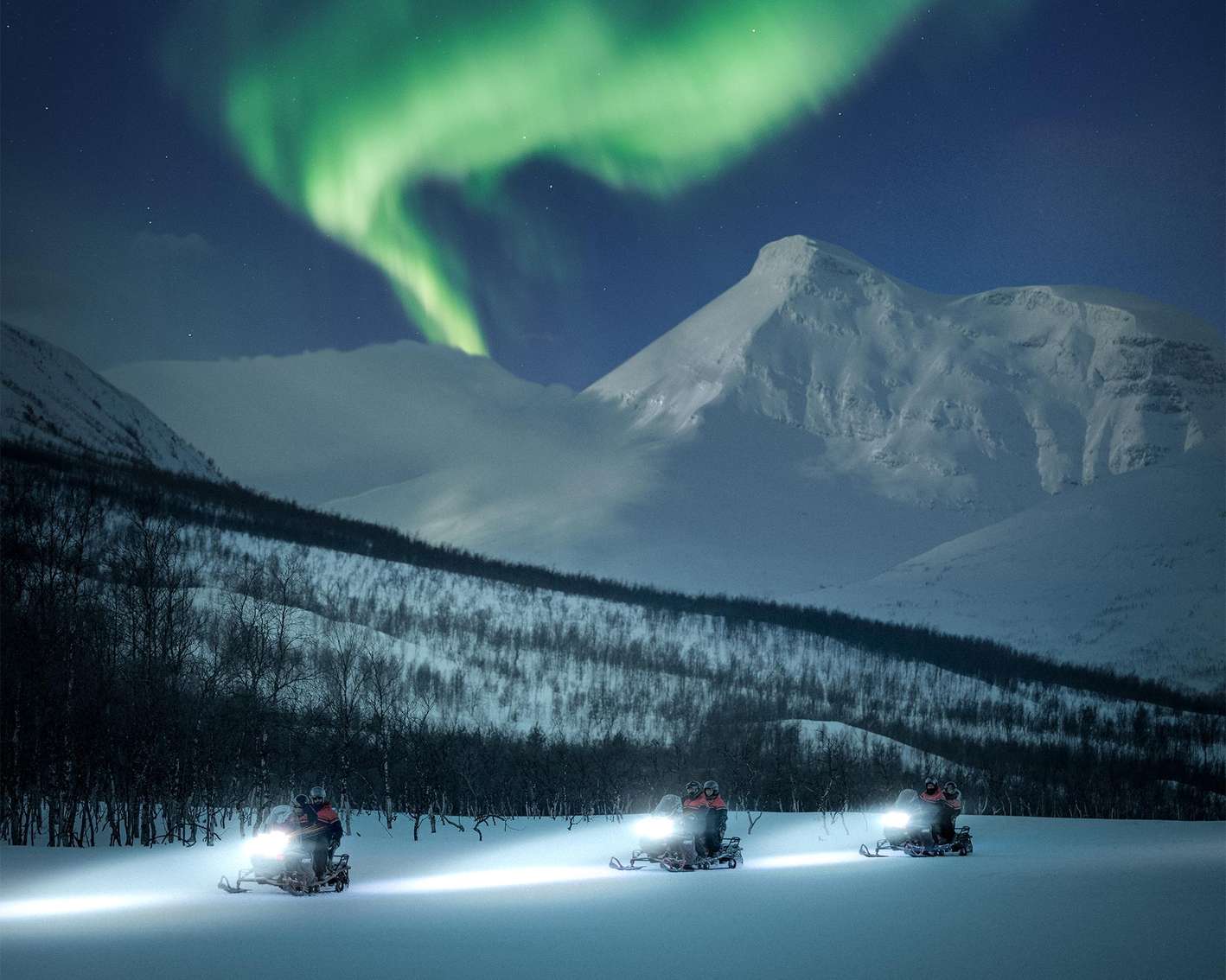
For travelers set on both in one go, the Arctic All-in-One Night: Dog Sledding, Snowmobiling & Aurora stretches the evening to 10 hours out of the Tamok Valley, with sledding, snowmobiling, a fireside dinner and aurora portraits in a single night.
What people get wrong about a husky aurora evening
MythThe dogs are made to run whether they want to or not
Reality
Alaskan huskies are bred to pull and throw themselves into the harness; the howling at departure is pure eagerness to run.
MythA camp evening gives the same aurora odds as a chase
Reality
A camp cannot drive to clear sky, so cloudy weather over the valley means no lights.
MythA strong aurora forecast guarantees a display over the camp
Reality
Lights need cloudless sky above you, and a camp stands where it stands.
When snow depth and dark skies line up for dog sledding
The month decides what kind of evening you get. January and February are the sweet spot: around 40 centimetres of snow under 12 to 15 hours of full darkness, so the trails are solid and the sky stays black from late afternoon to late morning.
March is the reliable runner-up. The snowpack thins to about 26 centimetres and darkness drops to roughly 7.6 hours a night, but clear dark nights become more common and you get daylight back for daytime activities. By late March the astronomical season closes; from late spring to mid-September there is no true darkness at all.
December looks tempting with 16 hours of darkness, and it is the polar night, when the sun never rises and the day is a few hours of blue twilight around noon.
Early in the month the snow cover is still settling, so some coastal camps run on thin trails or bare frozen ground until the base builds. November is the riskiest of the dark months: coastal rain can strip the snow, which is why inland camps hold their trails better that early.
Best months for snow and dark skies in Tromsø
January: 5 out of 5 for how busy it gets. Peak visitor numbers coincide with deep snow cover, over 13 snowy days, and 15 hours of darkness daily.
HighestOct to Mar
LowestApr to Sep
Darker: a higher how busy it gets score, out of 5
Tap a month to read it.
January: snow on 13.6 days. Peak visitor numbers coincide with deep snow cover, over 13 snowy days, and 15 hours of darkness daily.
HighestNov to Apr9.4 to 13.6 days
LowestMay to Oct0 to 2.8 days
Darker months: higher, from 0 to 13.6 days
Tap a month to read it.
December: 16 hours of darkness. The busiest month provides 16 hours of pitch-black sky daily, though deep snowpack is still building.
HighestNov to Feb12 to 16 h
In betweenMar, Sep to Oct5.5 to 10.6 h
LowestApr to Aug0 to 1.1 h
Darker months: higher, from 0 to 16 h
Tap a month to read it.
September: 6.7 clear dark nights. Tours do not run on snow as autumn begins without snow cover, though dark skies return.
HighestSep to Oct5.3 to 6.7 nights
In betweenDec to Mar3 to 4.3 nights
LowestApr to Aug, Nov0 to 1.7 nights
Darker months: higher, from 0 to 6.7 nights
Tap a month to read it.
Whichever month you pin the trip to, match it to what you want most: the deepest snow and longest darkness come in January and February, easier roads and returning daylight come in March, and November trades trail reliability for the quietest slopes of the season.
Tour for this
Tromsø: Northern Lights Husky Visit with Traditional Dinner4.7★ (1,769) · 4 hours · Free cancellation
Self-drive, ride along or kennel visit - choosing your dog sledding evening
How much of the evening belongs to you and the dogs decides everything else about it. Driving your own team means work.
Two people share each sled behind four to six dogs and swap halfway, and the driver brakes, kick-scoots and pushes the sled uphill through fresh snow.
You need the fitness to jog uphill in snow, good balance, and the habit of keeping your foot on the brake whenever you stop, because a team will bolt the moment you lift it. Camp Tamok's advanced run sets the bar at 16 years old, a 120-kilo weight limit, and no pregnancy at any stage.
A guide-driven passenger sled sits you behind eight to twelve dogs while a professional musher steers. Families with small children, photographers and anyone with an injury ride this way, and all ages are welcome.
The third option skips the sled entirely. The Tromsø: Northern Lights Husky Visit with Traditional Dinner runs about 30 minutes from downtown, wanders a yard of some 200 Alaskan huskies with puppies, then serves bacalao by the fire under the open sky. Four hours, no fitness test.
Self-drive mushing vs guide-driven sled vs husky camp visit
Self-drive mushing
Guide-driven sled
Husky camp visit
Fitness needed
High: brake, push uphill, balance
None, you sit wrapped up
None
Who can join
16+, no pregnancy, under 120 kg
All ages, families with young children
All ages
Time with the dogs
Your own team for 10 to 22 minutes, shared
Photos from the sled behind 8 to 12 dogs
Cuddle 200 huskies and puppies
Warmth
You work, so you stay warm riding less
Warmest seat in the valley
Fires and a heated tent
Photos
Of the team before and after
Easy shots while riding
Dogs in daylight-quality setting
Self-drive mushing
Fitness needed
High: brake, push uphill, balance
Who can join
16+, no pregnancy, under 120 kg
Time with the dogs
Your own team for 10 to 22 minutes, shared
Warmth
You work, so you stay warm riding less
Photos
Of the team before and after
Guide-driven sled
Fitness needed
None, you sit wrapped up
Who can join
All ages, families with young children
Time with the dogs
Photos from the sled behind 8 to 12 dogs
Warmth
Warmest seat in the valley
Photos
Easy shots while riding
Husky camp visit
Fitness needed
None
Who can join
All ages
Time with the dogs
Cuddle 200 huskies and puppies
Warmth
Fires and a heated tent
Photos
Dogs in daylight-quality setting
Those seats and yards translate into minutes like this: typical Tromsø trails run 30 to 45 minutes, and with two people swapping halfway each gets 10 to 22 minutes driving.
One operator's standard run is more precise, 10 to 15 minutes behind the team, a five-minute swap, then the same stretch riding. The exact split depends on the trail and the kennel you book.
Tour for this
⭐Tromsø: Small Group | Northern Lights Chase + All-Inclusive4.8★ (1,835) · 7 hours · Free cancellation
Hour by hour on a husky evening of dog sledding under the northern lights
The bus leaves the city centre, and after 25 to 30 minutes of dark road the kennel lights appear. Total running time is about 4 hours and 15 minutes, and the sledding itself is a slice of that.
Gearing up comes first: thermal suit, boots, a briefing at the sled. Then the trail, 30 to 45 minutes long.
On one operator's standard run each driver gets 10 to 15 minutes behind the team, a five-minute stop to swap seats, then the same stretch as a passenger; across Tromsø kennels the split lands anywhere from 10 to 22 minutes per seat, since trails and formats differ.
Extended trails up to 90 minutes give each of you up to 45 minutes in each seat.
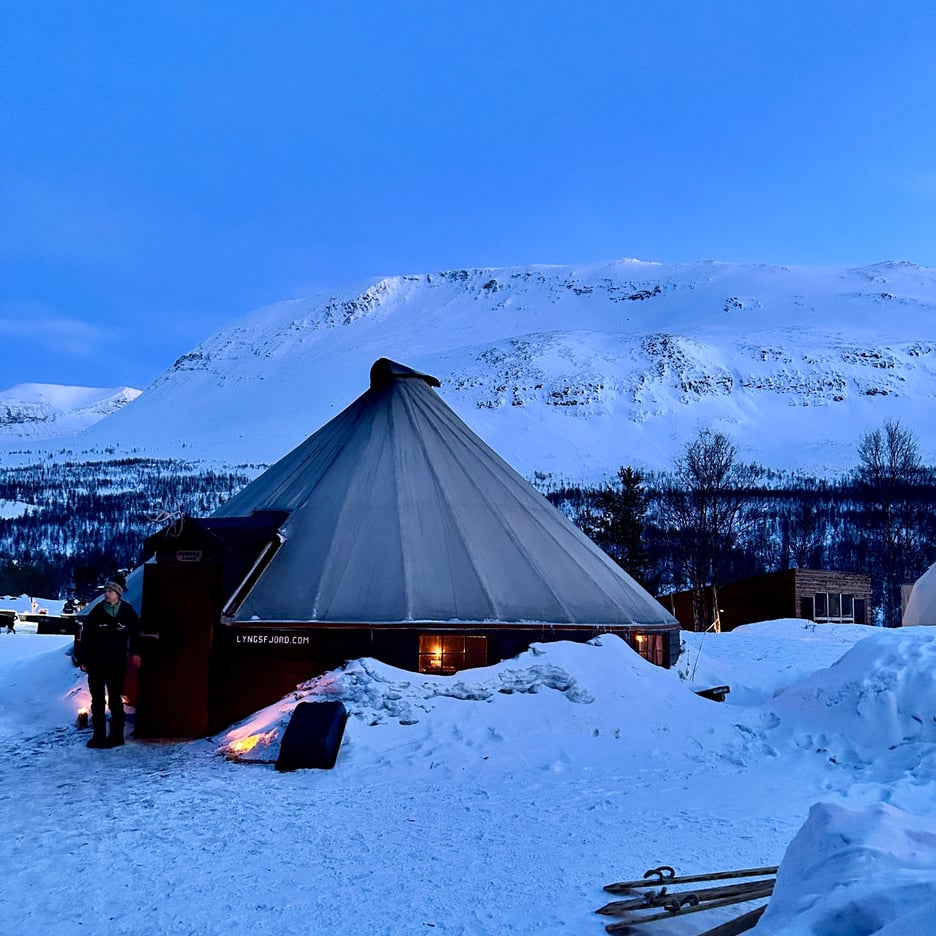
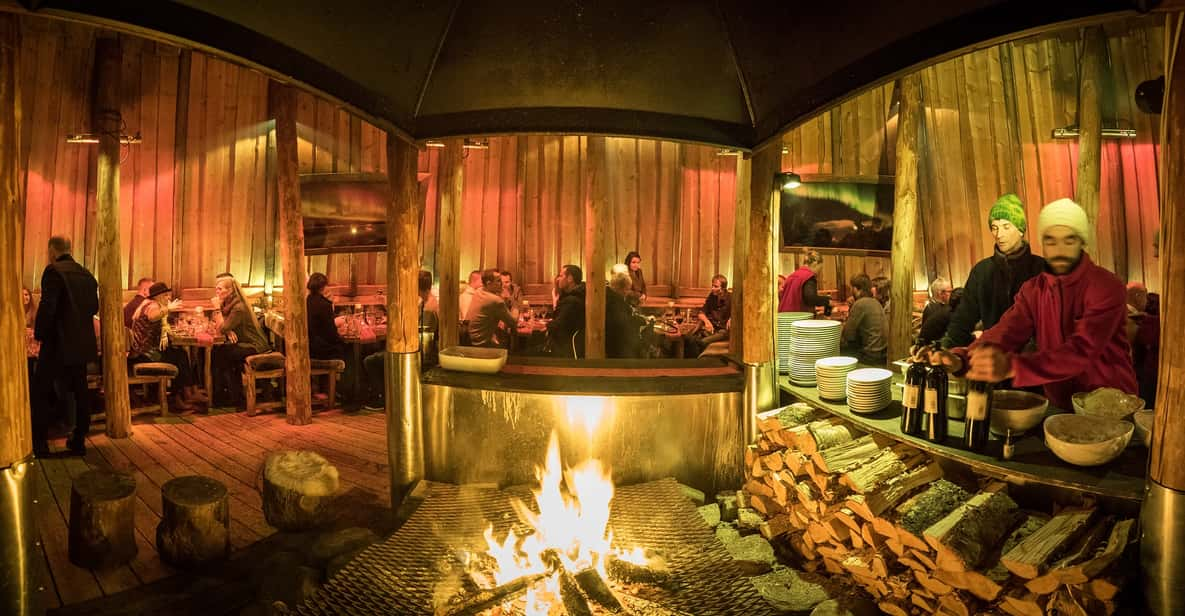
Back at camp, the evening slows down. Puppies come out of their boxes. Handlers talk dogs while you hold one. Then dinner in the lavvu, warmed by a wood fire and candles, with coffee and cake after.
On the husky visit tour the meal is bacalao, salt cod in tomato sauce; other camps serve bidos reindeer stew, with vegetarian versions if you ask when booking.
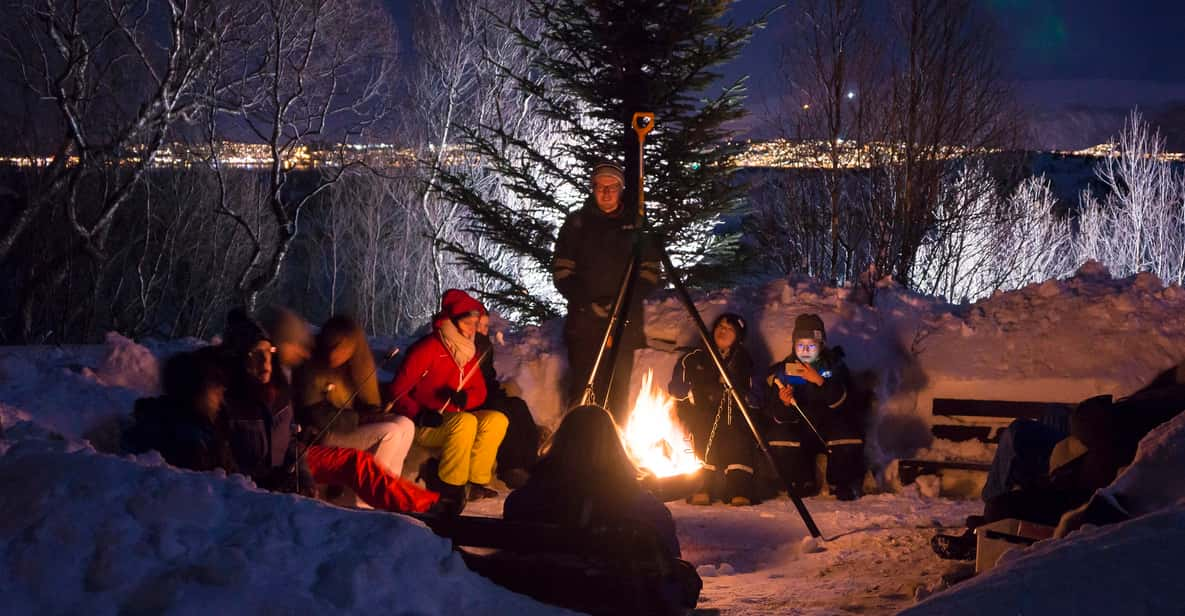
Last comes the sky. You walk out past the fire glow, let your eyes adjust, and wait. On a cloudy night the lavvu is the reason nobody minds: a warm tent and a full meal make even a grey evening worth the drive.
Evening husky excursion timing
4 hr 15 minTotal excursion time
25-30 minBus ride each way
Read the shape of it and the evening makes sense: well under an hour is sledding, and the rest belongs to transfers, dogs, dinner and sky. Booked for what it is, the pace feels generous.
Tour for this
Reindeer Feeding & a Chance of Northern Lights with Dinner4.5★ (1,569) · 4.5 hours · Free cancellation
Dog sledding camps - how you get out to the valleys
Three valleys hold the region's husky camps, and the transfer length shapes your whole evening. Kennels on Kvaløya, the big island across the bridge from the airport, run 25 to 40 minutes from town.
Breivikeidet, a sea-close valley east of the city, takes about 50 minutes by bus. The inland Tamok Valley, where Camp Tamok sits, means a 90-minute ride each way, which is why that all-in-one evening runs so long.
Most buses leave from a tight harbourfront cluster in central Tromsø: the terminal inside Prostneset, the Radisson Blu entrance and the quayside by Scandic Ishavshotel, all within a few minutes' walk of each other. Prostneset stays open from early morning to half past one at night if you need to warm up first.
Watch the pavement, not the schedule. Downtown walkways freeze into sheet ice from autumn through April, so slip-on ice grips over your winter boots are the local default for reaching the meeting point. If a return runs past midnight, taxis run around the clock and weekend night buses cover selected routes.
How hard each way of reaching the camps is
Walk to the harbour meeting pointSheet ice from autumn to April; ice grips over boots make it a safe five-minute walk
Moderate
Kvaløya kennels, 25 to 40 min transferShortest ride, best for families with young children and puppy time
Easy
Breivikeidet, about 50 min transferSea-close dark valley, straightforward bus ride each way
Moderate
Tamok Valley and Camp Tamok, 90 min transferA long dark ride each way, but the deepest inland snow and the full 10-hour evening
Difficult
Choose the camp by what you want from the night: a short transfer leaves more evening for puppies and sky, while the long inland ride buys the deepest snow at the cost of hours on the bus.
Tour for this
Tromsø: Snowmobile Tour & Aurora Crystal Lavvo Stay4.8★ (71) · 1 day · Free cancellation
At the gear table the guides hand out the heavy layer: an insulated thermal suit, winter boots and outer mittens. On the sled in December and January a headlamp comes with the deal when the trail runs in darkness.
What ruins first-timers' evenings happens underneath. Cotton base layers hold sweat and chill you fast in sub-zero cold, and a wet cotton shirt under a thermal suit feels like standing in a freezer once you stop moving.
Wool or synthetic thermal tops and bottoms against the skin, then a fleece or wool mid-layer, are the layers that count, because most of the night you sit still.
The rest is small: thick wool socks with room for toes to move inside the provided boots, a hat that covers the ears, a neck gaiter to seal the collar against blowing snow.
Parents dressing small children for a night in the cold should double everything, since a child sitting still in a sled or a lap loses heat far faster than a musher working the trail.
What to wear under provided husky camp gear
Wool or synthetic thermal base layersLong thermal top and bottom worn against the skin; avoid cotton, which retains moisture and chills you in sub-zero Arctic temperatures.
Fleece or wool mid-layer sweaterTraps warm insulating air beneath the camp's windproof thermal suit while sitting stationary in the dog sled.
Thick wool socksKeeps toes warm inside the provided winter boots; leave enough toe room to maintain healthy blood circulation.
Warm winter hat covering earsEssential head protection against freezing wind chill out on open snow trails and around the camp.
Thermal gloves or liner glovesWear under the camp's provided heavy mittens so your hands stay protected when operating cameras or phones.
Neck gaiter or wool scarfSeals the collar of the thermal suit against blowing snow and drafts while the dog team runs.
Pack these the night before departure; at a wilderness camp there is nowhere to buy a forgotten pair of wool socks.
Photographing dog sledding northern lights in the cold
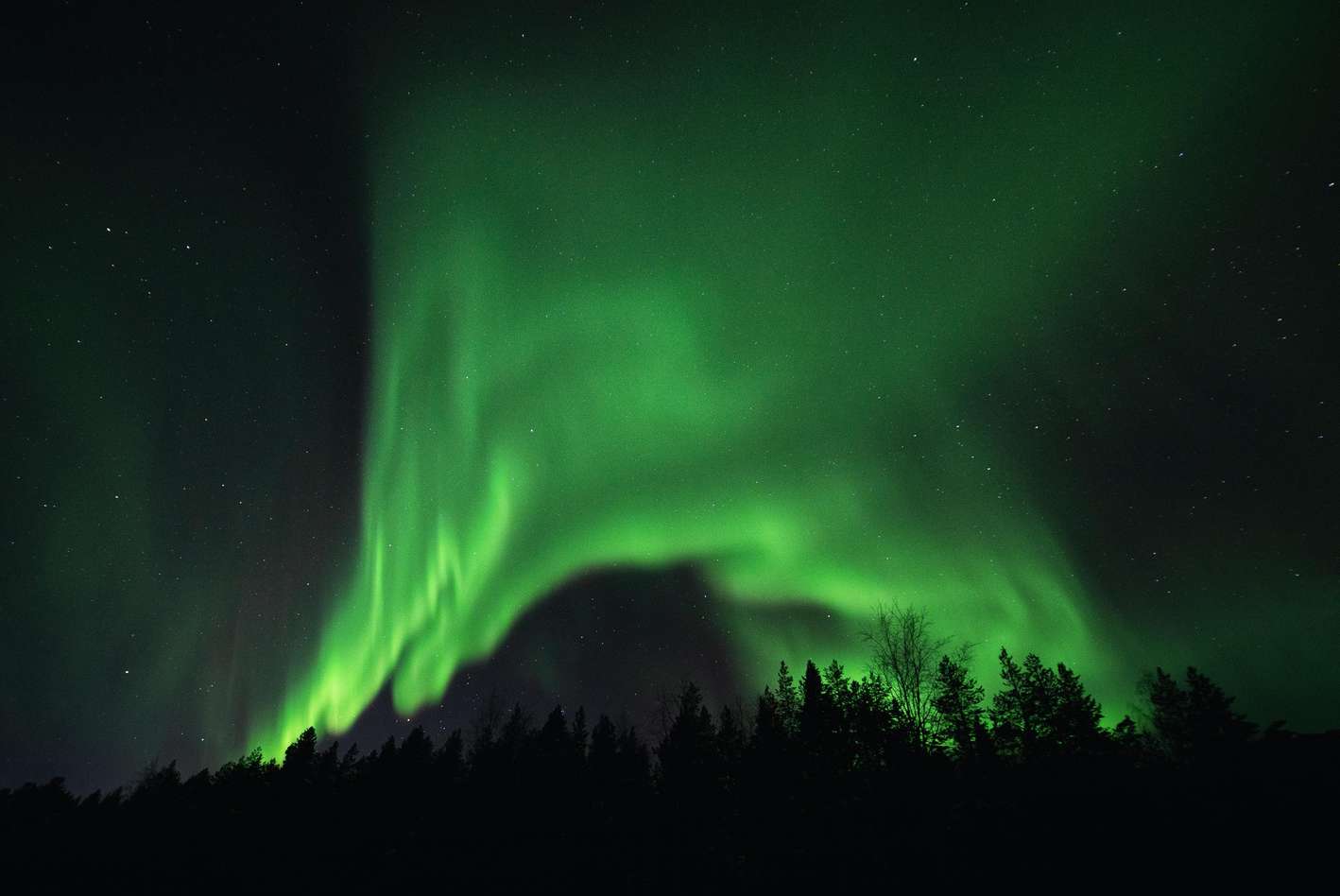
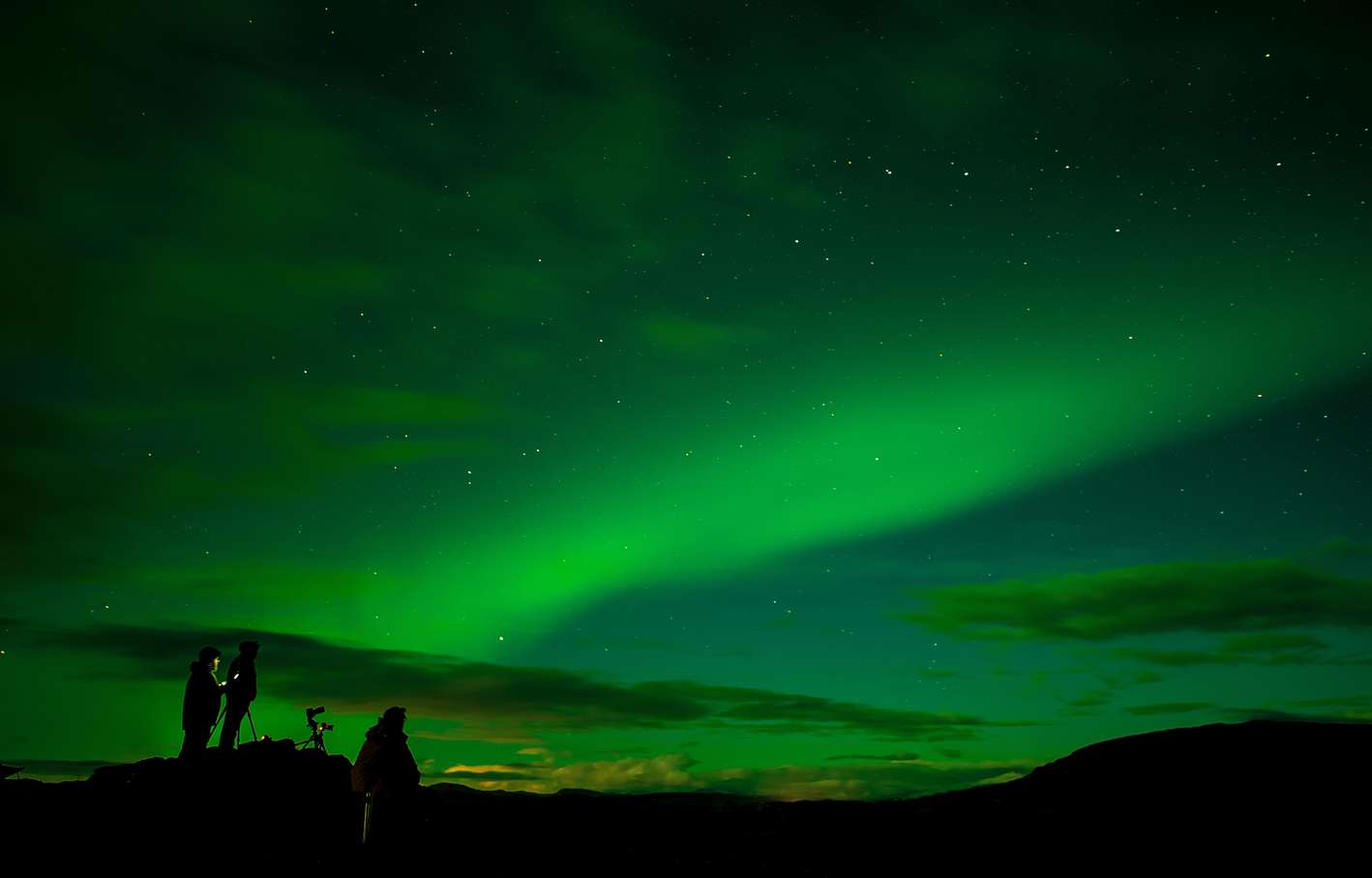
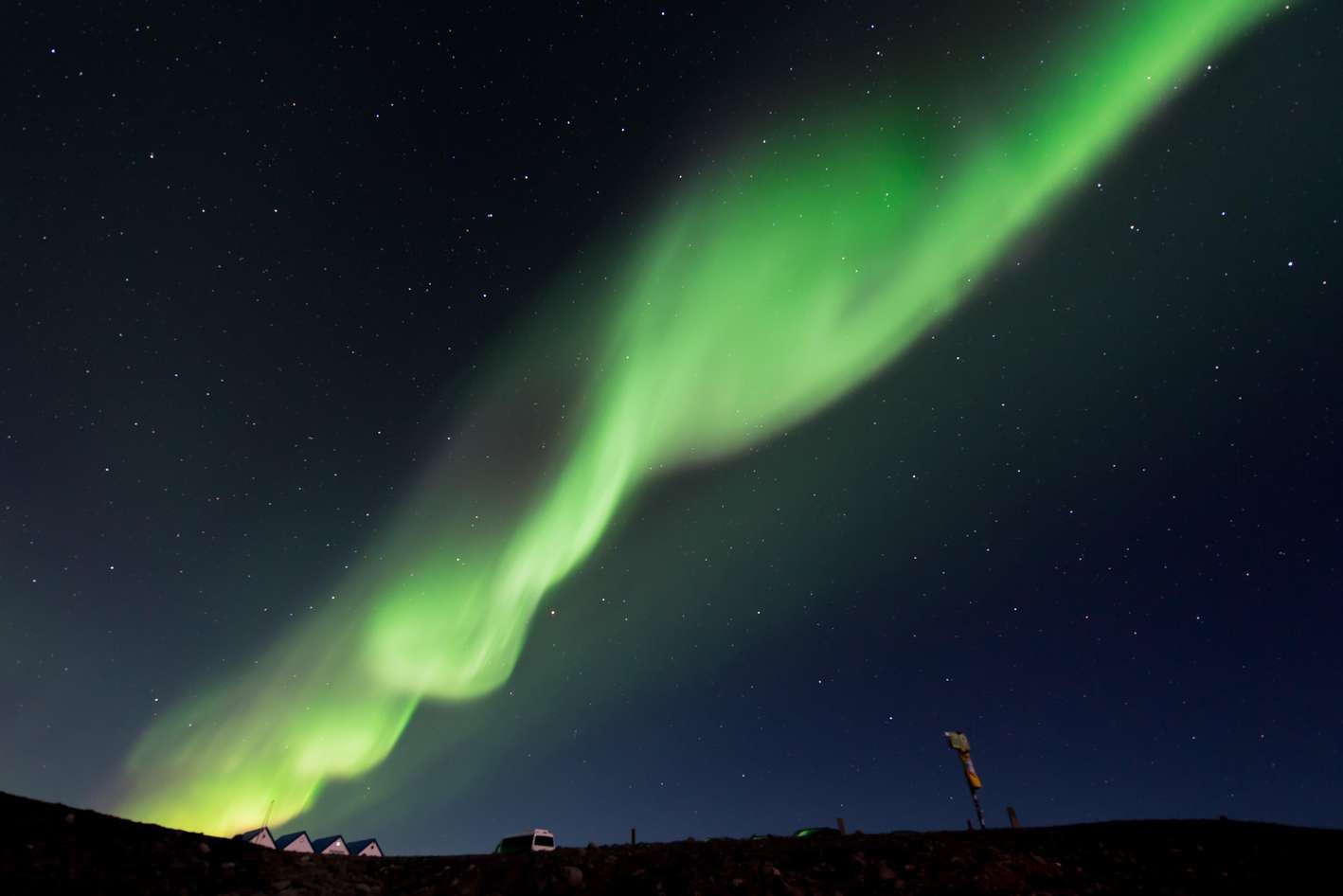
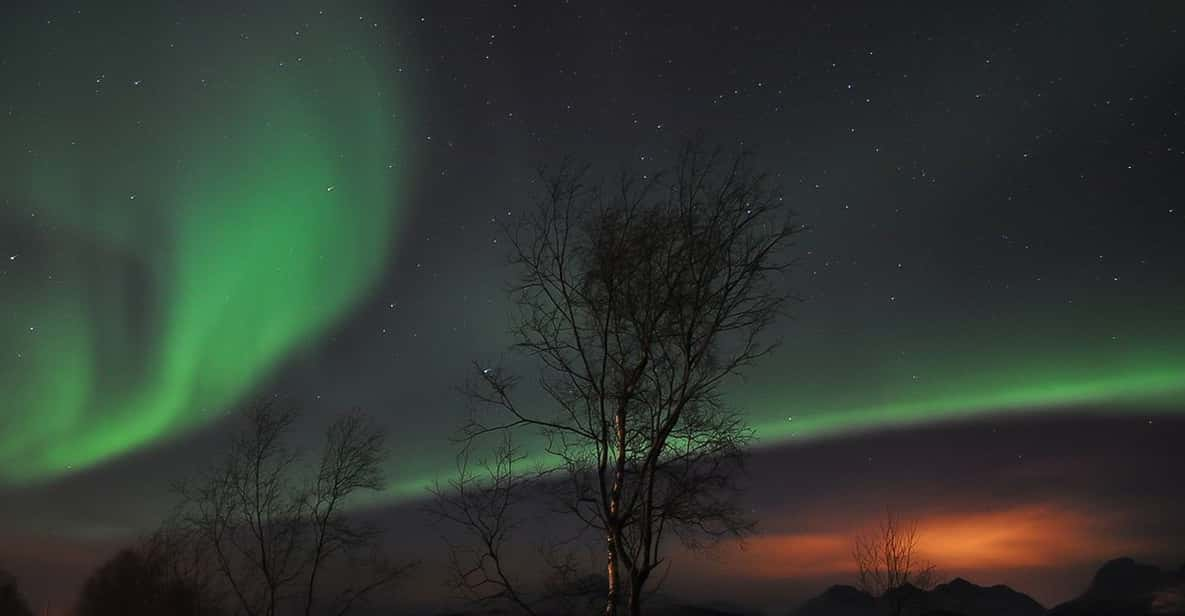
The first thing to know about aurora photography is that your eyes lie. To the naked eye a faint display reads as a pale grey or whitish streak, almost like fog above the ridge.
The camera, stacking light over seconds of exposure, pulls out the green and purple you will recognise from every postcard. The photo is the keepsake even when the sky looks quiet, and guides' portraits under the lights, shared after the tour, exist for exactly that reason.
If you bring a camera, switch it off automatic. Automatic settings return black frames. Start in manual at ISO 3200, a shutter of 3 to 8 seconds and the aperture wide open at f/2.8, focus set by hand on a bright star.
On a phone, use Pro or night mode at ISO 1600 to 3200 with a 10 to 15 second shutter, flash off, and the two-second timer so your tap does not shake the shot.
Then protect the gear. At -15°C a lithium battery can lose half its capacity, and phones shut down without warning, so keep spares and the phone in an inner pocket against your body.
Seal the camera in a bag before bringing it back into a warm bus, or condensation will fog the lens for the rest of the night.
What nobody tells you about the northern lights
Your eyes see grey, the camera sees green
Rod cells handle the dark but not colour, so faint auroras look like haze while a long exposure builds the real colours.
Automatic mode ruins every shot
Manual settings or a phone's Pro mode are the difference between black frames and a display.
Cold kills batteries before the lights arrive
Keep spares warm in an inner pocket and let a cold battery warm up before recharging.
How far ahead to book an evening of dog sledding and northern lights
Kennels are small and buses are fixed, so the peak winter calendar is the hardest constraint on this plan. From December to February, when visitor numbers run more than double an average month, evening dog sledding tours sell out 2 to 4 weeks ahead.
Christmas and New Year departures go 6 to 8 weeks early, and February dates book out 4 to 6 weeks in advance. Arriving in Tromsø and hoping for a walk-up slot in high season almost never works.
Before paying, read what the ticket includes. Some cheaper tours add rental fees for thermal clothing, boots or tripods at the counter, and some give low-resolution photos free while charging for the high-resolution set. The tours on this page list suit, boots and portraits in the price.
If the kennels near town are full, widen the search to wilderness operators further inland, which often keep later availability. And put your husky evening on the first possible night of the trip, so a weather cancellation still has spare nights to rebook into.
Pro tipBook your husky evening for the first night of your trip, 2 to 4 weeks ahead in peak season and 6 to 8 weeks over Christmas and New Year, so a cancellation still has buffer nights to rebook into.
Late additions to a full calendar are rare in winter, so treat the booking window as part of the trip planning, booked alongside the flights.
Dog sledding in bad weather - what happens if the sky stays grey
Two different failures can hit a booked husky evening, and they cost different things.
The first happens before departure. Storms, freezing rain or bare icy trails can cancel sledding outright, for the safety of guests and dogs.
When that happens the operator offers a new date, an alternative activity, or a full refund; if there is snow but not enough for sleds, some camps run the same trail on wheeled carts instead. A cancelled evening costs you nothing but the plan.
The second happens under your own sky. The tour runs, dinner is served, and thick cloud sits over the valley all night. Because a husky camp cannot drive to clear weather, no lights appear, and operators across Tromsø generally do not refund a tour that ran as scheduled.
The ticket covers the dogs, the wilderness and the evening; the aurora is the part nobody can sell. A few chase tours sell second-chance or retry guarantees instead; a fixed camp cannot.
Book with that in mind and the fine print never surprises you: cancellations refund, cloudy nights generally do not.
If the weather turns
If this happens
What happens then
Severe storm or unsafe trails cancel the tour
Rescheduling, an alternative activity, or a full refund.
Not enough snow for sleds
Some operators switch to wheeled carts or rebook you.
The tour runs but clouds hide the aurora
Generally no refund, because the evening itself was delivered.
You want stronger aurora odds
Book a mobile chase on a separate night; some offer a free retry if the lights stay hidden.
The freedom of your own car is real: you pick the departure time, the kennel, and how long you linger with the puppies, and you share no viewpoint with a coach load.
The road is the counterargument. The routes out to the kennels are dark, narrow and frequently covered in packed snow or black ice, and rental-car winter experience is exactly what most visitors lack.
Add reindeer and moose crossing unlit roads at night, and the chance of being stranded far from help if the car slides into a snowbank, and the arithmetic changes.
For a first Arctic winter, the tour bus is the sensible vehicle. A guided transfer puts a driver who knows these roads behind the wheel, hands you a thermal suit and boots at the camp, and gets you home whatever the storm does.
Keep the rental for daylight hours on plowed main roads, if at all, and let someone else handle the ice.
Driving yourself
Rent a car for the driveCompare cars from the rental companies in one search, then pick yours.
Dog sledding sold out? Reindeer, snowmobiles and other Arctic evenings
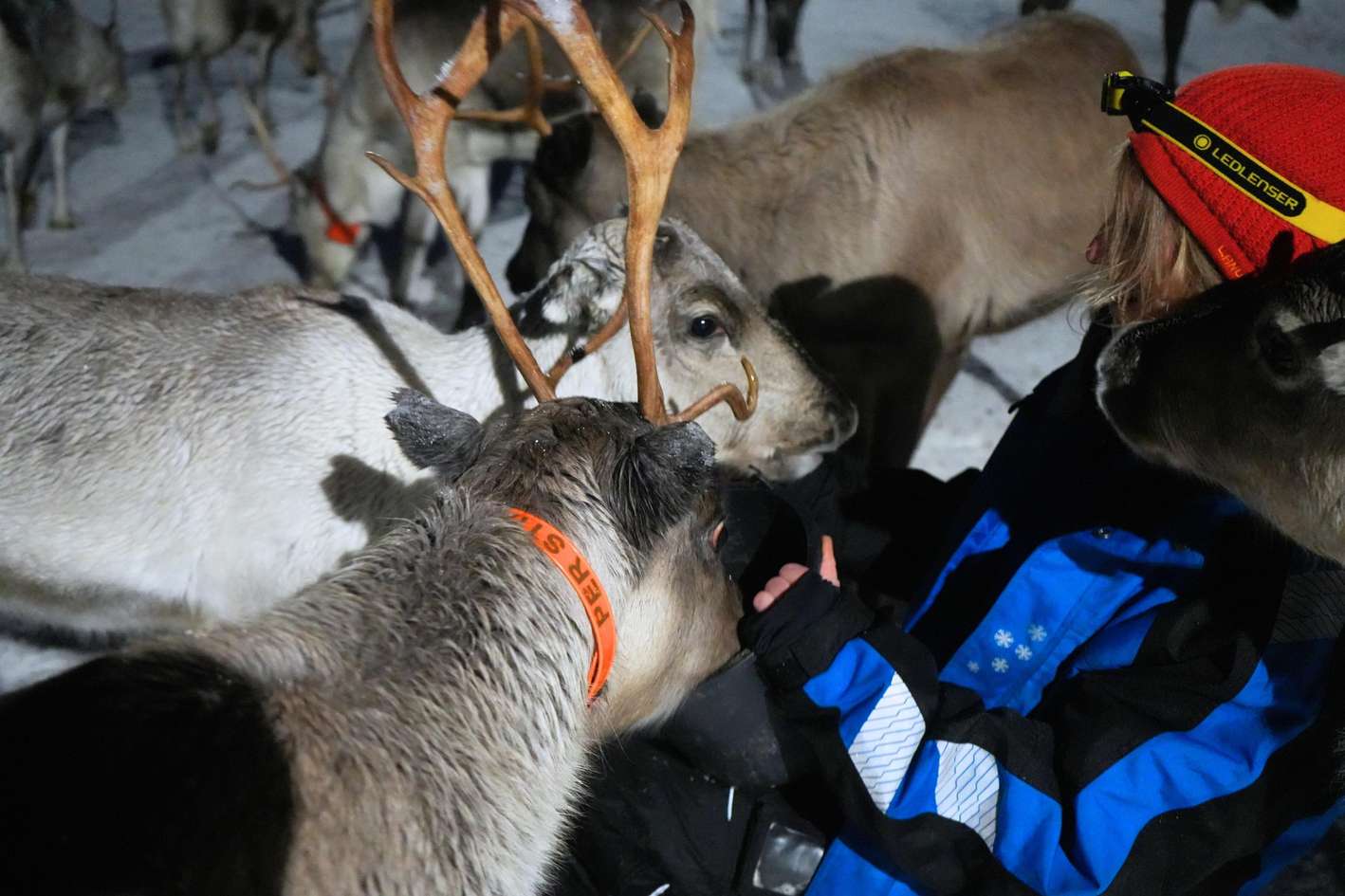
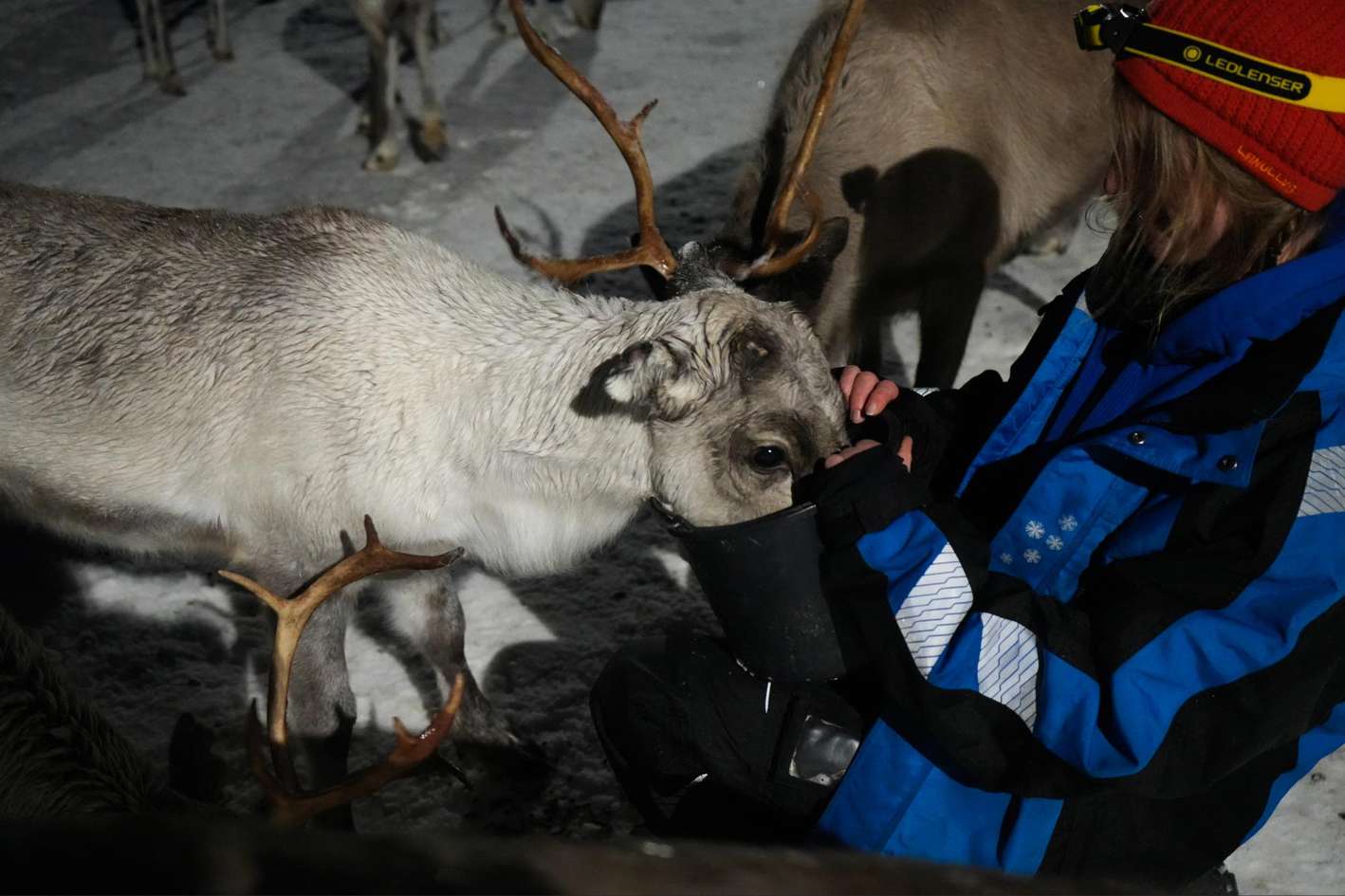
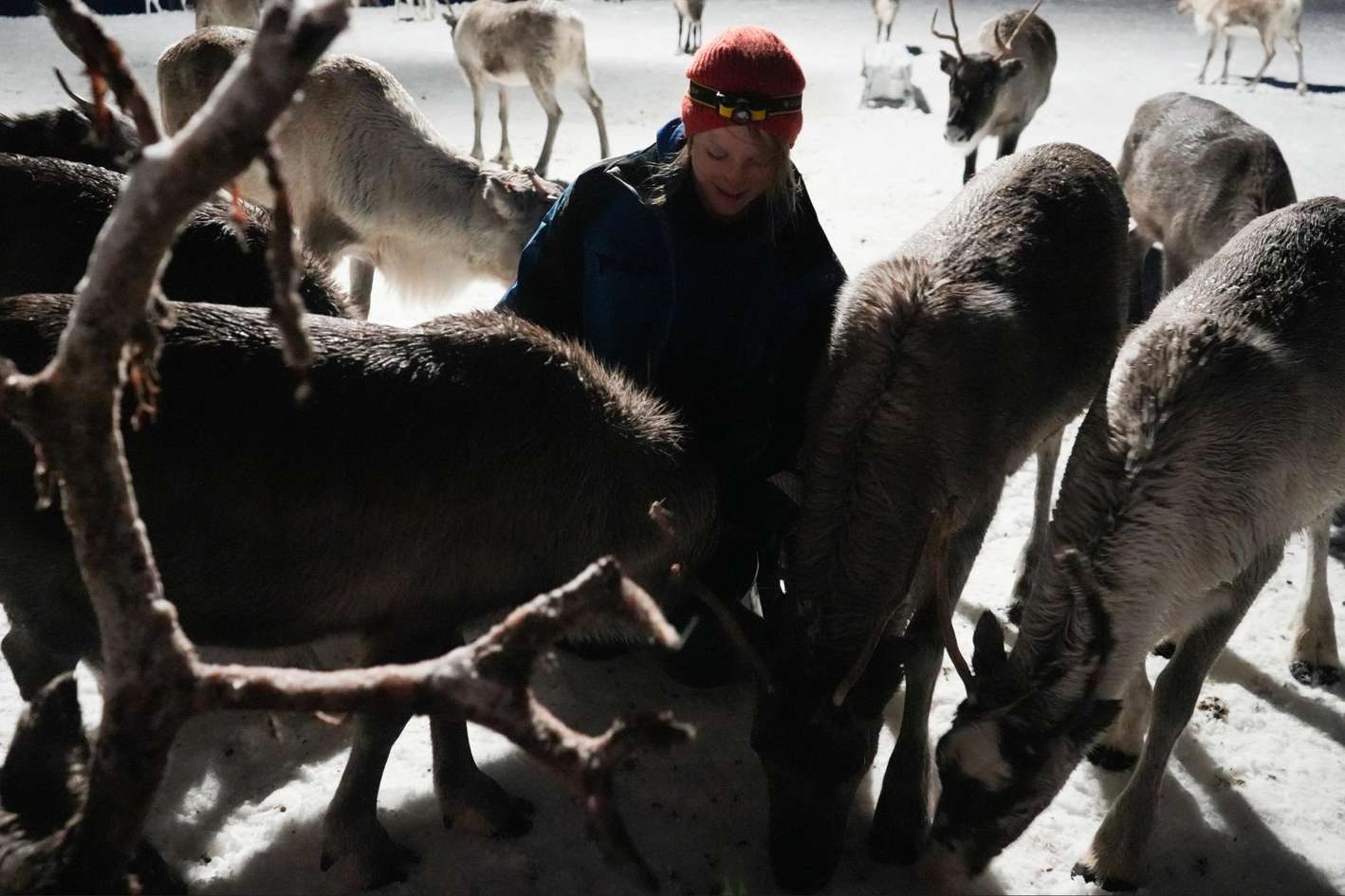
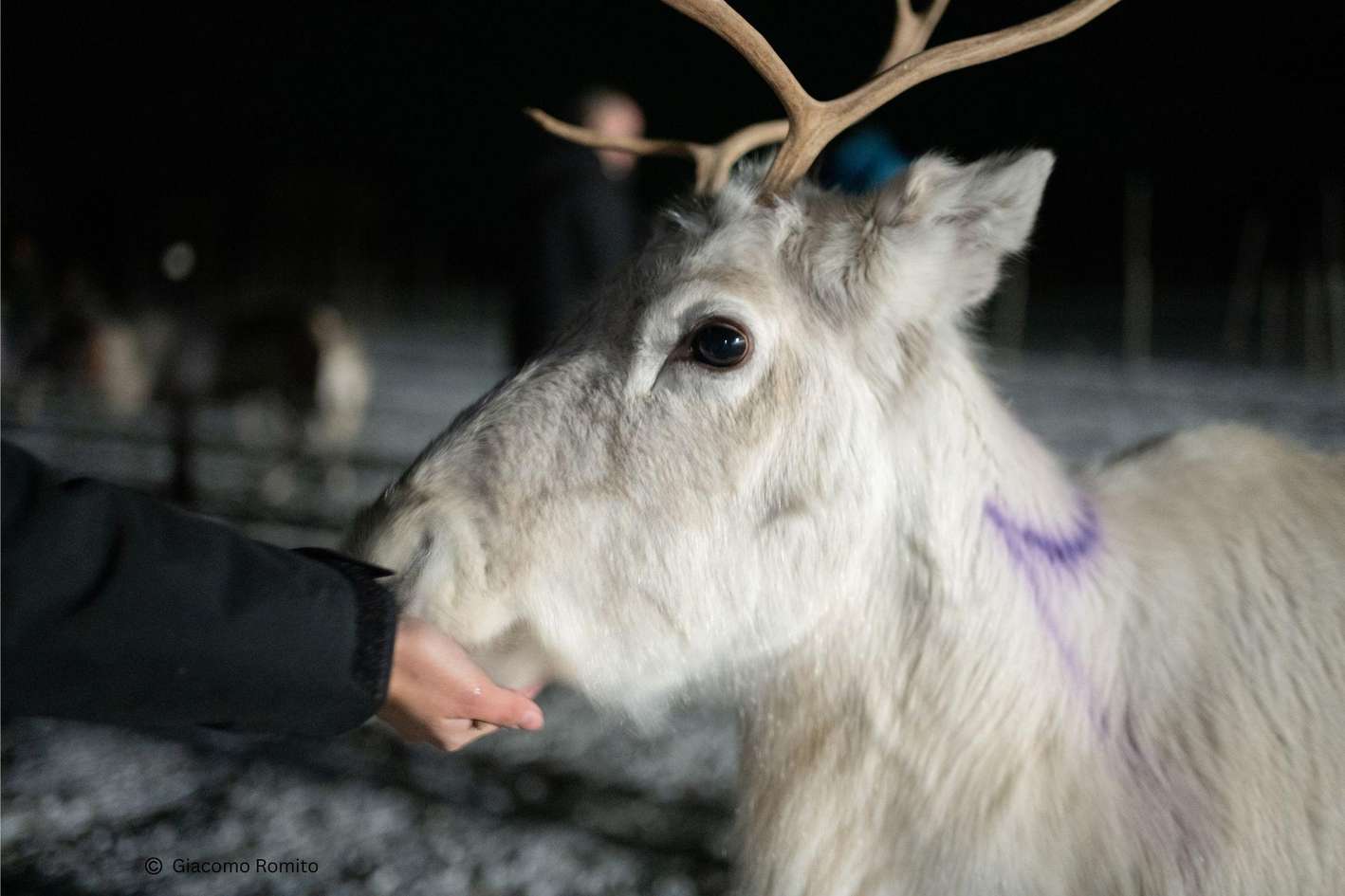
Full kennels are not the end of the Arctic evening. The nearest cousin is the Reindeer Feeding & a Chance of Northern Lights with Dinner at Breivikeidet: 4.5 hours of feeding and petting reindeer, a Sámi guide explaining life in the Arctic, bidos stew in a traditional gamme, and open dark sky above the camp.
Wheelchair users and people with mobility impairments should look elsewhere, as the terrain around the camp is rough.
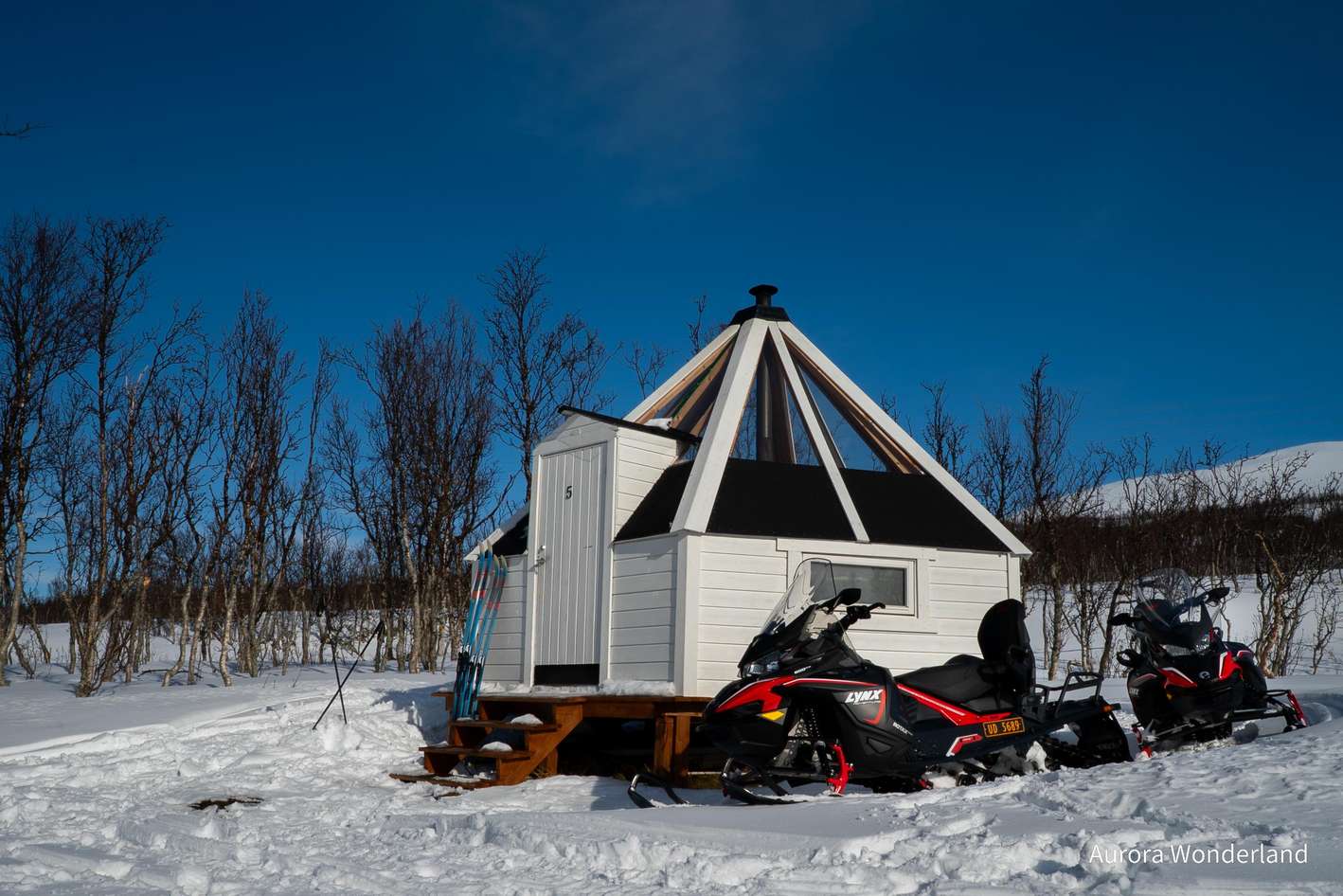
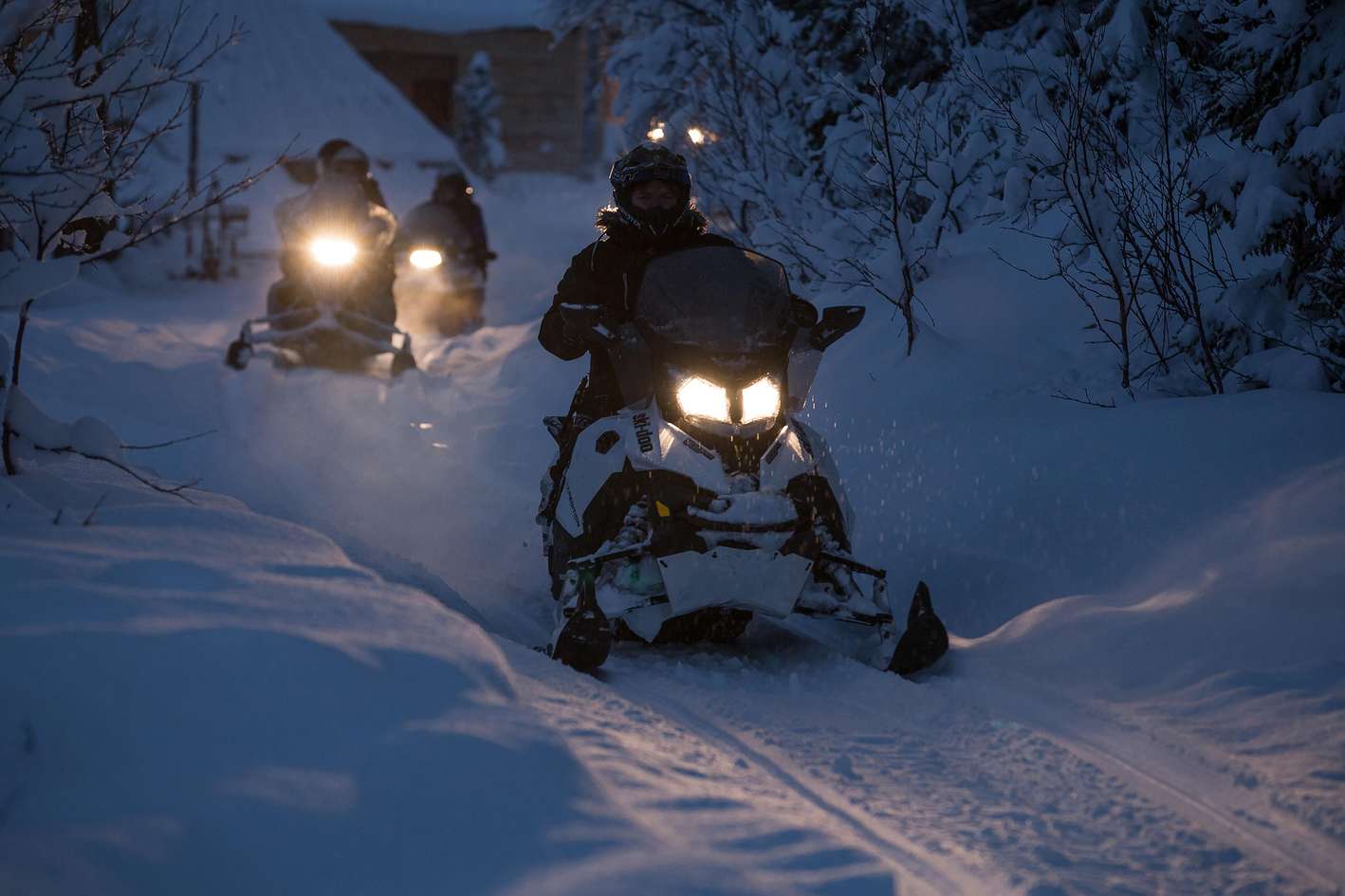
More active nights exist too. The Tromsø: Snowmobile Tour & Aurora Crystal Lavvo Stay pairs a snowmobile ride under the Lyngen Alps with a night in a glass-roofed cabin where you watch the sky from under a duvet.
And one bonus runs only in a narrow window: November through January, humpbacks and orcas follow the herring into the fjords, so in those three months a whale trip stacks onto the same dark, snowy stretch of winter as your husky night. From February the whales leave with the herring.
More to book around Øverbygd
Live dates and prices
A traveler's note
Enthusiastic guides sharing their knowledge, made you feel welcome. All the food was delicious and every husky looked happy and healthy. Definitely recommend!
Two dreams, one evening, if you pick the right version
The combination works when you book it for what it is: a wilderness evening with dogs, fire and food, plus a real chance of aurora if the valley sky cooperates. Chase the lights on a separate night and come here for the huskies.
Go for January or February snow, book weeks ahead, and choose your sled seat honestly.
Go ifYou want dogs, dinner and dark-sky silence in one evening and accept the aurora gambleYou are visiting in January or February, when deep snow meets 12 to 15 hours of darknessYou can book 2 to 4 weeks ahead, or 6 to 8 for Christmas and New Year
Skip ifMaximum aurora odds are your top priority; a mobile chase covers far more skyYou cannot manage 16+, the fitness demands or the 120-kilo limit of self-drive sledding and no passenger option is offeredYou are arriving in high season hoping to book on the spot; the kennels will be full
Dog sledding and northern lights in Tromsø - the questions worth asking first
The honest answers, before you book your evening with the dogs.
Øverbygd2026
Tonight the huskies howled before we even harnessed them. Clouds rolled in after dinner, but the fire in the lavvu made waiting easy. Book your first evening here and keep a chase night spare.
Will I actually see the northern lights from a husky camp?
Only if the sky clears directly above the camp. Sled teams stay on their local trails, so they cannot drive away from cloud cover the way a minibus chase can. On nights when Tromsø sits under coastal cloud, a mobile chase has the better odds.
How much time do I spend driving the sled on a self-drive tour?
Two people share each sled and swap halfway through, so on a typical 30 to 45 minute trail you get roughly 10 to 22 minutes driving and the same riding as a passenger. Extended trails of up to 90 minutes give each of you up to 45 minutes at the handlebar.
Is self-drive dog sledding physically demanding?
Yes. You brake, kick-scoot and push the sled uphill in snow, and both people sharing a sled need good fitness, balance and strength. If you cannot jog uphill in snow, a guide-driven passenger sled suits you better.
Can children come along on an evening dog sledding tour?
Families can join by sitting together as passengers while a professional guide drives the sled. Thermal suits and boots keep everyone warm. Self-drive mushing, on the other hand, carries a minimum age of 16 on some operators' tours.
What happens if it is snowing or overcast at the camp?
The dogs run regardless, and the evening around the fire still makes the trip. The lights depend entirely on local weather at that spot, since a fixed camp cannot move to clearer skies. If seeing the aurora is your top priority, book a chase tour instead or as a second night.
What do we eat at a husky camp dinner?
The husky visit near Tromsø serves bacalao, a warm dish of Norwegian stockfish in tomato sauce, with coffee and cake. Some camps serve bidos, a Sámi reindeer stew. Vegetarian alternatives exist when you request them in advance.
Which months combine deep snow with dark night skies?
January and February are the peak, with 40 to 41 cm of average snow depth and 12 to 15 hours of darkness a day. December brings 16 hours of darkness, though snow cover can still be patchy early in the month. March stays reliable with 26 cm of snow.
Do I need a headlamp to drive the sled at night?
A headlamp is provided when the sledding happens in darkness, mainly in December and early January. It matters for the aurora too: after white light your eyes need 20 to 30 minutes to readjust, so a red filter on the lamp helps you keep your night vision.
What happens if bad weather cancels the tour?
In unsafe conditions for guests or dogs, the tour is cancelled and you get a rescheduled date, an alternative activity, or a full refund. Camps near Tromsø sit under the same winter storms as the city, so keep a spare evening free when you can.
Is a husky camp evening worth it if the aurora odds are lower than a chase tour?
If dogs and a fireside dinner in a dark valley are part of what you came for, then yes, and the lights are a bonus when the sky opens. If your only goal is to see the aurora, a dedicated chase that covers up to 320 km gives you the better chance.
More ways to pair dog sledding and the northern lights